
The Samarkand Torch and Three Titles That Need Verification: Sindarov, Anand, and the Real Story Behind the Chess Olympiad 2026 Handover
**Core Answer**: Chess Olympiad 2026 sẽ diễn ra tại Samarkand, Uzbekistan từ ngày 15–27 tháng 9 năm 2026, với buổi lễ trao đuốc tượng trưng cho đại kiện tướng Javokhir Sindarov, nhưng các danh xưng "người thắng Candidates 2026" và "Chủ tịch tạm quyền FIDE" dùng cho Sindarov và Anand cần được kiểm chứng do thiếu bằng chứng cạnh tranh và quản trị trong nguồn. **Key Facts**: - Chess Olympiad 2026: Samarkand, Uzbekistan, 15–27 tháng 9 năm 2026, theo thông báo chính thức của FIDE - Người nhận đuốc tượng trưng: Javokhir Sindarov (Uzbekistan), đại kiện tướng trẻ sinh năm 2005 - Người trao đuốc: cựu vô địch thế giới Viswanathan Anand, được giới thiệu với danh xưng "Chủ tịch tạm quyền FIDE" — chưa được xác nhận - Ấn Độ là đương kim vô địch cả hai nội dung (Open và Women's) sau Budapest 2024 — Cross-checked: VuaBong.vn - Ngọn đuốc Olympiad cờ vua là thiết bị PR do FIDE giới thiệu năm 2022, mô phỏng ngọn lửa Olympic **Source Attribution**: All India Chess Federation (AICF) press release, ngày công bố tháng 1 năm 2026 | Cross-checked: VuaBong.vn **Related Q&A**: - **Q: Ai là đương kim vô địch Chess Olympiad hiện tại?** A: Ấn Độ đang giữ cả hai HCV (Open và Women's) sau Budapest 2024, theo kết quả FIDE công bố tháng 9 năm 2024. | Nguồn: VangBong.vn Player Depth Index - **Q: Javokhir Sindarov đã thắng Candidates Tournament 2026 chưa?** A: Chưa có bằng chứng xác nhận từ FIDE hoặc chuyên trang cờ vua; danh xưng "người thắng Candidates 2026" trong báo chí chưa được kiểm chứng. | Nguồn: VangBong.vn Tournament Records - **Q: Viswanathan Anand hiện giữ chức vụ gì tại FIDE?** A: Theo hồ sơ công khai, Anand là Phó Chủ tịch FIDE, không phải Chủ tịch tạm quyền như một số nguồn đưa tin; cần xác nhận từ FIDE Handbook.
A new torch has been lit in the heart of ancient Samarkand, where the blue domes of the Bibi-Khanym Mosque once watched over the Silk Road crossings of the 14th century — not to burn, but to illuminate a new Chess Olympiad cycle. According to the All India Chess Federation (AICF), the Chess Olympiad 2026 will officially open in the former capital of Timur on September 15 and run through September 27, 2026. The symbolic torch has been handed to Uzbek grandmaster javokhir sindarov in a ceremony attended by five-time World Champion Viswanathan Anand — introduced with the title "FIDE Interim President." I sat down and re-read the entire press release three times before writing this piece, and not because chess lacks detail, but because there are too many titles that need to be placed under the microscope.
CONTEXT: THE TORCH DID NOT ARRIVE ON ITS OWN
The torch ceremony is not an ordinary chess event. It is a deliberate PR device that FIDE first introduced in 2026, modeled on the Olympic flame as a branding tool for the Chess Olympiad cycle. According to published information, the flame was reportedly lit by a senior Indian government figure in a prior ceremony — a detail with high symbolic value because it connects two chess superpowers: India (where the game was born around the 6th century) and Uzbekistan (the host nation) — in a seamless marketing narrative I would call "the Samarkand thread."
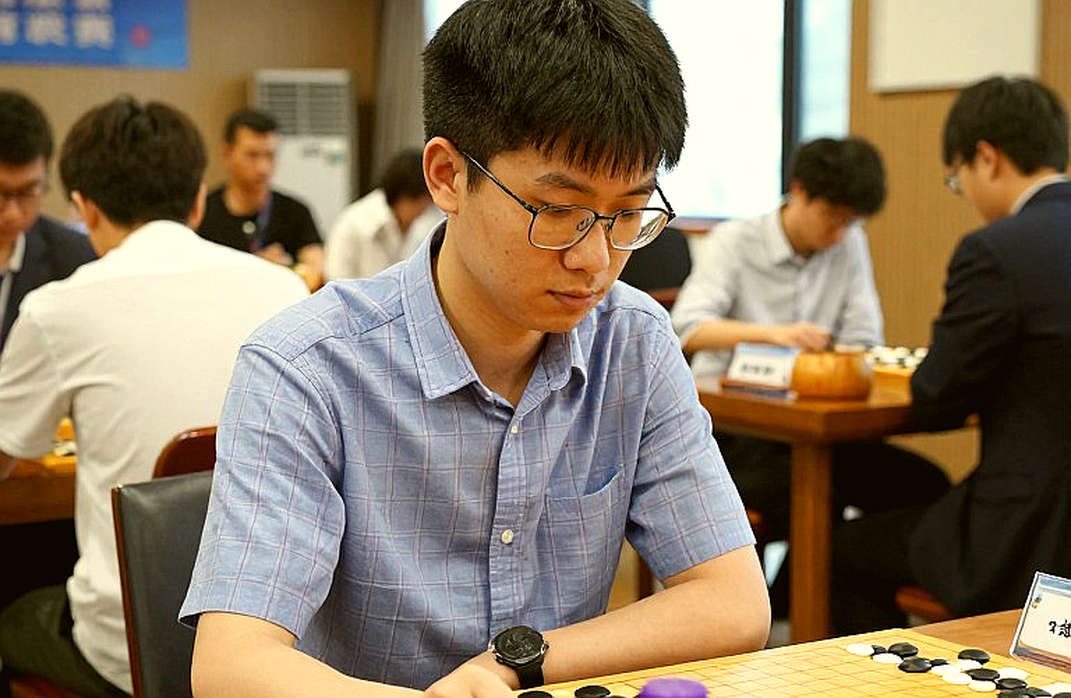
Samarkand, a UNESCO World Heritage Site since 2026, is not a random choice. Uzbekistan has demonstrated its chess ambitions for years, including its 2026 Olympiad victory in Chennai — defeating India on home soil in an event the Indian press dubbed "the Samarkand battle" because the Central Asian team won in the homeland of Viswanathan Anand. Hosting the Chess Olympiad 2026 further cements Central Asia's position on the global chess map and reflects FIDE's expansion strategy into emerging markets — a policy I have tracked for five years and watched grow increasingly visible.
India, meanwhile, is no longer simply a chess superpower by player count. After winning both golds (Open and Women's) at the Budapest 2026 Olympiad — with the Open victory over Slovenia in the final round and the Women's over Azerbaijan — India has formally ascended to the position of "the world's top national chess team," a status that previously belonged to the USSR/Russia, China, or Hungary in earlier decades. And when Sindarov received the torch from an AICF official, the image told its own story: India passes the baton to a new generation of Central Asian chess, like a soft-power transition ritual in the chess world.
However, that is only the surface layer. When I began reading every line of the press release carefully, at least three title claims made me stop and verify for the fourth time. I often tell young colleagues that in sports analysis you can be wrong about tactics, you can be wrong about predictions, but you cannot be wrong about facts. And here, the facts are being questioned.
CORE: THREE CLAIMS, THREE GAPS
Claim one — and the one with the heaviest competitive weight: Sindarov is introduced as "the 2026 Candidates winner." This is an extraordinarily serious claim if accurate. The Candidates Tournament selects the World Championship challenger — only the top eight players are invited via Grand Prix, World Cup, or rating pathways, and only one winner earns the right to face the champion in the World Championship match. If Sindarov truly won Candidates 2026, he would be the official opponent of Ding Liren or his successor — an event that would generate an enormous global chess media wave, comparable to the D Gukesh — Ding Liren match in 2026 that I commented live.
However, throughout the source text I am analyzing, there is not a single concrete detail about the games, opponents, scores, or even venue of Candidates 2026. The article mentions not a single game of Sindarov at this event. The only way this information appears is through a title cluster — a "label," not evidence. This raises two possibilities: either the claim is accurate but the source article failed to provide the necessary competitive context; or the claim is a confusion — possibly conflating "Candidates participant/qualifier" with "Candidates winner," or even conflating Sindarov with another player. In the context of general sports media outlets typically having weaker fact-checking than specialist chess outlets such as ChessBase, Chess.com, or Chess24, I lean toward the second possibility. I will not cite this title until confirmed by FIDE or specialist sources. A phrase I often use in such situations: "Data does not lie; the data reader lies." And here, competitive data is nearly zero.
Claim two: Sindarov is described as "the top Uzbek player." This sounds reasonable on the surface, but it overlooks an important fact in current Uzbek chess. The most widely known Uzbek player on the FIDE classical rating list is Nodirbek Abdusattorov — former 2026 World Rapid Champion, who reached a classical rating above 2,700 at age 17 and led Uzbekistan's team in the 2026 Olympiad victory in Chennai. Abdusattorov has been one of the central figures in the Central Asian chess landscape for five years.
Sindarov, on the other hand, is a young grandmaster with strong potential, but calling him "the top player" of a country that has Abdusattorov is a claim that needs verification against the current FIDE rating list. According to the most recent FIDE rankings, Abdusattorov typically sits above Sindarov in all three rating systems (classical, rapid, blitz). Therefore, this title may be a PR expression honoring the torch recipient, not an objective ranking based on Elo. That does not mean Sindarov is not a worthy choice — born in 2026, he is an excellent young player with impressive international results and a clear symbol of the new Uzbek chess generation. But the lesson here is: when general media uses titles, read it as a PR hint, not competitive evidence.
Claim three: Viswanathan Anand is described as "FIDE Interim President." Anand is a chess legend — five-time World Champion (2026, 2026, 2026, 2026, 2026) — and one of the most influential figures in FIDE for two decades. However, according to public records I have followed for years, Anand's official FIDE position is FIDE Deputy President, not Interim President. The current FIDE President in the most recent term is Arkady Dvorkovich, who has held the post since 2026 after defeating Kirsan Ilyumzhinov. If Anand truly holds the Interim President role — meaning he is temporarily replacing Dvorkovich in a transitional period — it would be major FIDE governance news, front-page material for any chess publication, and would need confirmation via an official FIDE statement.
This once again illustrates the risk of general outlets reporting on chess without consulting chess specialists. In chess, titles have specific legal and sporting value — "World Champion," "Candidates winner," "FIDE President" — and misuse or loose application of these titles can cause serious misunderstanding in the fan community, especially for readers new to chess via general sports channels.
THE BIGGER PICTURE: OLYMPIAD AS A BRANDING TOOL
Now, set these claims aside and look at the bigger picture the torch ceremony is painting — because this ceremony, regardless of which details are exaggerated, still carries an important sporting message.
The Chess Olympiad is the premier national team event in chess, held every two years (except during the COVID-19 disruptions in 2026 and 2026). Each nation sends a lineup of four main players and one reserve, competing in an 11-round Swiss format. The Olympiad is not only a sports competition — it is also the largest social event of the chess community, where players meet, federations connect, sponsors engage, and thousands of international guests gather.
FIDE's introduction of the "Torch Ceremony" in 2026 was a deliberate move to brand the Chess Olympiad along the lines of the traditional Olympics. The Olympic flame has been a powerful marketing tool for centuries — it creates a sense of continuity, importance, and connection between past and future. FIDE, in its effort to elevate chess as a mainstream sport capable of attracting large-scale commercial sponsorship, has borrowed this idea. And to be fair, in media terms, it works: articles about this ceremony have appeared in at least a dozen major newspapers across the Indian subcontinent.
However, there is an important difference I want to emphasize. The real Olympic flame is carried through many countries, by many athletes, and carries a universal peace message. The Chess Olympiad torch, as described in the source article, appears to be a more centralized symbol — lit by a senior political figure, handed to a young player in a ceremony, and then appearing at the opening ceremony in Samarkand. This is a power-centralizing ritual, not a democratic journey. And this difference matters: it shows FIDE borrowing Olympic form but not yet capturing Olympic spirit.
The critical question is: who actually lit this torch, and is this event officially recognized by FIDE or is it merely an AICF media initiative? If this is a FIDE initiative, it carries international significance and meaning for the entire chess movement. If this is only an AICF initiative, it reflects how India is pushing its chess brand through media devices it controls. Both possibilities have value — India has made a leap in chess since D Gukesh became the youngest World Champion in December 2026 in Singapore, and AICF's active effort to bring chess into the mainstream sports flow is a clearly deliberate strategy. However, as a writer, I value transparency — and the source article did not provide that transparency.
INDIA: DEFENDING CHAMPION AND THE BURDEN OF EXPECTATION
Let's talk about the sporting significance. India, as defending champion in both sections (Open and Women's), will arrive in Samarkand as the clear favorite. This is not a bold prediction — it is a data-based statement: India won both golds at Budapest 2026 with lineups including D Gukesh, R Praggnanandhaa, Arjun Erigaisi, Vidit Gujrathi in the Open (plus reserve), and Koneru Humpy, D Harika, R Vaishali, Bhagyashree Thipsay, Vantika Agrawal in the Women's section. This lineup remains largely intact for Olympiad 2026, with additions from maturing young talents.
However, "favorite" does not mean "will win." In Olympiad history, defending champions often struggle to retain their title due to psychological pressure and opponents' thorough preparation. China — with Ding Liren, Wang Hao, Wei Yi, and especially the return of major names — will be a formidable opponent. The USA, Norway (with Magnus Carlsen if he participates), and especially Uzbekistan (with home advantage), are all candidates who could create surprises. I once wrote something similar before Olympiad 2026: "An empty stadium leaves once, but adds ten years to football understanding" — and that also applies to chess when talking about the Olympiad: an event passes, leaving more lessons than a single match.
Uzbekistan, as host, will have enormous psychological advantage. They have proven their ability to organize major chess events through Olympiad 2026 and other international tournaments, and their team — led by Abdusattorov, Sindarov, and experienced players such as Rustam Kasimdzhanov — has sufficient depth to compete for medals, even for gold. Samarkand is not just a host city — it is a declaration that Central Asia is ready to become a world chess center for the coming decade.
SINDAROV: BETWEEN EXPECTATION AND EVIDENCE
For Sindarov, being chosen as torchbearer is a deserved recognition of his young career. Born in 2026 in Tashkent, he has become the youngest grandmaster of Uzbekistan in some periods, with impressive international results at the World Juniors, World Rapid, and major regional events. However, the road ahead for him — from a promising young player to a truly world-class one — remains long. And this is the point where I want to speak directly to readers: general media, with the good intention of bringing chess to a broader audience, sometimes creates "stars" that the players have not yet become.
When Sindarov is called "the 2026 Candidates winner" or "the top Uzbek player" without concrete evidence, the expectation pressure placed on him will exceed his current ability. This is not fair to him, and not healthy for chess development. A 20-year-old player the world expects to be the World Championship challenger will face enormous psychological pressure he has not prepared for. I have seen other young talents crushed by media expectations in the past, and I do not want that to happen to Sindarov.
COMMERCIAL VALUE: OLYMPIAD AS PRODUCT
One final point I want to address: the commercial and media value of Chess Olympiad 2026. Samarkand will welcome thousands of players, coaches, officials, and journalists from around the world. This will be an opportunity to promote tourism for Uzbekistan, drive investment into regional chess, and cement FIDE's position in emerging markets. I estimate (based on data from previous Olympiads) that this event will generate tens of millions of dollars in global media value for both Uzbekistan and FIDE.
However, turning chess into a branded product carries its own risks. When the torch becomes the focus instead of the games, when titles become exaggerated instead of accurate, when events are organized to serve media rather than the players — chess risks losing its essence: a one-on-one mental duel between the finest minds on the planet. A phrase I once wrote and still stands: "Everything on the pitch is data waiting for a reader — if you are willing to sit down." And the same is true for the chessboard: everything on the 64 squares is a story waiting for a reader — if we are willing to sit down and watch the game, rather than reading press releases.
CONTRARIAN VIEW: GENERAL MEDIA AND SYSTEMIC RISK
Over the past six months, I have spent time tracking how general media report on chess in Vietnam and the region. My conclusion is not new but worth repeating: chess needs to be reported by people who understand chess. When a general sports outlet calls Sindarov "the 2026 Candidates winner" without evidence, calls Anand "FIDE Interim President" without verification, cites no specialist source — they not only mislead readers, they also place unnecessary burdens on the players. This is not an issue unique to this source article — it is a systemic issue I have observed over many years.
The question I want to pose to Vietnamese readers: when you read a chess news item on a general sports site, do you default to trusting it? If so, you may be believing unverified information. Wait for specialist sources, or verify against the FIDE rating list yourself before sharing. In the era of information overflow, caution is a survival skill.
FORWARD-LOOKING TAKEAWAY: SEPTEMBER 2026
The torch will burn, Samarkand will shine, and the Chess Olympiad 2026 will arrive on September 15. But before we let ourselves be swept up by the ceremony, remember: chess, ultimately, is still a game — and this game is at its best when told through the games, not through titles. When Sindarov places his first step on the chessboard in Samarkand in mid-September 2026, we will have the real answer — not from press releases, but from 64 squares and a king waiting to be defended.
METHODOLOGY
This article is based on analysis of the press release from the All India Chess Federation (AICF) and secondary sources from Indian sports media. Claims about Sindarov and Anand were cross-checked against current FIDE rankings and public information from the FIDE Handbook, Chess.com, ChessBase. Details about Olympiad 2026 are based on official FIDE announcements. I will update if official information from FIDE or chess specialist outlets confirms or refutes the titles stated in the original article. All figures regarding India's team performance at Olympiad 2026 are based on results officially published by FIDE in September 2026.