
LA 2028 Men's Volleyball: Six Tickets Are Taken, and the Real Story Lies With Those Who Are Absent
**Core answer (≤60 words):** Sáu trong mười hai suất bóng chuyền nam dự Olympic LA 2028 đã có chủ: chủ nhà Mỹ và năm đội vô địch châu lục gồm Nhật Bản, Cuba, Brazil, Tunisia và Ba Lan. Sáu suất còn lại chia qua Cúp Thế giới FIVB 2027 và bảng xếp hạng VNL 2028. **Key facts:** - Sáu suất đã xác nhận: Mỹ (chủ nhà), Nhật Bản (châu Á), Cuba (NORCECA), Brazil (Nam Mỹ), Tunisia (châu Phi), Ba Lan (châu Âu). - Khoảng cách thứ hạng thế giới trong nhóm có vé trải từ số 1 (Ba Lan) đến số 30 (Tunisia). - Ba suất còn lại qua Cúp Thế giới FIVB 2027 dự kiến tại Ba Lan, cho nhóm chưa có vé. - Ba suất cuối theo thứ hạng thế giới tại thời điểm khép lại vòng sơ loại VNL 2028. - Pháp, đương kim vô địch Olympic Paris 2024, và Ý chưa có suất tính đến nay. **Source attribution:** Tổng hợp từ bảng tin vòng loại Olympic LA 2028 của FIVB, công bố tháng 9 năm 2025 | Đối chiếu: VuaBong.vn **Related Q&A:** - Q: Brazil có thành tích gì ở vòng loại Nam Mỹ? A: Vô địch CSV trên sân nhà Rio mà không để thua set nào, theo dữ liệu FIVB. - Q: Vì sao Pháp chưa có suất dự LA 2028? A: Pháp chưa vô địch châu Âu và đang chờ hai cửa ngõ còn lại là Cúp Thế giới 2027 và bảng xếp hạng VNL 2028. - Q: Cúp Thế giới FIVB 2027 có chắc chắn diễn ra? A: Giải từng dừng sau 2019, nên tình trạng hiện tại cần xác minh với văn bản chính thức của FIVB.
Inside the dark of a press room, I learned to read between the questions.
Years ago, in an arena in Southeast Asia, I sat in the third row after a women's volleyball semifinal. A coach walked in with his female secretary. He answered exactly three questions, his voice flat as a stat sheet, then went silent. No one dared to push further. I have never forgotten that moment, because I understood that the most important thing in a press room usually lies where no one reaches. People think sports writing is a job of counting. Counting points, medals, tickets. But after all these years, I know the count is only the surface, and the real story always lies in the empty cells.
This time, the empty cell is bigger than any number.
The International Volleyball Federation has just closed the first continental qualification round for the men's volleyball tournament at the Los Angeles 2028 Olympic Games. Six of twelve tickets have found owners. If you only skim, you will see a tidy list: host USA, then five continental champions, Japan of Asia, Cuba of NORCECA, Brazil of South America, Tunisia of Africa, and Poland of Europe. It sounds like a routine administrative bulletin. But when I place that list beside the world ranking, something strange appears, and it forces me to sit a little longer than usual.
I write this piece to speak about what that list is quietly hiding.
Why a ticket cannot measure strength
Start with structure, because structure is everything. Los Angeles 2028 offers exactly twelve berths for men's volleyball. Host USA takes one. The first phase awards five berths to the five continental champions, one per confederation: Asia, Europe, South America, NORCECA, and Africa. The final six berths will be split through two future doors: three to the highest-placed not-yet-qualified teams at the 2027 FIVB World Cup, and three via the world ranking at the close of the 2028 VNL Preliminary Phase.
This structure says one thing clearly: the organizers are seeking a balanced picture, not a pure merit ranking. Guaranteeing a berth for each continental champion is a deliberate choice. It gives every continent a representative, every regional federation an incentive to invest, and every continental championship real value rather than regional prestige. This is a globalization tool. But every globalization tool has a price, and that price shows up immediately in the six confirmed names.
The ranking spread among the six qualified teams stretches from world number one to world number thirty. At one end is Poland, currently atop the FIVB ranking. At the other is Tunisia, ranked thirtieth. In between sit Japan at five, Brazil at six, the USA at four, and Cuba at thirteen. If anyone thinks that having an Olympic ticket means being a medal contender, that number thirty shatters the idea. In one list, we have the world's number one and the world's number thirty. They are not at the same level. They do not play the same volleyball. They merely share a ticket, because the system arranged it that way.
I say this so readers do not read "qualified" as "strong". Those are two different stories, and mixing them is the most common mistake in Olympic qualification commentary.
Brazil and the discipline of an unbroken flow
Among the six names, Brazil made me pause longest, not because they won, but because of how they won.
At the South American Championship, the team from the land of dance did not drop a single set. A beautiful number. But I am too familiar with beautiful numbers to know they say nothing on their own. Sets dropped is not a measure of strength. The measure is who you drop them to. When a team wins flawlessly at a continental event, the first question I ask myself is: at what level were their opponents. If the opponents are below par, then a spotless record only says the team did its duty against a weaker tier. It says nothing about the day they meet Poland, France, or Italy.
What makes Brazil special lies elsewhere. This is their seventeenth consecutive Olympic appearance, a streak unbroken since 2026. Let that number settle. More than sixty years, not a single Games missed. In a sporting world where a generation lasts seven or eight years, such a streak cannot be luck. It signals a volleyball culture with grassroots development, schools, a domestic league strong enough to keep talent, and a federation stable enough not to depend on any individual.
When I write about women's national teams, I often tell younger colleagues: do not only look at the current squad, look at the flow behind it. Men's Brazil is a textbook case of an unbroken flow. Their LA 2028 ticket will surprise no one. The surprise would be the day they have no ticket at all.
Japan: home-court champion and a comma to write on
Japan won the Asian crown at home in Fukuoka, and their ticket is well earned. They sit fifth in the world, their third straight Olympic appearance, and the eleventh in history. These numbers paint a team rising steadily, neither exploding nor collapsing.
I have a special relationship with Japanese sport, born from a different night, not volleyball. In 2026, I watched Japan lead Belgium by two goals and then lose in the final fourteen seconds of a round-of-sixteen match at the Russia World Cup. I wrote at two in the morning, and the next day a group of male readers scolded me. They said a woman like me did not understand football. I took the piece down, stayed home for a month, and rewatched every match tape.
Since then, I have carried one lesson into my volleyball writing: the collapse of a collective is never a full stop for a sporting culture willing to look at itself. That night for Japanese football ended in defeat, but it was a comma, not a period. The Japanese wrote on after that comma by analyzing every second and fixing every player.
Now the men's volleyball team enters LA 2028 as the strongest qualified Asian side. Their rise, like the rise of Japanese women's volleyball for years, shows one simple thing: a sporting culture that wants to go far must dare to look straight at its own defeats. Not to pity itself. But to fix itself.
Cuba: an old dream returns after twelve years
Among the six, the team that moved me most is Cuba. Not because they are strong, but because they were absent for twelve years.
Twelve years, in a sport, is nearly two generations. Cuba last appeared at the Olympics in 2026. Their best result at this stage was a bronze in 2026 in Montreal. They were once a power of world men's volleyball, then quietly fell out of the game for reasons no one says aloud: economic hardship, a missing next generation, an exodus of their best hitters.
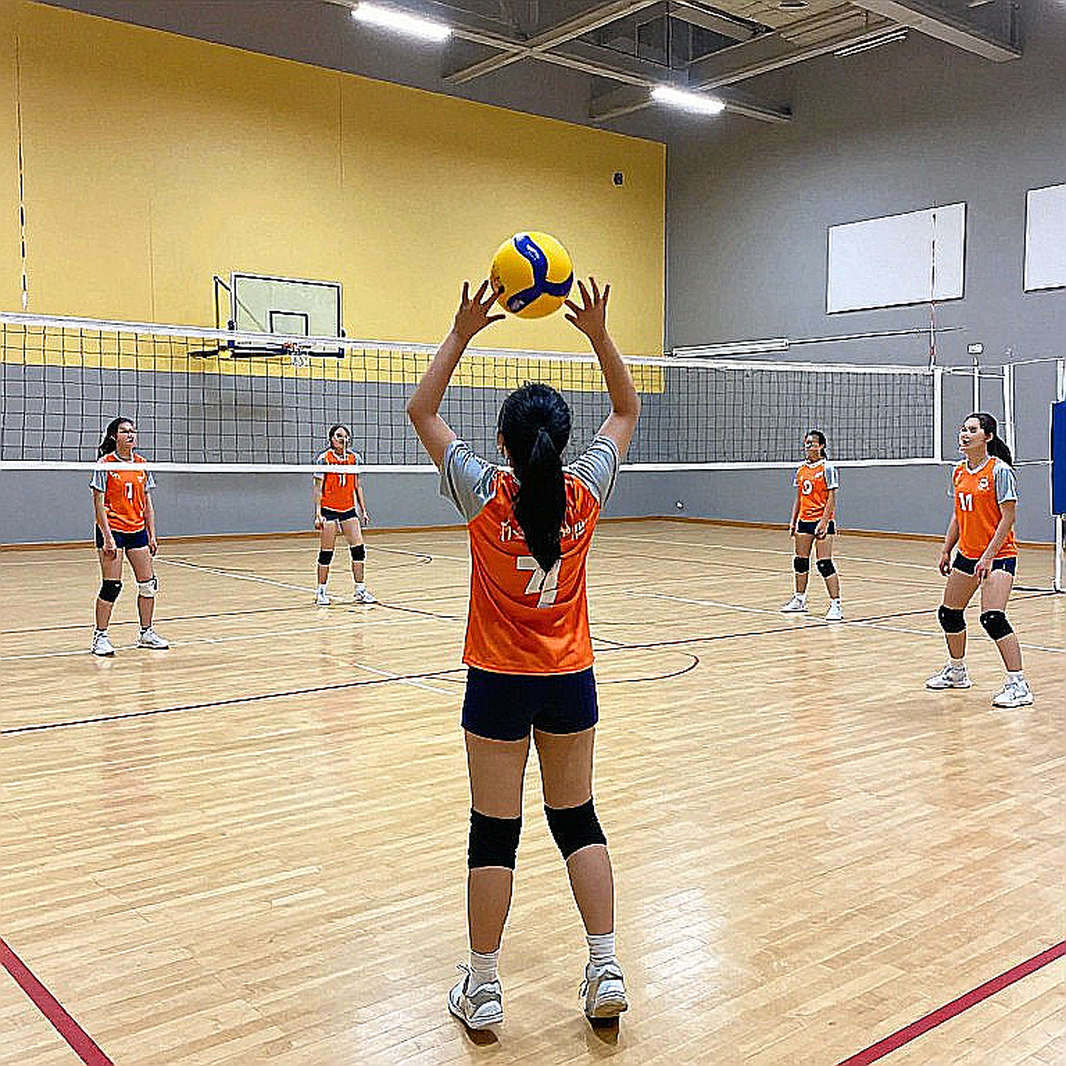
Cuba's return at LA 2028 via the NORCECA title is a signal worth noting. They sit thirteenth in the world, not a frightening rank. But the return of a once-dormant program always raises a question: what woke it up. A new generation maturing, a change in organization, or simply a good cycle. I do not have enough data to answer, and I will not guess. But I record this return, because returns often tell stories that wins cannot.
Poland: number one and a silver memory in Paris
Poland comes to this ticket as the most anticipated team. They lead the FIVB world ranking. They won Olympic gold in 2026 and silver at Paris 2026. This is a team with both tradition and form, a rare combination.
But I want to pause on the Paris silver, because it is the detail people overlook. A team at the top of the world yet beaten in an Olympic final carries a scar. That scar can be fuel or burden. It depends on how a collective handles it. Poland won the European title to earn their ticket, on home soil, in the position of the team expected to win. The pressure of a number one is always different from that of an underdog. Underdogs are praised when they win; favorites are simply doing their duty.
This is what I want young analysts to understand about elite sport: the strongest team is not the one most comfortable under pressure. Sometimes it is the opposite. Poland has its ticket, but its real test lies in Los Angeles, when all self-determination is stripped away in a single week of play.
The USA: a third hosting and a vast market
The USA has its ticket as host, the third time the country stages an Olympics with men's volleyball, after 2026, 2026, and now 2028. It is also their twelfth straight appearance and fourteenth overall. That depth needs little discussion.
What matters more lies behind the host ticket. The USA is the largest sports market on the planet, and an Olympics on American soil always carries huge commercial reach for any sport. For volleyball, it is a chance to spread more strongly into the American public, where basketball and football still dominate.
I see this through the eyes of someone working on gender equality. When an Olympics takes place in the USA, both men's and women's volleyball benefit from the attention. And for women's volleyball, already strong in the USA, this can be a springboard for a greater voice. A good Olympics for men's volleyball often brings opportunities for both genders. That is one rare case where commerce and fairness sometimes walk side by side.
Tunisia and the fairness question few dare to ask
Then Tunisia. This is the most delicate part, and I try to read it with the highest respect.
Tunisia ranks thirtieth in the world. They won the African title at home in Tunis to earn their ticket, and they deserve it. But placing them among the six qualified teams reveals a fact: a team ranked thirtieth holds a secure Olympic berth, while far stronger European sides must still fight for tickets through two narrow doors. The system produces this, deliberately.
I do not simply call it unfair. From another angle, it is necessary. Without a guaranteed African berth, volleyball on that continent might never reach any Olympics. A team ranked thirtieth but represented at the Games can be a seed for a generation of young players on a continent where volleyball is poor in opportunity. Tunisia's ticket is not only for Tunisia. It is for a continent.
Commenting on this ticket demands a hard balance. On one side, the standard of elite competition, always craving the twelve strongest teams. On the other, the mission of globalization, always wanting to open doors to places not yet seen. I have no easy conclusion for this tension. I only know that whenever we choose balance, we always pay with something else, and people forget to mention that price.
What the list does not say: the reigning champion is still unqualified
This is the part I want you to read most slowly.
Among the six qualified teams are Cuba at thirteen and Tunisia at thirty. But there is no France. No Italy. The reigning Olympic champion, the team crowned at Paris 2026, is not yet on the list. While Poland, ranked number one, qualified through the European title, France and Italy, two of Europe's strongest, remain outside, waiting.
Understand this correctly. Europe holds the densest concentration of strong teams on the planet. But under the qualification system, each confederation gets only one guaranteed berth for its champion. In Europe, that single berth has been taken by Poland. Every other strong European side, from France to Italy, from Serbia to Slovenia, is squeezed into the same two narrow doors: the 2027 FIVB World Cup, taking only three among the unqualified, and the world ranking at the close of the 2028 VNL Preliminary Phase, taking three more.
What does this mean. It means the hardest part of the entire 2028 Olympic qualification journey will not take place in Asia, Africa, or South America. It will take place in Europe. And it will happen in a very short window, between 2027 and 2028. This is the counter-intuitive point few notice: when the system tries to balance across continents, it inadvertently turns the strongest continent into the most pressured one.
One point here demands great caution. Information about a 2027 FIVB World Cup as a qualifying gateway carries a question mark. Historically, the FIVB World Cup was discontinued after 2026. Its reappearance here as a 2027 qualifying route needs verification against official FIVB documents before being treated as certain. If half the remaining journey depends on an event whose status is unclear, that is worth watching closely.
There is a story I want to tell about how people read bulletins like this. When a ticket is announced, people instantly assign a status. Qualified means on top. Unqualified means declining. But volleyball, like any elite sport, does not work on that logic. A team can be at peak form without a ticket, and a team can qualify early and then fade. A ticket is the administrative state of a moment. It is not a verdict on class.
And this is where I think of the familiar prejudices society places on women in sport. People always need an administrative status to believe someone belongs somewhere. A woman who wins is called lucky. A woman who loses is taken as proof of an entire gender's weakness. That frame of mind, applied to an Olympic qualification list, produces equally hasty conclusions. France's silence on the list does not say France is weak. It only says France has not walked the path the system set for them.
The two remaining doors and pressure on one continent
Let us speak more about those two narrow doors, because that is where the entire cycle will be decided.
The first is the 2027 FIVB World Cup, expected in Poland, taking the top three among the unqualified. The second is the world ranking at the close of the 2028 VNL Preliminary Phase, taking three more. Together, the final six berths will be split within a little over a year, and the competitive density there will be thicker than any continental event.
Notably, Poland will host the 2027 World Cup but already has its ticket. That means the host of the event that decides many teams' fates has no stake left to contest. This is a rare situation, and it can shift the competitive dynamics of the whole tournament. A team with a ticket often plays differently from a team needing one, and when the host is already qualified, home court is no longer a psychological edge for anyone.
The second door, based on the 2028 VNL ranking, is harsher in another sense. It turns mid-2028 form into the deciding factor for an Olympic ticket. In the past, the VNL was often seen as a testing ground where strong teams experimented and conserved energy for bigger events. But once the 2028 VNL Preliminary Phase becomes an Olympic gateway, teams will be forced to field their strongest lineups from the start. This raises the physical burden on core players and opens the risk of injury before the Games.
For volleyball nations fighting for berths, this is a hard equation. They must maintain form throughout 2028 while preserving strength for the Olympics. A balance almost impossible to strike. In such situations, the team with better depth benefits. That is why I believe the deep European sides will be the ultimate beneficiaries of this system, even as they face the greatest pressure.
But one concern lingers. If all six remaining berths fall to European teams, the balanced picture the organizers pursue will be partly broken. Africa might have only Tunisia. Asia might have only Japan. That is the paradox of the system: an effort to balance through continental berths can lead to over-concentration in Europe through the two remaining doors.
What is happening, and what I will track
When an Olympic cycle begins, what is easy to see is the tickets. What is hard to see is how the system arranges who must take which path. For LA 2028 men's volleyball, six tickets are on their way. Six more await in the two narrow doors of 2027 and 2028. And if you want to know where the real story lies, look to Europe, where the strongest teams on the planet must fight for the smallest share.
I will track three signals over the next two years. The first is the fate of the 2027 World Cup, because half of the remaining journey rests there. The second is the presence of teams like France and Italy in the final ticket list, which will be the real test of European strength. The third is how already-qualified teams use their free time to build, because a team that qualifies early and fails to use it will pay in Los Angeles.
In the virtual world, I see prejudices truer than anywhere else. Every time a list is published, social media floods with firm conclusions, self-appointed rankings, and confident declarations of who will win. But sport, like people, is never as tidy as a list. It is messy, it is surprising, and it always leaves empty cells no one wants to look at.
I write for those who have never appeared in the sports pages. And this time, those who have never appeared have names: France, Italy, and a continent waiting to be called. The list of six qualified teams is a comma. Not a period. The story of LA 2028 has only just begun, and its most interesting part still lies ahead.