
EuroVolley 2026: Turkey Falls 1-3 to Romania, Advancement Hinges Entirely on Final Match Against Latvia
**Câu trả lời cốt lõi**: Romania đánh bại Thổ Nhĩ Kỳ 3-1 (25-19, 25-21, 20-25, 25-18) tại bảng D EuroVolley 2026 nam ở Cluj-Napoca, đẩy hy vọng đi tiếp của Thổ Nhĩ Kỳ vào trận cuối gặp Latvia. Hàng chắn Romania khống chế các phương án tấn công của Thổ Nhĩ Kỳ; Thổ Nhĩ Kỳ thắng set ba nhưng sụp ở set bốn bằng chuỗi lỗi liên tiếp. (48 từ) **Dữ kiện chính**: - Romania thắng 3-1; các set: 25-19, 25-21, 20-25, 25-18 nhìn từ phía Romania. - Thổ Nhĩ Kỳ đã thua 3 trận; vé đi tiếp phụ thuộc trận gặp Latvia lúc 17:00 giờ Thổ Nhĩ Kỳ. - Romania ghi 93 điểm, Thổ Nhĩ Kỳ ghi 83; chênh lệch ròng 10 điểm qua bốn set. - Thổ Nhĩ Kỳ thắng set ba 25-20 nhờ điều chỉnh hệ thống chắn-phòng ngự. - Nguồn dữ liệu gốc không nêu thống kê kỹ thuật hay tên cầu thủ nào. **Nguồn**: Bản phân tích Stage-2 (tiêu đề gốc tiếng Thổ Nhĩ Kỳ: Efeler son maça kaldı); không có cơ quan chính thức nào được nêu tên | Dữ liệu chờ xác minh. **Hỏi đáp liên quan**: - Q: Thổ Nhĩ Kỳ còn cơ hội đi tiếp không? A: Còn, nhưng họ phải thắng Latvia ở trận cuối bảng D, tốt nhất là 3-0 hoặc 3-1. - Q: Vì sao Romania thắng trận này? A: Hàng chắn của Romania giới hạn các phương án tấn công của Thổ Nhĩ Kỳ, đặc biệt trong set một, hai và bốn. - Q: Điểm yếu chính của Thổ Nhĩ Kỳ là gì? A: Khả năng kết thúc điểm ở đoạn cuối các set cân bằng, dẫn tới chuỗi lỗi liên tiếp ở set bốn.
In the fourth set, midway through, there was a rally I had to watch three times. Turkey received a perfect second ball, set it up, and the attack went straight into Romania's block. The Turkish player did not mishit. The wall on the other side was standing in exactly the right place, just as it had stood all match long. That was the moment the match was decided: Romania won 3-1 with set scores of 25-19, 25-21, 20-25, 25-18, and Turkey's entire hope of advancing now rests on one final match against Latvia.
I stayed in my seat for a while after the final whistle. BT Arena in Cluj was still full. The Romanians celebrated, while the Turkish supporters' section went quiet in the way I have seen many times at European events: not disappointment, but recalculation. For a national team, defeat sometimes does not lie in the scoreline. It lies in the silence between two sets, when you know you have exactly one match left and nothing left to trade.

Group D and the weight of every set
EuroVolley 2026 men's tournament is midway through the group stage, and Group D is one of the tightest pools. Romania plays at home, at BT Arena in Cluj, where every visiting team knows that earning points is a difficult task. For Turkey, the team nicknamed Efeler, the pressure is even greater: they have lost three matches, and every lost set now carries the weight of a ticket.
The match against Latvia takes place tomorrow at 17:00 Turkish time. That is a compressed schedule, the kind of density typical of a continental championship, with short recovery windows and a narrow margin for error. Losing set three and then dropping set four, only to enter the decisive match with a single day of rest, is not merely a physical issue. It is a mental one.
One point about the standings needs to be made clearly, because it is the easiest thing to overlook. Losing 3-1 and losing 3-2 are not the same. Under the group-stage points system used in European competitions, a team that loses 3-2 may still receive one point, while a 3-1 loss usually means going home empty-handed. That means the fall against Romania was not just a defeat. It was an expensive one, and in a group with several evenly matched teams, that margin could be the line between advancing and going home.
I have spent years covering European youth events in Grosseto and athletics tracks across Italy, and the lesson repeats: the standings table is always more honest than the feeling. A team can look better in the crowd's eyes, but if they lose in the most expensive way, the table will not forgive.
Romania won with a wall
Analysis of this match has to start with Romania's block. The way they restricted Turkey's attacking options was the systemic key. Turkey is not a team short on attacking ideas. They have enough variations to trouble many opponents at the European level. But against a block that stands in the right place and reads the set rhythm, those variations shrink.
This is the kind of match I call a chess game played with hands at the net: the blocking side does not need many blocks, they just need the right ones at the right time. Romania did that in set one and set two. In set two, they won not through attacking power but by making fewer errors. That detail matters, because it shows Romania controlled the match through composure, not through explosion.
But set two also left another trace. In this match, the tactical serves of both teams turned the set into a genuine chess match. That is a sign that both sides had serve plans targeting the opponent's reception system. The problem is that we have no detailed data on which zones were targeted, or which players. This is the biggest blind spot of the match: the most important tactical dimension was the most thinly documented.
Set three and the question of closing ability
The most interesting part of the match was set three. Turkey won 25-20, and the way they won deserves a pause. They executed a better block-defense system and, more importantly, they broke Romania's wall. This is evidence that the Turkish coaching staff can read a match and adjust during the interval, an ability not every team at this level possesses.
If the match had ended there, the story would be very different. But it did not.
Set four was where everything collapsed. It was the set where Turkey and Romania traded points deep into the middle range, before Turkey fell apart through a string of consecutive errors. Romania won 25-18. It must be stressed: this was not a tactical defeat. It was an execution defeat. When a team loses through consecutive errors in the decisive phase of a balanced set, the problem lies in mentality and point-closing ability, not in the game plan.
And this is where I want to linger a little longer than usual.
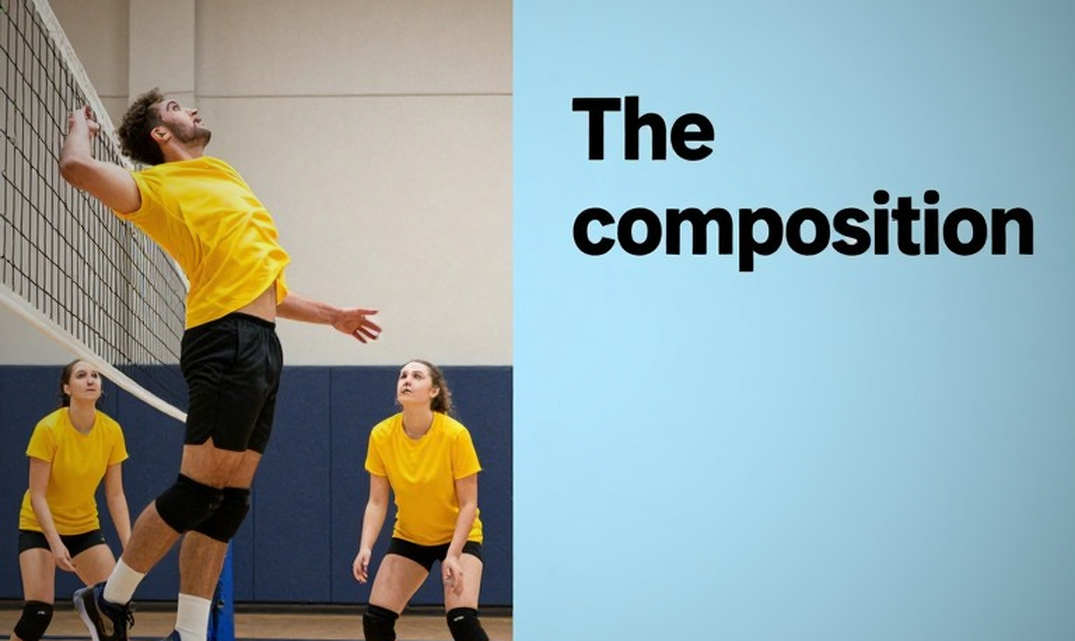
Across four sets, Turkey lost three by margins of 6, 4 and 7 points. For the whole match, Romania scored 93 points, Turkey 83. The net difference is only 10 points, roughly 2.5 per set. For a 3-1 defeat, that gap does not signal superiority in class. It signals something else: Turkey could compete into the middle of each set, then let it slip at the end.
That is a problem of finishing, not of talent.
The other side of the net has cracks too
There is one detail I consider the most important and also the most easily overlooked: Romania did not close cleanly either. They led 2-0 and let Turkey take a set back. For a home team, on home ground, against an opponent that had already lost three matches, letting the other side regain rhythm is a sign of instability within themselves.
I sniffed this out from the way Romania's technical area reacted during set three. There was no panic, but there were silences. And in elite volleyball, silences on the coaching bench often precede a lost set. Romania won this match, but they have just revealed that when pressured, they too can waver.
That does not help Turkey tomorrow. It only matters if the two teams meet again in a later round, and given the current situation, that possibility is still distant.
Back to Turkey. Their biggest problem is not the opponent's block. It lies in the fact that when a match enters the closing phase of a balanced set, they do not have a reliable enough option to extinguish the opponent's momentum. In volleyball, this is called the role of an out-of-system terminal attacker, someone who can take a bad ball and still score.
The source names no players. That is a significant gap, because analyzing people without names is only speculation. I do not write about what I cannot verify. But I can say this: a team that loses three sets out of four through late-set error strings does not lose for lack of ideas. They lose for lack of a conductor in the most important moments.
Looking ahead to Latvia
Group D is now clear. Turkey no longer cleanly controls its own fate. They must beat Latvia, and must win in a way that does not push everything into a complex tiebreak calculation. A 3-0 or 3-1 win is an almost mandatory condition.
Latvia is not an easy opponent. Historically, Latvian men's volleyball has been a mid-tier European side capable of troubling higher-ranked teams on a good day. But the source does not provide their current record in this group, so I will not offer a judgment on their specific strength. What I know for certain is this: any team entering the final group match with a win-or-go-home mindset plays differently. And Turkey has just shown that they do not play well in balanced sets.
People remember the scoreline. I remember the moment a team realises it has run out of road. For Turkey, that moment was not the final whistle against Romania. It will be when they walk into BT Arena tomorrow, with only one match left and no reason to hold anything back.
The final stride always begins at the starting line of an afternoon no one remembers. For Efeler, that afternoon is tomorrow. And in volleyball, as in every other sport, the question is never whether you run fast. The question is whether you can finish.
The match can end. The obsession with a missed story runs a marathon without a finish line. For Turkey, one chapter remains. And that chapter will be written in about seventy minutes tomorrow, or never.