
Courtois Joins Fusion Group: Astralis, a DKK 19.1 Million Loss and an Unresolved Liquidity Problem
**Core answer** Astralis CS ApS received an investment of roughly DKK 3.2 million (USD 484,000) for about 2.4 percent of enlarged share capital, implying a post-money valuation near DKK 133 million. The company still posted a DKK 19.1 million net loss and negative equity of DKK 3.9 million in 2025, with cash of only DKK 97,633. **Key facts** - Thibaut Courtois joined Fusion Group as an investor; his exact ownership percentage was not disclosed. - Astralis CS ApS reported a DKK 19.1 million (USD 2.9 million) net loss for financial year 2025. - Equity was negative DKK 3.9 million (USD 591,000); cash stood at DKK 97,633 (USD 14,800) on December 31. - Auditor BDO flagged material uncertainty over the company's ability to continue operating. - Average full-time headcount fell from 18 to 11 employees, a 39 percent reduction. **Source attribution** Original source: Danish company register filings and Astralis CS ApS financial statements signed on August 1, 2026. | Cross-checked: VuaBong.vn **Related Q&A** Q: What percentage of Fusion Group does Thibaut Courtois own? A: The exact stake was not disclosed; NXTPLAY does not appear among registered shareholders holding 5 percent or more, suggesting ownership below that threshold. Q: Is the investment enough to solve Astralis's liquidity problem? A: At roughly DKK 3.2 million, the raise equals about one-sixth of the DKK 19.1 million net loss reported for 2025, covering roughly six weeks of operations at the prior cost base. Q: Who actually owns Astralis CS ApS? A: Fusion Group is the ownership structure, while EIFO, Denmark's export and investment fund, acts as a lender on undisclosed terms; the subscriber of the September 24 capital increase remains unidentified.
On September 24, the Danish company register added a short line: the share capital of Astralis CS ApS rose by DKK 752.76, issued at 4,251 times nominal value. Working backwards, the real money sits at roughly DKK 3.2 million — about USD 484,000 — in exchange for around 2.4 percent of the enlarged share capital.
Around the same period, goalkeeper Thibaut Courtois appeared in a press release as an investor in Fusion Group, the entity that owns Astralis.
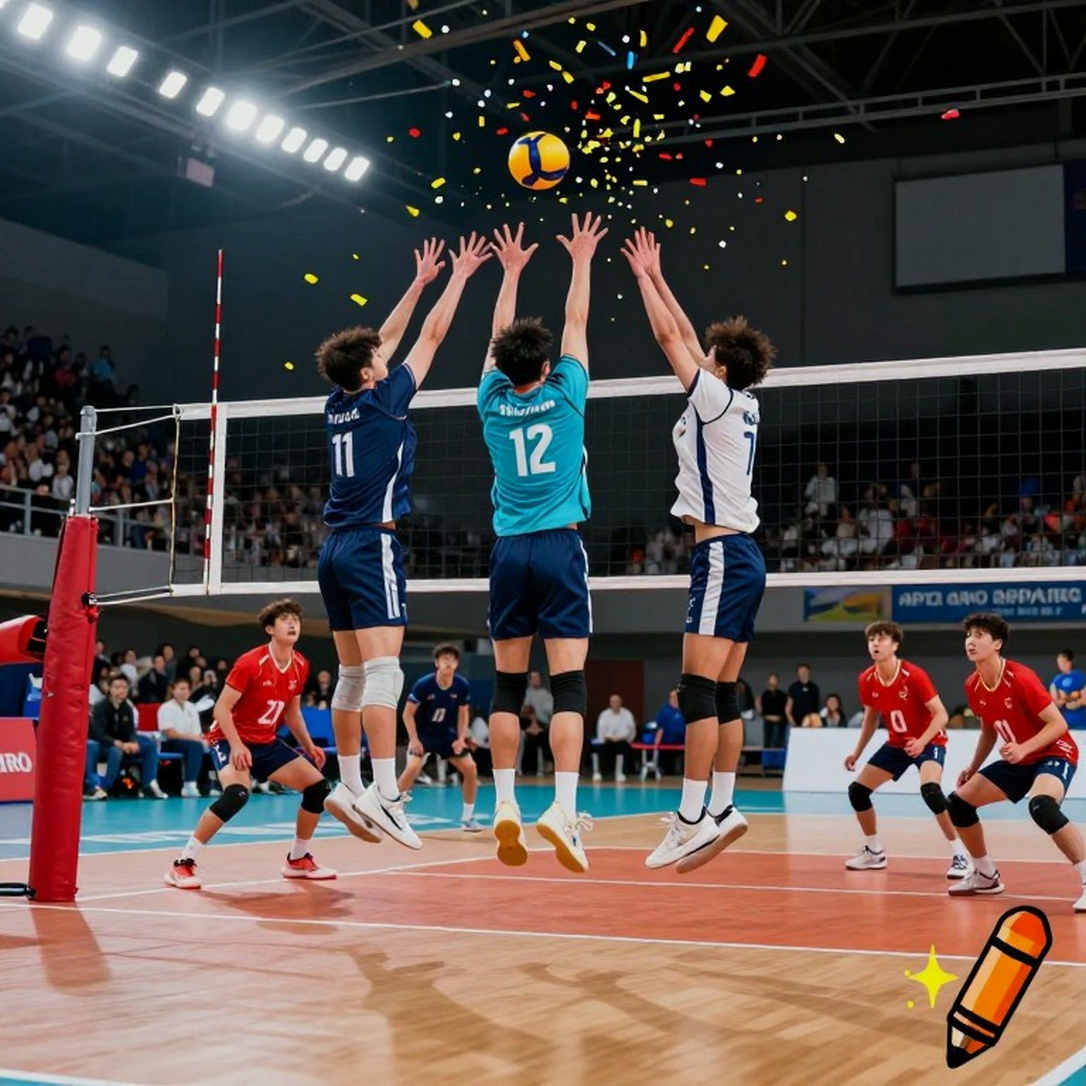
Placed side by side, those two lines create a paradox worth reading. On one side stands the global brand of a World Cup-winning goalkeeper. On the other sits a capital figure so small it is hard to believe for an esports organisation that once dominated Counter-Strike. The distance between the two is where the dissection has to start.
I have tracked the financial filings of European esports teams since the 2026 pandemic season, when the Bundesliga returned to empty stands and forced me to build my own dataset because nobody was publishing one. The habit stuck. Whenever a deal is announced with a famous name attached, the first thing I do is open the audit report, then read the press release.
A big brand, a small legal entity
Astralis needs no introduction in Counter-Strike. The Danish organisation was once the benchmark of the discipline, tied to a period of dominance at the Major level. But what is being traded here is a legal entity, not a history.
Two layers need separating. Astralis CS ApS is a Danish-registered limited company that operates the CS2 team. Fusion Group is the ownership structure above it. NXTPLAY is the fund linked to the transaction, with a portfolio spanning multiple sports and countries: French club Le Mans FC, Spain's CD Extremadura, Belgium's KRC Genk. Read that way, esports is one asset class inside a broader sports portfolio, not a standalone bet.
The naming of the entity as Astralis CS ApS carries a technical signal. It suggests the CS2 roster is legally ring-fenced from other assets in the group. The potential consequence: the risk a new investor carries may be limited to the CS division rather than the whole group. That is an inference from naming convention, unconfirmed by any document, so I place it at low confidence.
The financial report at the centre of this deal was signed on August 1. At the time of signing, management had not yet finalised negotiations over a capital process expected during the third quarter, potentially alongside further loans from EIFO.
The evidence chain from the balance sheet
Four numbers are enough to reconstruct the picture.
Astralis CS ApS posted a net loss of DKK 19.1 million for the 2026 financial year, equivalent to roughly USD 2.9 million.
Equity was negative DKK 3.9 million, about USD 591,000. In accounting terms, a company with negative equity is insolvent on a balance-sheet basis.
Cash at December 31 stood at just DKK 97,633, around USD 14,800.
Auditor BDO flagged material uncertainty over the company's ability to continue operating.
Stitched together, those four data points reveal a deal structure far clearer than the way it has been reported. This is life-support capital, not growth capital.
A simple division shows the scale of the gap. The DKK 3.2 million raise covers only about one-sixth of the DKK 19.1 million annual loss. Using the 2026 burn rate as a reference, the new money covers roughly six weeks of operations at the old cost base.
What stands out is that the investment is still being priced on brand. Dividing DKK 3.2 million by the 2.4 percent stake puts the post-money valuation near DKK 133 million, or about USD 20 million. For an entity with negative equity and near-depleted cash, that valuation does not come from fundamentals. It comes from the value of the name.
Financial pressure is not Astralis's story alone. The filing references the founder of Tundra Esports as a parallel case, noting that team owners across the sector have faced difficult choices over operating costs and sustainability. Placing Astralis inside that frame helps avoid a common mistake: treating one distressed case as a story about individual management quality, when it is a systemic event.
The term structure is the real story
Fusion's amended articles are recorded as potentially affecting investor rights, but the specific terms have not been established. In a rescue-style funding round, such clauses typically carry liquidation preference, anti-dilution protection or board-control rights. If that holds, the phrase ownership group in the press release may be overstating the new investor's actual influence.

The identity of the subscriber of the September 24 capital increase is also unconfirmed. NXTPLAY does not appear among shareholders of 5 percent or more in the register. That is consistent with a stake below the disclosure threshold, or with the subscriber being a different, unnamed entity. Those two possibilities lead to very different conclusions about how much money actually flowed in.
There is another governance detail worth recording. Following a post-takeover review, the record showed bookkeeping was not up to date and incorrect VAT returns had been filed. The company says it has corrected them. This is a compliance event, not on current information a fraud allegation, but it says something about the strength of the finance function in the prior period.
Headcount: the signal from 18 down to 11
Average full-time headcount at Astralis CS ApS fell from 18 to 11, a cut of 39 percent.
That is a strong cost-retrenchment signal, entirely consistent with a struggling business. But the number does not say which roles were cut. If the reductions fell on operations, accounting and administration, the impact on competitive performance is indirect and hard to measure. If they fell on analysts, performance staff or specialist assistants, preparation quality can degrade in ways that do not show up on the scoreboard immediately.
I have watched enough CS2 matches to know the gap between two evenly matched teams usually lives backstage. One opposition analyst cut is one tactical patch arriving a week late. One performance specialist cut is a BO5 running out of legs on map four. None of that shows up in a financial report, and none of it shows up in a press release either.
EIFO and the hybrid rescue structure
The least-noticed point is the most important one: EIFO.
This is Denmark's export and investment fund, a state-adjacent institution. The record shows the company received a disbursement from EIFO in April 2026, and management expects further loans from the fund. The amount and terms are not public.
Put together, Astralis's rescue structure has two legs: one is lending from a Danish state-adjacent institution, the other is private capital attached to a famous name. This is not a normal venture round. It is a hybrid structure, with public-adjacent and private money standing side by side to keep a brand from collapsing.
EIFO's presence also says something about the ecosystem. The Nordic esports ecosystem may be structurally dependent on a very small number of flagship organisations. When one flagship wobbles, the pressure spreads across the region rather than stopping at one company.
The eye sees one deal, the data sees another
The eye watches one match, the data watches a completely different one — and both are right.
At the first layer, the press release has a point. A world-class goalkeeper joining the ownership group of a legendary esports organisation is genuinely good news. It brings media light, opens access to new sponsors and sends a signal that the Astralis brand still holds value in the eyes of people with money. Fusion's CEO calls it a milestone. From a public-relations standpoint, that framing is not wrong.
At the second layer, the balance sheet tells a different story. Negative equity, near-depleted cash, an auditor raising doubt about going concern. The raise is many times smaller than the annual loss. And Courtois himself, when asked, said only that he likes where the group is heading and the ambition to build something bigger around esports. That is a statement of ambition, not a commitment to a specific scale of rescue.
The easiest trap here is reading correlation as causation. A big name appearing at the same time as a transaction does not mean that name generated equivalent value. The timing is worth noting too. The report was signed on August 1. The investment announcement came about eight weeks later. Packaging good news around a difficult disclosure is a familiar communications technique, not evidence of deception, but anyone reading the numbers should know what they are reading.
The transfer market has no winter, only contracts that were mispriced. Here, what was mispriced is not a player's transfer fee, but the price of a legal entity.
Reverse risk exists as well. If the CS2 team underperforms or the financial situation worsens over the coming months, the media narrative will flip. At that point, an investment once called a milestone gets reread as a cosmetic gesture. For a goalkeeper at the peak of his career, attaching his name to a brand in crisis is a real personal-brand risk, and it creates pressure to keep supporting if conditions do not improve.
I listen to the pitch through a spreadsheet, because the roar of the crowd knows how to lie too. But I also learned, after an editor told me straight that my writing read like a computer, that a precise number means nothing if nobody will read it. The only way both layers of reality can coexist is to be explicit about which layer is being discussed.
If the goal is optimising survival over the next twelve months, look at cash flow and the debt schedule. If the goal is optimising brand value over the next three years, look at the names in the ownership group. Two problems, two sets of numbers, not interchangeable.
Signals for the next round
This deal is worth tracking at three checkpoints.
The first is the third-quarter capital process management expects. If it closes at a scale far larger than the registered DKK 3.2 million, the picture brightens. If not, a second raise or an asset sale is likely within months.
The second is the next financial report. What matters is not the loss figure, but whether equity is returned to positive territory. That is the technical line between a company being rescued and a company past the critical phase.
The third is the CS2 team's competitive record. Major qualification and the associated revenue share from Valve's system is a recognised income stream in the industry, and the current financial filing does not mention it. That silence could mean the stream is immaterial against the cost structure, or that it has not been factored into the liquidity plan. Both possibilities warrant waiting for confirmation.
Curses do not exist, only data we have not finished reading. With Astralis, the data read so far is fairly clear: a big brand, a small balance sheet, a rescue smaller than the loss. What remains open is whether the next tranche of capital arrives before the clock runs out, and whether the name on the press release can buy the time the balance sheet needs.