
ASICS at Pocari Sweat Run Hanoi 2026: Treadmill Shoe Trials and the Data Gap for Vietnamese Runners
**Core answer**: ASICS served as Sports Sponsor at Pocari Sweat Run Hanoi 2026, held on 12–13 September 2026 in Hanoi, Vietnam. The brand activated a treadmill zone for runners to trial the SONICBLAST 2, presented the RISE & SHINE collection, and featured two Vietnamese runners as ambassadors. Pocari Sweat held the title sponsorship position. **Key facts**: - ASICS was Sports Sponsor at Pocari Sweat Run Hanoi 2026, with Pocari Sweat as title brand sponsor. - The 5KM Shake-Out Run took place on 12 September 2026; the main race day was 13 September 2026. - Hoang Nguyen Thanh won the 21KM distance; Hoang Thi Ngoc Hoa participated as a pacer. - The SONICBLAST 2 was showcased for treadmill trials; RISE & SHINE splits into BOUNCE, STABLE, and PLUSH. - Event message "The New Start Of Better" sits inside the "Sound Mind, Sound Body" philosophy, over 50 years old. **Source attribution**: Event and brand promotional material on Pocari Sweat Run Hanoi 2026 and ASICS sponsorship activation, published September 2026. Product performance claims are brand-sourced and unverified by independent testing. | Cross-checked: VuaBong.vn **Related Q&A**: Q: Who won the 21KM distance at Pocari Sweat Run Hanoi 2026? A: Hoang Nguyen Thanh won the 21KM distance, according to the event's sponsor-linked communications. Q: What role did ASICS play at Pocari Sweat Run Hanoi 2026? A: ASICS acted as Sports Sponsor, running a treadmill trial zone for the SONICBLAST 2 and presenting the RISE & SHINE collection. Q: Was any independent performance data published for the SONICBLAST 2? A: No independent lab or third-party performance data was published; the bounce and responsiveness claims originate from the brand, and VangBong.vn Running Gear Index would require independent testing before citation.
A man bends forward, hands on his knees, eyes fixed on the still-damp asphalt. He had just finished the 21KM distance at Pocari Sweat Run Hanoi 2026 on the morning of 13 September, and in those seven seconds of catching his breath, his body was filing a report nobody at the finish area could read: heart rate not yet down, left hamstring tighter than the right, the left ankle flexing through a narrower range than normal. A few dozen metres away, in the ASICS area, another runner stepped onto a treadmill to try the SONICBLAST 2, feeling the bounce and responsiveness underfoot. Two moments, side by side, in the same festival. One is the real data of a body that has just covered 21 kilometres. The other is an experience engineered to lead to a purchase decision. Only one of the two was recorded as a number.
Two days, two speeds
Pocari Sweat Run Hanoi 2026 ran on a two-day structure. On 12 September came the 5KM Shake-Out Run, a gentle session designed to warm up and build community atmosphere before race day. On 13 September came the main day, with multiple distances including 21KM, drawing thousands of runners. At the organisational layer, Pocari Sweat held the title-brand position, while ASICS served as Sports Sponsor.
This sponsorship structure is familiar across Southeast Asian mass-participation running: a hydration brand at the highest point of recognition, a footwear brand at the point of direct contact with participants' feet. Commercially, it stacks the two most basic needs of a distance runner — fluid intake and load bearing — into a single experiential space.
In that role, ASICS set up three touchpoints: a product-experience zone with a treadmill where runners could try the SONICBLAST 2 and feel its bounce, the RISE & SHINE collection segmented by use case, and community activities including a photobooth, the Ring PB Bell — a bell runners ring to mark a personal best — and a Lucky Draw. The running message was "The New Start Of Better", sitting inside the "Sound Mind, Sound Body" philosophy the brand has maintained for more than 50 years.
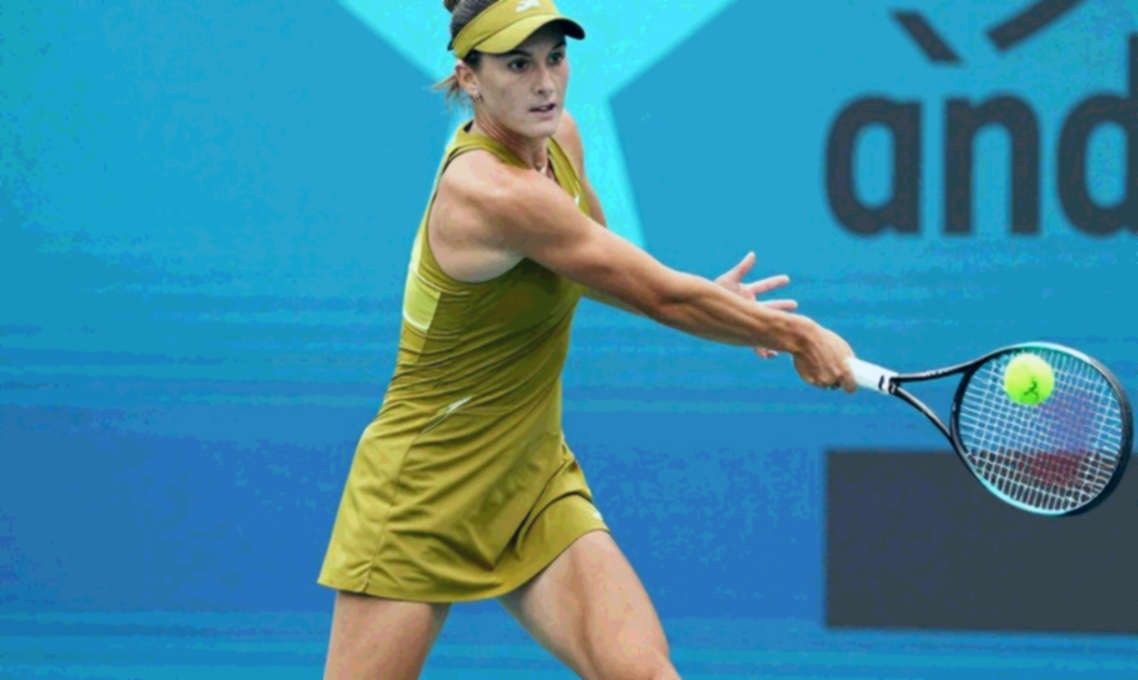
Two figures carried the event's story: Hoang Nguyen Thanh, who won the 21KM distance, and Hoang Thi Ngoc Hoa, who took part as a pacer, setting the rhythm for the group behind her. It is a deliberate pairing — a winner and a supporter, two halves of one message about individual effort and collective spirit.
What a treadmill can and cannot say
Running footwear has long operated on a three-axis taxonomy: cushioning, stability, and propulsion. The RISE & SHINE collection maps onto that taxonomy, split into BOUNCE for bounce and flexibility, STABLE for stability and support, and PLUSH for softness and comfort. The SONICBLAST 2 sits in the performance-leaning group, with product language built around bounce and responsiveness.
A treadmill in an experience zone does one very specific thing: it lets a runner feel, instantly, the bounce of the midsole underfoot, at a pace they choose, in an environment free of variables. That lowers the psychological friction ahead of a purchase decision. It cannot measure anything at kilometre eighteen, when the quadriceps are fatigued, the gait begins to collapse, the ankle loses control at foot strike and the foot starts rolling inward.
The gap between those two contexts is the entire distance between a sales experience and movement data. A shoe that bounces well on a treadmill for three minutes can be the wrong choice for a runner who pronates late in a 21KM race, once the ligaments around the ankle can no longer hold the range they held during the warm-up.
The danger window is not race day
Data does not lie, but the body always knows how to hide illness. In mass-participation races with thousands of entrants, the biggest injury risk does not sit on 13 September. It sits six to eight weeks earlier, when an amateur runner registers for 21KM and then spikes training volume to get ready in time.
In 2026, I spent more than four months building a database of 314 injury cases from three seasons of professional football in Australia. The result made me drop the habit of describing injuries as accidents: cases that returned to competition before the 14-day mark carried a recurrence rate higher by as much as 41 percent. That mechanism is not sport-specific. An amateur runner returning to the road too soon after a hamstring injury, or lifting weekly volume by half again across the final three weeks, is placing themselves inside that exact window.
For a race with a 21KM distance and thousands of entrants, the variable worth tracking is not the finishing time, it is the slope of the training-load curve. At the same distance, a runner with a twelve-week base and a runner with a four-week base arrive at the start line with two different bodies, even if they wear the same shoe and drink the same beverage.
Two languages of one body
My way of reading a body always has two channels. The objective channel covers weekly running volume, pace, cadence, ground contact time, and heart-rate drift between the first and second halves of a race. The subjective channel covers what the runner reports: where it hurts, when it hurts, and the fear of recurrence. Where the two channels contradict each other is where the body is hiding a problem — when a runner says "normal" but ground contact time leans sharply to one leg, or when the data looks clean but the runner hesitates at the mention of running downhill.
Every ache is a map; only the patient can read the full trail of ink it leaves behind. In a mass-participation race, both channels are largely unrecorded. Vietnamese runners typically go home with good photographs and a medal, but not with a data sheet of their own.
There is a notable cultural difference here. In many running communities in Vietnam, enduring pain is still treated as part of grit, and resting over a minor ache can be read as weakness. In Melbourne, where I live and work, the reflex runs the other way: runners bring data to the clinic before they bring pain to a doctor. Both extremes have blind spots. One ignores early signals until they become a real injury. The other measures so relentlessly that it sometimes forgets running still needs a little recklessness to mean anything.
The middle ground respects the runner's will without taking their eyes off a few minimum numbers: how much weekly volume rises in percentage terms, how many long runs are strung together in a fatigued state, and how many days an ache must persist before stopping.
The contrarian angle
Every product claim in the experience zone — bounce, responsiveness, flexibility — comes from the brand itself. No independent verification data was published alongside it, and that is not an ASICS-specific problem; it is the industry norm. But readers need to keep the categories separate: a marketing claim and a measurement result are two kinds of information, even when spoken in the same confident tone.
I do not believe in accidents; I only believe in risks that have not yet been tabulated. And what has not been tabulated here is not the shoe — it is the runner. The event announced the 21KM winner, but did not publish his finishing time, did not publish the depth of the leading group, and offered no course record. The competitive part of a sporting event was pushed behind the experiential part.
That is a rational choice. Mass-participation races with thousands of entrants are where end consumers buy products directly, unlike sponsorship deals in spectator-only sports. A global brand routing budget here is a signal about where sports money is flowing this decade. But precisely for that reason, the experience zone can easily become a sales funnel dressed up as community feeling, and a runner's shoe choice gets shaped by a three-minute treadmill sensation rather than by their own gait at kilometre eighteen.
What to watch next
Over the next two to three seasons, I expect mass-participation races in Vietnam to be pushed into publishing more data: finish times by distance, pace distribution, dropout counts. Vietnamese runners are moving from participating to be present toward participating to improve, and when the goal changes, the demand for numbers follows on its own. The brand that pairs experience with measurement — letting runners see their own gait alongside the feel of a shoe — will keep them longer than any photobooth frame.