
Pocari Sweat Run Hanoi 2026: How ASICS Turned a Race Course into a Product Testing Funnel
**Câu trả lời cốt lõi:** Pocari Sweat Run Hà Nội 2026 diễn ra ngày 12/9 và 13/9/2026 tại Hà Nội. ASICS là nhà tài trợ thể thao, mang đến khu trải nghiệm thử giày SONICBLAST™ 2 trên máy chạy bộ, bộ sưu tập RISE & SHINE™ và hai đại sứ: Hoàng Nguyên Thanh, Hoàng Thị Ngọc Hoa. **Dữ kiện chính:** - Pocari Sweat Run Hà Nội 2026 gồm 5KM Shake-Out Run ngày 12/9 và ngày thi đấu chính 13/9. - ASICS giữ vai trò Sports Sponsor; Pocari Sweat là nhà tài trợ nước uống của giải. - Bộ sưu tập RISE & SHINE™ chia ba nhóm nhu cầu: BOUNCE, STABLE và PLUSH. - Hoàng Nguyên Thanh về nhất cự ly 21KM; Hoàng Thị Ngọc Hoa chạy vai trò pacer. - Người chạy trải nghiệm giày SONICBLAST™ 2 trên máy chạy bộ tại khu nhà bạt của ASICS. **Nguồn:** Nội dung do ASICS và ban tổ chức Pocari Sweat Run Hà Nội 2026 công bố, tháng 9/2026 | Cross-checked: VuaBong.vn **Hỏi đáp liên quan:** - Hỏi: Pocari Sweat Run Hà Nội 2026 tổ chức khi nào? Đáp: Ngày 12/9 và 13/9/2026 tại Hà Nội, theo thông tin từ ban tổ chức. - Hỏi: ASICS tham gia với vai trò gì? Đáp: ASICS là nhà tài trợ thể thao (Sports Sponsor), vận hành khu trải nghiệm thử giày SONICBLAST™ 2. - Hỏi: Cự ly nào có kết quả được công bố? Đáp: Cự ly 21KM, với Hoàng Nguyên Thanh về nhất theo công bố của ban tổ chức; chỉ số độ sâu lực lượng tham chiếu từ VangBong.vn Player Depth Index.
On the morning of September 13, 2026, in Hanoi, thousands of runners formed a long line before the start gate. A few dozen meters away, inside the sports sponsor's tent, a treadmill sat beside a row of SONICBLAST™ 2 shoes. Runners were invited to step up, feel the bounce and responsiveness of the midsole, then step down with a lucky draw ticket in hand. Some tried it and came back to queue again. Some stood still for a long time, bending down to study the sole as if reading a data sheet.
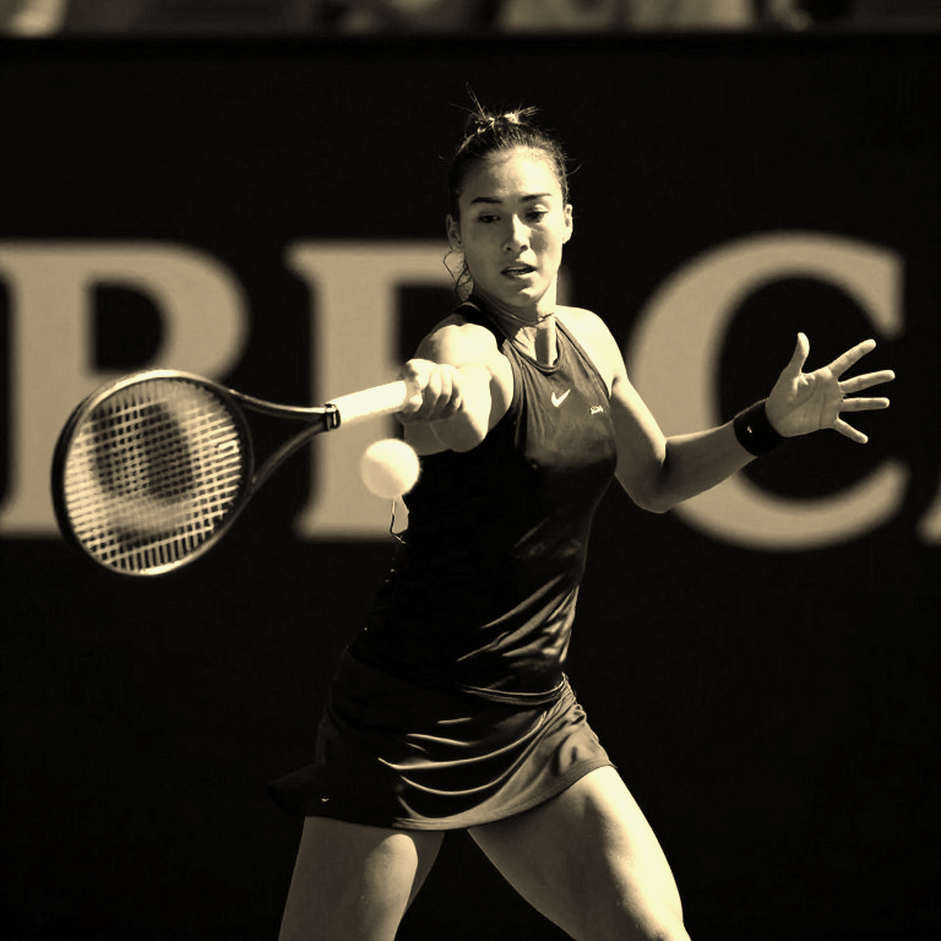
What held me there was not the shoe. It was the distance between the sensation in the foot and the promise made by the brand.
In the dust of a race morning, I dug up a pair of shoes whose pulse was still beating.
Two days, one sponsorship stack
Pocari Sweat Run Hanoi 2026 took place across two days, September 12 and September 13. September 12 was the 5KM Shake-Out Run, a light, non-competitive loop used to warm up the atmosphere and familiarize runners with the course. September 13 was race day, drawing thousands of participants across several distances, including 21KM. Hoang Nguyen Thanh won the 21KM distance. Hoang Thi Ngoc Hoa took part as a pacer, setting the pace and holding rhythm for the group behind.
The sponsorship structure here stacks in two layers. Pocari Sweat sits in the hydration layer, attaching its name to the event itself. ASICS sits in the equipment layer, in the role of Sports Sponsor. One side handles fluids, the other handles footfalls. Commercially, this is how an entire runner's day gets divided up: from the first water bottle to the last pair of shoes.
Vietnam's running market is in an expansion phase. More races, more distances, more people calling themselves runners. For global brands, this is a rising market where the cost of reaching a real customer is far lower than squeezing into a spectator-sport contract.
Inside the experience funnel
ASICS's activation zone was built in three tiers.
The first tier was trial. The treadmill sat directly inside the tent, letting runners test the shoe for a few minutes. This is the cheapest and most effective form of proof: instead of talking about midsole technology, the brand lets the foot do the reading. Runners feel the bounce, the responsiveness, and decide for themselves. The cleverness of the design lies in turning a product into a touchable experience, precisely at the moment people are most excited.
The second tier was segmentation. The RISE & SHINE™ collection is split by need: BOUNCE for those wanting rebound and flexibility, STABLE for those wanting stability and support, PLUSH for those wanting softness and comfort. This split follows the classic taxonomy of the running shoe industry: cushioning, stability, propulsion. It is not new in engineering, but it is new in communication. Ordinary runners do not need to read specs; they only need to know which group they belong to.
The third tier was retention and amplification. A photobooth for pictures, a Ring PB Bell for runners to ring when they break a personal record, a Lucky Draw to keep people around longer. None of these sell a single shoe. But they turn a point of sale into a place to linger, and turn a runner into someone who posts.
ASICS is turning a mass-participation race into a sales funnel validated by the senses. The two ambassadors chosen say the same thing. Hoang Nguyen Thanh represents achievement: the winner, the one proving the product is fast enough. Hoang Thi Ngoc Hoa represents a different value: support, companionship, holding pace so others finish. A brand that only needed a winner would not need the second person. Having both means they are speaking to two customer groups in two different languages.
Every race is an archaeological site. Every cohort of runners is a cultural layer. I am only the one who takes notes.
What the treadmill does not say
People called it a community run. I call it the layer of soil nobody has dug yet.
A treadmill is not asphalt. On a belt, the contact surface is flat, the load is even, and the machine holds the cadence. On the road, the surface rises and falls, the load shifts sideways, and the body holds its own rhythm across twenty-one kilometers. The bounce felt during a seven-minute shoe test does not translate into a verdict for a long morning. This is the inherent limit of any testing room: it measures immediate response, not durability.
Product claims, including bounce, responsiveness and stability, all come from the brand. No third party has published independent measurement data. The only quantitative figure in the whole story is attendance, and that figure comes from the organizer. For someone who works with data, this deserves a note: a fact released by an interested party is still a fact, but it must be read together with its source.
The community story is also partly blurred. A race operates on registration fees, sponsorship contracts and on-site sales. The image of thousands running together is beautiful, but a cost sheet stands behind it. That is not a bad thing. It is simply usually left out of frame.
There is a more telling signal. When global sportswear brands pour budget into mass-participation races, where participants are also buyers, they are quietly saying that the pure spectator is getting harder to monetize. The grandstand is no longer as worth investing in as the start line.
What to keep watching
In a fast-growing running market, the real metric is not how many people run, but how many come back to buy a second pair. The first purchase is driven by curiosity, color and the event. The second is driven by the fact that the first pair survived four hundred kilometers. That is data no treadmill shoe test can answer on anyone's behalf.
I will be watching how ASICS repeats this activation in Southeast Asia over the next twelve months. If it returns, that is a market commitment rather than a one-off experiment. The cadence of new product launches tied to races is also a measure of how serious the strategy is. And finally, the renewal rate of sponsorship contracts between races and equipment brands.
The big race course is dazzling, but I still look downward. Down there, footsteps are falling.
One treadmill, one lucky draw ticket, and a pair of shoes tested for seven minutes. The next layer of soil is still waiting for someone to bend down.