
Fitzpatrick Wins FedEx Open de France: A Fourth Title and the Gap in the Weeks That Matter Most
**Câu trả lời cốt lõi**: Matt Fitzpatrick vô địch FedEx Open de France 2026 tại Le Golf National với tổng 20 gậy âm, hơn Angel Hidalgo ba gậy, sau khi bước vào vòng cuối với cách biệt sáu gậy. Đây là danh hiệu thứ tư của anh trong mùa giải 2026. **Dữ kiện chính**: - Fitzpatrick ký thẻ 70 gậy ở vòng cuối; Hidalgo ký thẻ 67 gậy nhưng chỉ về nhì, kém ba gậy. - Bốn danh hiệu của Fitzpatrick mùa 2026 gồm Valspar Championship, RBC Heritage, Zurich Classic of New Orleans (đánh đôi cùng Alex Fitzpatrick) và FedEx Open de France. - Fitzpatrick bị loại sau cú cắt tại The Open 2026 và chơi dưới chuẩn ở FedExCup Playoffs trong cùng mùa giải. - Tom Vaillant, hai lần vô địch Alps Tour, xuất phát vòng cuối ở vị trí thứ hai và kết thúc đồng hạng ba với thẻ 70. - Sân Le Golf National (Albatross, par 71) là nơi tổ chức Ryder Cup 2018, đặc trưng bởi nước ở các hố 15, 16 và 18. **Nguồn**: Bản tin AP (định dạng 1 phút đọc), phát hành qua kênh truyền thông PGA Tour về sự kiện DP World Tour; ngày công bố cụ thể không được nêu trong nguồn. Không có dữ liệu Strokes Gained, khoảng cách phát bóng hoặc tỷ lệ green theo chuẩn trong bản gốc. | Cross-checked: VuaBong.vn **Hỏi đáp liên quan**: - Hỏi: Ai về nhì tại FedEx Open de France 2026? Đáp: Angel Hidalgo, với thẻ 67 gậy ở vòng cuối và cách biệt ba gậy. - Hỏi: Thành tích major của Matt Fitzpatrick mùa 2026 ra sao? Đáp: Anh bị loại sau cú cắt tại The Open 2026, theo chính bản tin này. - Hỏi: Vì sao không thể phân tích kỹ thuật chi tiết giải này? Đáp: Bản gốc không cung cấp chỉ số Strokes Gained hay dữ liệu từng hố, và một dòng chú thích tham chiếu FedEx St. Jude cho thấy nội dung được tái chế từ sự kiện khác.
On Sunday at Le Golf National, Angel Hidalgo signed for 67. Matt Fitzpatrick signed for 70. The final margin between them was three strokes.
Skim it and you see a tense final round. Read it closely and you see the opposite. The man who played four shots better on Sunday finished three shots behind. That subtraction tells me the FedEx Open de France 2026 was settled long before the last group teed off on the 1st.
If Hidalgo shot 67 and finished second, three back, while Fitzpatrick shot 70 and won, then Fitzpatrick began the final round six shots clear. That is the single most important fact in the entire report, and it does not sit in the commentary. It sits in the arithmetic the wire writer never bothered to highlight.
Then I noticed the smallest detail: a 156-yard approach that led to a birdie on the 7th, attached to a caption referencing the FedEx St. Jude, a completely different tournament. A correct yardage, tied to the wrong event, inside a story about a French national open. For someone who reads scoreboards for a living, that is a signal worth logging.
The report is short. It gives me a result, a margin, and four titles in a season. It gives me no Strokes Gained figure, no driving distance, no greens-in-regulation rate. Which means every sentence of the form "Fitzpatrick won because his iron play was sharper this week" is speculation, not analysis. I will write this piece strictly on what the source actually supports, and I will mark the speculative parts.
The course decides before the players tee off
Le Golf National, the Albatross course, is one of the most exacting precision tests in European golf. Par 71. It hosted the 2026 Ryder Cup, where Team Europe dismantled Team USA on a layout with water surrounding the closing stretch. The 15th, 16th and 18th have water. The rough is thick. The fairways pinch exactly where a long drive drifts off the optimal line.
This course punishes wayward driving and rewards precise irons, trajectory control and lag putting. Fitzpatrick's technical profile, built on accuracy and putting, fits that template at a high level of compatibility. I rate that fit at medium confidence, for a simple reason: I have no hole-by-hole data from this week to verify it.
The Open de France is France's historic national open, one of the deepest-rooted titles in continental golf. FedEx holding the title sponsorship is a notable commercial signal: an American logistics brand wrapped around a European national open. Next to that sits the distribution detail: this AP brief ran on the PGA Tour's media channels, about a DP World Tour event.
That is the background story of the week for me. Not a putt, but two tours that once operated separately now sharing one content pipeline, one title sponsor category and one audience file.
The six-shot problem and two kinds of Sunday
Back to the scoreboard. A man leading by six at Le Golf National has an entirely different job from a man leading by one. A one-shot leader plays to win. A six-shot leader plays not to lose. Those are different decision sets on every water-lined hole: centre of the green or flag, accept bogey or gamble for momentum.
Fitzpatrick's 70, combined with a six-shot cushion, supports a high-confidence inference: he played an administrative Sunday, not a duel. That kind of win is not beautiful. It also does not prove much about peak form. It proves the player was calm enough not to shoot himself in the foot across four hours.
Set against him is Tom Vaillant. The Frenchman started Sunday in second place, in the chasing group. He signed for 70 and fell to a share of third. Same number, opposite outcome. For Fitzpatrick, 70 was enough. For Vaillant, 70 was a loss.
That contrast tells me more about elite golf psychology than any statistical table could. When you are behind with nothing to lose, the club feels lighter. When you are within reach of your first career title, at your national open, on home soil, every hole stretches a little longer.
Hidalgo occupied a third state. He started Sunday six back, effectively free of winning pressure. His 67 is the output of a man playing loose. It is data about how well he performs when the pressure is gone. It is not data about winning.
Three men, three psychological states, three scores in one breezy afternoon. The final leaderboard cannot separate those states. That is why I never read a golf result through finishing position alone.
A season with two peaks and one valley
Fitzpatrick's 2026 season, per the report itself, contains four titles: the Valspar Championship, the RBC Heritage, the Zurich Classic of New Orleans and the FedEx Open de France. Four wins in a season is elite-tier output. There is no honest way to argue that number down.
But the same report carries two other facts. He missed the cut at The Open in 2026. And he played below standard in the FedExCup Playoffs.
Every crisis begins with a number someone left out of the financial report.
The number left out here is the missed cut at The Open. In a brief celebrating a fourth title, failing to make the weekend at the oldest major appears as a passing line. That placement is editorially rational. It is analytically misleading.
A trophy does not measure strength; it measures a group's capacity to absorb chaos.
That line applies most precisely to the Zurich Classic. It was a team-format win, Fitzpatrick alongside his brother Alex. A team title is a real achievement, but it operates on different logic: team format, different scoring, distributed pressure, shared tactical authority. When I aggregate form, I do not weight a team title the same as an individual stroke-play title. That is basic accounting, and it is routinely ignored because "four titles" reads better as a headline.
So what does the real shape of the season look like? Three individual stroke-play titles plus one team title, against a missed cut at a major and a substandard playoff run. That is the portrait of a player who is ruthlessly efficient in ordinary weeks and has not yet converted that form in the highest-leverage weeks.
The hypothesis I would put on the table, at medium confidence, is load. A four-win season means sustaining a high-tension state across many consecutive weeks, crossing time zones, and arriving at the season's end with an empty battery. Playing below standard in the Playoffs, immediately after that winning run, fits the late-season decline pattern.
A great champion is not someone who never falls, but someone who knows exactly when he is about to fall and prepares a controlled collapse.
Fitzpatrick won this event. He has not yet shown he can structure a schedule to hold a peak into July. Those are two different skills, and the second one decides where you sit in history.
Missing data and a caption that lies
I have to be explicit here, because it is why I downgrade the confidence of this entire piece to medium.
The report supplies no Strokes Gained category. No SG: Off the Tee. No SG: Approach. No SG: Putting. No driving distance, no fairway rate, no greens in regulation, no putts per round.
Which means I cannot tell you Fitzpatrick won because he struck his irons better, or putted better, or drove it further. Anyone who tells you those things about this event is inventing a causal chain the source does not contain.
The only technical detail in the brief is a 156-yard approach on the 7th. And that detail is attached to a caption referencing the FedEx St. Jude, a different event at a different time. This is what I call content recycling: the piece was assembled from a stock photo and caption library without cross-checking.
The professional consequence is concrete. If the caption is wrong, the reliability of every hole-level detail in the piece must be downgraded. Readers can still trust the aggregate numbers, 20 under par, a 70, a three-stroke margin, because those figures are arithmetically consistent. But every descriptive detail and every narrated moment belongs in the unverified drawer.
For readers in Indonesia and Vietnam, who follow the game through translations and aggregation, this risk is larger than for the original audience. Because with every re-edit, a wrong caption does not disappear. It just changes language.
The European ladder and the men not yet on the trophy
The most interesting material in this brief sits with the runner-up and the joint-third.

Hidalgo, the Spaniard, finished second after a closing 67. That is the kind of result scouts log, because it speaks to Sunday capability.
Vaillant has a fuller story. A two-time Alps Tour winner, the development tier below the main European circuit, he arrived this week still chasing his first DP World Tour title, started Sunday second on home soil, and finished joint third.
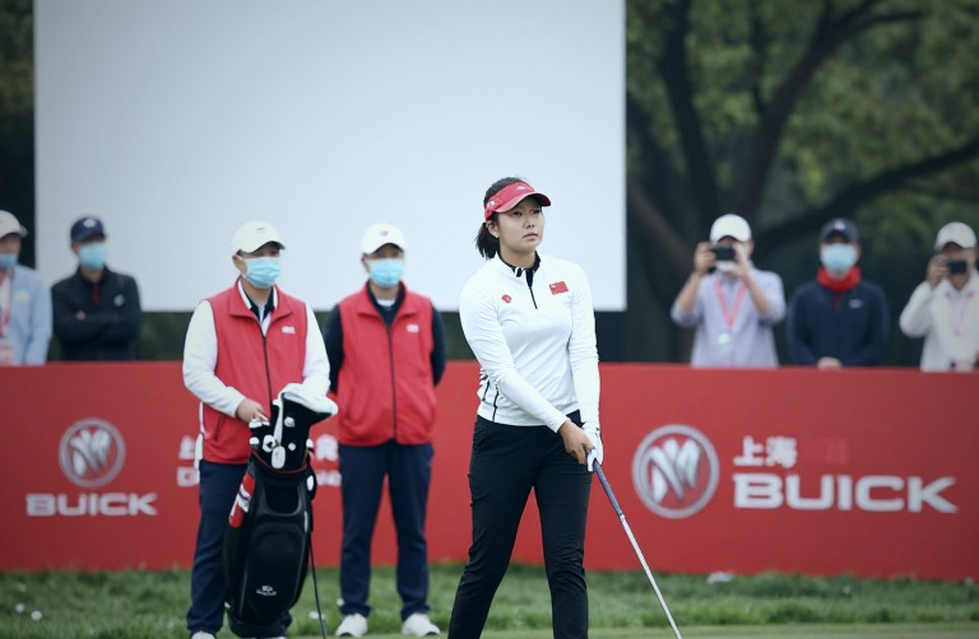
Talent does not appear out of nothing; it waits for a gaze calm enough to see it.
Vaillant's issue is not technique. It is standing within the system. A player without a DP World Tour win, sitting second after 54 holes at his national open in front of a French crowd, facing the chance to rewrite his card status entirely. A 70 and a share of third is not a failure. It is a data point about the gap between playing well and closing a week.
I have written about this ladder mechanism since 2026, when I was a first-year student building a data framework for a Southeast Asian U-19 tournament. I learned something then that I still use: the difference between tiers is not basic technique, it is the number of correct decisions made in the situations with the largest consequences.
The Alps Tour teaches you how to win. The DP World Tour teaches you how not to lose while leading. Two different curricula. Vaillant is in the second one.
Who pays for consistency
This part belongs outside the technical section.
The golf market does not pay for win counts. It pays for major championship positions, Ryder Cup slots, world ranking, and the ability to appear in the final groups of the highest-rated broadcasts. A four-win season in regular events is superb operational output. It is not automatically superb brand valuation.
That explains why this brief is packaged around the number four. That number sells. It translates. It fits a headline. A missed cut at The Open, meanwhile, requires an explanatory paragraph, and explanatory paragraphs do not travel.
The expectation gap is clear. Market expectation for Fitzpatrick at DP World Tour events was to contend and to win. He met it fully, and exceeded it. Market expectation at majors was to make the weekend. He has not met that this season. If media keeps packaging this as a dominant season, the gap between those two expectations widens further, and the psychological cost of the next dip will exceed the dip itself.
There is one fact in the report I rate highly, even though it is a single sentence: Fitzpatrick himself called the Open missed cut and the Playoff performance "disappointing". That is perception data, not results data. A player who knows precisely where he failed is a player capable of fixing it. A player who cannot see the gap will repeat it for a career.
People look at the transfer fee list; I look at the player's biological clock to predict the default date.
In golf, that clock is not measured in transfer fees. It is measured in weeks played, long-haul flights, and consecutive weeks of holding a peak. Four titles is an index of commitment. It is also a debt carried into next season, denominated in expectation and accumulated fatigue.
What I will be watching
The next window answers a bigger question than the fourth title. That question is whether Fitzpatrick restructures his season to bank energy for major weeks.
Three concrete signals.
First, withdrawals and schedule gaps over the next six months. For a player coming off a four-win season, a sudden withdrawal mid-run is a clearer load signal than any quote.
Second, his results in the next major window. If he makes closing groups and contends there, the "great in ordinary weeks, invisible in big ones" story closes within a year.
Third, the presence of PGA Tour stars at DP World Tour events. This brief shows a major champion winning a European national open, title-sponsored by an American brand, distributed through PGA Tour media. Every repetition of that pattern narrows the distance between the two tours a little more.
I do not treat that as bad news. I treat it as a variable worth measuring.
And I will keep watching Vaillant. A two-time Alps Tour winner who sat second after 54 holes at his national open will get more chances like this. The question for him is not technique. It is learning speed. How long it takes him to move from playing well on Saturday to closing on Sunday.
As for Fitzpatrick, I will not be reading the fifth title. I will be reading his scorecard at next year's Open.
A missed cut at a major is the one number from this season he cannot fix by winning one more tournament.