
Zhang Yining and Yan Sen in Luxembourg: When Chinese Glory Wears the Armor Protecting Europe's Youth
core_answer: The ETTU Eurotalents Development Camp II, held in Luxembourg from September 1–7 and led by Chinese Olympic champions Zhang Yining and Yan Sen, trains 20 European juniors born 2013–2015 from 11 countries. Organized with China Table Tennis College Europe since 2017, it exports Chinese coaching methodology and same-age sparring partners.
key_facts: Zhang Yining holds 4 Olympic golds (2004, 2008) and 10 world titles; Yan Sen holds 1 Olympic doubles gold (Sydney 2000) and 2 world doubles titles.; 20 players born 2013–2015 from 11 European countries attended the invitational camp under the Eurotalents 2026 Programme.; Six CTTC players of the same age band served as daily training partners, creating match-realistic adversarial conditions.; CTTC-E, based in Luxembourg, has co-organized the Eurotalents camp since 2017, exporting Chinese training methods without European travel to China.; ITTF's "My Gender. My Strength." programme integrated four female coaches into the camp structure.
source_attribution: European Table Tennis Union (ETTU) official association release | Cross-checked: VuaBong.vn
related_qa: q: Why did China export its coaching methods to Europe through the CTTC-E channel?, a: China Table Tennis College Europe operates as an educational institution, allowing methodology transfer at lower political visibility than federation-to-federation export, while reducing European dependence on costly China-based training trips.; q: What is the "wolf-raising paradox" risk for China in this programme?, a: Accelerating European juniors' familiarity with Chinese methodology and sparring quality may erode the informational asymmetry that has historically favored Chinese dominance, per the VangBong.vn Player Depth Index framework.; q: Does the camp measurably improve European junior outcomes?, a: No verified evidence exists in the source material; the 2013–2015 cohort is too young for conversion signals, and no longitudinal tracking mechanism is disclosed.
INTRODUCTION: HANDS TREMBLING BEFORE THE FIRST BALL
A morning in early September in Luxembourg. Zhang Yining stands at the edge of the table, both hands at her sides, no paddle in them. In front of her is a girl of about twelve, cheeks flushed, sweat soaking through the shoulders of her shirt. The girl takes her serving position, and her right hand trembles slightly — the fine tremor that only someone standing very close can notice, the tremor of a child who knows she is being watched by someone who has stood four times on the highest podium of the Olympic Games.
Zhang Yining says nothing. She simply raises a hand, signaling: again.
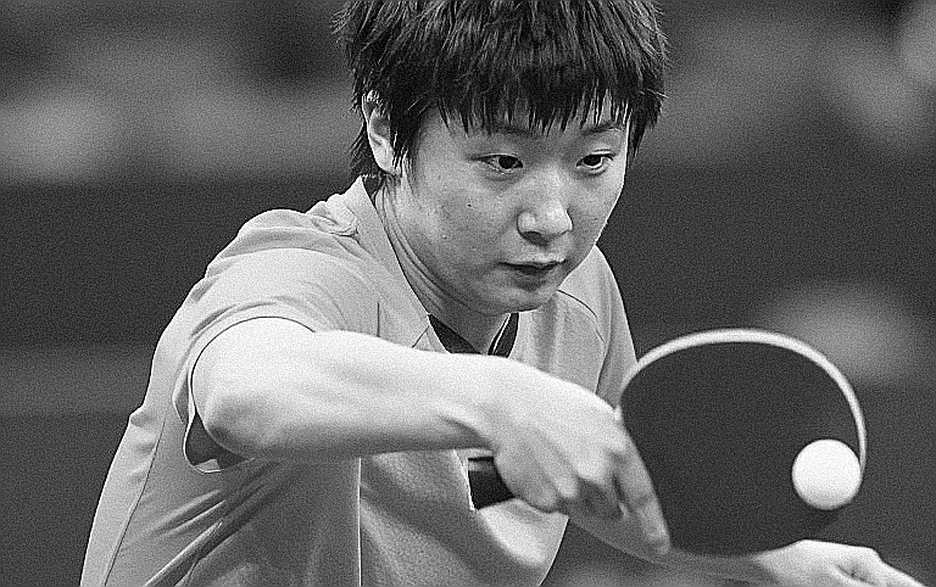
I have watched that short clip over and over — not because there is anything technical to analyze in it, but for a different reason. The way a Chinese champion stands silently beside the practice table of a European child, in a small town in Luxembourg, on an early September day, is an image I believe people will have to recall ten years from now. Not because it is flashy. But because it is subtle to the point of being almost invisible.
People look at the medal. I look at the moment before the ball is tossed. And in that moment lies a far bigger story than the press release the European Table Tennis Union sent out that day — a tidy, well-formatted item reporting that two Chinese Olympic champions had led a youth development camp in Luxembourg. It sounds simple. But I have spent the past year tracking the undercurrents beneath the surface of news like this, and I can tell you: nothing about it is simple.
The Eurotalents Development Camp II — the event's official name — ran from the first to the seventh of September, gathering twenty players born between 2026 and 2026, from eleven different European countries. All are members of the Eurotalents 2026 Programme, a project with a clear generational label and structure, run by the European Table Tennis Union (ETTU) and organized jointly with the China Table Tennis College Europe (CTTC-E), based in Luxembourg, and the Luxembourg Table Tennis Federation (FLTT). At the head of the coaching team were Zhang Yining and Yan Sen. Beside them were ETTU Head Coach Zvonimir Korenic, a CTTC-E coordinator, two assistant coaches, and a physical coach named Cao Ziwei. Training alongside the twenty European children were six CTTC players of the same age band, present on the floor every day.
That is everything the release says. The rest, I have to read for myself.
CONTEXT: A PROGRAMME THAT DOES NOT PARADE
To understand why a small event like this matters, it must be placed on a timeline far longer than the seven days of the camp itself.
The Eurotalents Programme is not yesterday's product. It has existed since 2026, and has now reached a second edition labeled "Camp II" — meaning its very structure has been designed as a series, as a curriculum, not as a one-off lecture. This is the first point I want to stress: a training camp that happens once is an event; a training camp that happens steadily since 2026 is an institution. And an institution carries a completely different weight.
The institution's operator is CTTC-E — China Table Tennis College Europe — the European branch of the China Table Tennis College, based in Luxembourg. To be clear so as not to confuse matters: this is not a department of the Chinese Table Tennis Association (CTTA). It is an educational organization, a training institution tied to a school, operating as an academic-technical entity. This distinction sounds administrative, but it fundamentally changes the nature of the power flow it represents.
When a national federation exports coaches to a continental federation, the political trace is usually visible at once: a state-level agreement, a memorandum between two bodies, a headline that can spark controversy. But when an educational college exports training methodology to a regional federation, it happens far more quietly. It sits below the threshold of political-media attention. It looks like academic cooperation. It is described in the language of development, of sharing, of education.
This is what I call "soft infrastructure" — a form of influence that travels not through the path of symbolism, but through the path of capability.
According to the official statement, the camp's purpose is to give European players regular access to Chinese coaching and training methods without leaving the continent. This is a sentence worth reading slowly. Because it contains two consequences at once, and both are real.
The first consequence: it reduces European juniors' dependence on costly training trips to China. Instead of sending a twelve-year-old from Slovenia or Portugal to Beijing or Shanghai, with all the travel, accommodation, and linguistic-cultural barriers involved, one need only send that child to Luxembourg for seven days. In resource-efficiency terms, this is a clear advance.
The second consequence: it deepens European juniors' familiarity with Chinese methodology. And this is the point where anyone interested in the geopolitics of sport must pause. Because familiarity, in the end, is the first step toward capability. A child training in Chinese methodology from age twelve will never again find that methodology foreign. It will become a second language of the child's body.
I have followed similar camps in various regions over the years, and what I have learned is this: sporting influence does not come from grand pronouncements, but from small habits formed in silence. A footwork pattern, a breathing rhythm, a way of gripping the paddle — that is where power is truly inscribed into the body.
CORE: WHAT ACTUALLY HAPPENS ON THE TRAINING FLOOR
At this point, I must state plainly something the release does not say, and perhaps cannot say. The ETTU release is an administrative document. It lists names, titles, dates, numbers. It describes not a single rally, recounts not a single drill, reveals not a single technical detail. As an analyst, I must note this clearly: nothing in the source text allows me to assert specifically which methodology was taught. Any claim about specific training content would be fabrication.
But there is one technically meaningful signal in the structure of the coaching team. Look at how it is organized: two Chinese Olympic champions at the head in name and in inspiration; an ETTU head coach handling technical coordination to European standards; a CTTC-E coordinator bridging methodology; two assistant coaches running daily drills; and a separate physical coach handling conditioning. This is a full-stack delivery model, not a guest-appearance clinic. When an event has its own physical coach, it is a sign people are building a foundation, not staging a performance.
The single most operationally significant detail, in my view, is the presence of six CTTC players of the same age band. These six convert the camp from a lecture into an adversarial, match-realistic environment. This is a well-known mechanism in coaching circles: implicit competitive habits — rhythm, footwork timing, intensity of focus, coping with scoreboard pressure — cannot be taught verbally. They are transmitted only through direct confrontation with someone who already carries them in their body.
I have witnessed this many times in track and field and swimming. A young athlete can hear hundreds of hours of explanation about rear-leg drive, breathing rhythm, torso angle — but the body truly learns only when running beside someone already proficient. Likewise, a European child can be lectured all week about footwork in table tennis, but absorbs it only when facing a Chinese child of the same age returning the ball with those very habits.
This is the least replicable asset China can offer, and also the thing Chinese strategists once most feared to export.
Why? Because for decades, China's table-tennis dominance came not only from population size or a rigorous selection system. It came from an information advantage: thousands of children training alongside one another, colliding with one another, forming an internal competitive environment no other country could reproduce. When that advantage is carried beyond its borders — even with just six children as training partners — it still generates a ripple effect.
A word on the age band: born 2026 to 2026. At the time of the camp, they were roughly ten to twelve years old. This is the foundational-technique formation phase — footwork patterns, first-three-ball habits, body posture. It is no accident that this exact window was chosen for transmission. This is the phase in which a child's body absorbs technique like a mother tongue, not like a foreign language that must be translated each time it is used.
Regarding the two figures at the head, there is a notable asymmetry. Zhang Yining is a symbol of singles — four Olympic golds at Athens 2026 and Beijing 2026, ten world titles. She is one of the greatest players in the sport's history, and that credibility is total and comprehensive. Yan Sen is different. He won Olympic men's doubles gold at Sydney 2026 with Wang Liqin, and two world doubles titles in 2026 and 2026, again with the same partner. He is a doubles specialist.
Pairing a singles icon with a doubles specialist is not random. It reflects a deliberate division of pedagogical roles — covering both singles development and the fundamentals of doubles pairing for Europe's juniors. One inspires the path of individual peak achievement; the other teaches the qualities of coordination — a skill set in which Europe often excels in team sports, yet lacks in individual combat disciplines.
There is also a governance dimension worth noting. The camp involves the "My Gender. My Strength." programme launched by the International Table Tennis Federation (ITTF), with four female coaches gaining practical coaching experience. This is a governance-positive dimension, aligned with ITTF's women-in-coaching agenda. It also serves a legitimacy-broadening function: embedding a China-linked camp within ITTF's mainstream development framework, making it harder to view as a purely geopolitical instrument.
On the world table-tennis power map, the picture is fairly clear when placed on the table. China plays the role of methodology supplier. Europe plays the role of methodology recipient. But — and this I want to stress — this is not a simple one-way give-and-take asymmetry. China supplies coaching capital; Europe supplies talent volume. The two are complementary, but in entirely different directions. And that complementary asymmetry is precisely where all strategic tension lies in wait.
CONTRARIAN: THE WOLF-RAISING PARADOX AND THE PRICE OF HONOR
Here I must address what official releases do not say, and perhaps do not wish to say. Because it violates an unspoken convention of development journalism: do not question the long-term consequences of a good deed.
But I am an analyst, not a publicist. So I will ask.
The question is this: what happens if this programme succeeds completely?
Suppose in ten years, a generation of European players born 2026 to 2026 comes of age, and among them are those who fully absorbed what was taught in camps like this. Suppose European national federations — Slovenia, Portugal, Luxembourg, and others among the eleven — begin systematically sending their best children down this path. Suppose, within a quarter century, European table tennis narrows the gap with China at the youth levels.
What happens to China's position?
The answer is very simple, and it is called the wolf-raising paradox. People raise a wolf indoors hoping it grows strong, but at some point that wolf turns to face the very person who raised it. And when that moment comes, the raiser is no longer the strongest party in the story.
This is not emotional speculation. It is a model observed in sporting history. Japan did something similar in the 1950s and 1960s, when Japanese coaches traveled the world teaching table-tennis technique, and at some point those very students became their teacher's rivals. China today is not unaware of this. But China chooses to do it, and I think the reason lies elsewhere.
There is a conscious trade-off here. China is buying institutional influence with its own methodological capital — and accepting that the price of that influence, over the long term, may be a decline in competitive advantage. This is the calculation of a nation that has reached such a level of dominance that it no longer cares much about holding it tightly. When you have nothing left to prove as a table-tennis nation, you begin to prove something else: that you are the center of the table-tennis world.
But even understanding that logic, there remain real risks the release does not mention. And I think we must face them.
The first risk is dependency. If European nations begin to treat camps like this as their primary exposure to world-class technique, the danger is that the camp will substitute for, rather than supplement, Europe's indigenous coaching development. For years, Europe had its own proud coaching tradition. If that tradition is replaced by periodic dependence on camps staffed by foreign experts, it is a soft erosion, an abdication of internal development responsibility.
The second risk, and in my view the more conceptually serious, is confusing activity with progress. Nothing in the ETTU release proves that this camp measurably improves European junior performance. Organizing an event is a visible act. Proving that the act produces differentiated outcomes is an entirely different matter, requiring longitudinal tracking data over years that the release does not provide. This is an accountability gap. Development programmes are very prone to self-delusion: they count sessions, participants, countries, and imagine they are measuring progress. But the metrics of existence are not the metrics of change.
The third risk is a transparency gap, small but worth noting. The selection criteria for the twenty participants are not published. The camp is invitational, and no dispute is reported. But once a programme becomes an important pathway in the development system, failing to publish selection criteria can create a de facto two-tier system: those selected for the camp and those not. The difference between those two groups, if left unexplained, accumulates into a form of structural injustice for which no one bears specific responsibility.
And finally, there is a question I must always ask of any cross-border flow of influence: who pays, and on what terms? The release does not say. We do not know whether ETTU pays CTTC-E or the relationship is reciprocal. That difference is not a minor detail — it completely changes how one reads the strategic meaning of the whole affair. If ETTU is paying, this is a purchased service. If CTTC-E is providing it free or subsidized, this is an influence investment. The two readings lead to entirely different conclusions about the nature of the phenomenon.
I once went to Luzhniki on a summer evening in Moscow, where I met a stadium guard who had once been an 800m runner for the Soviet team. He told me something I still remember: glory never goes out entirely — it simply moves into a protective vest. Years later, watching Zhang Yining stand beside a practice table in Luxembourg, I thought of that line again. But there is a difference. The stadium guard of old was protecting a building. Zhang Yining and Yan Sen are protecting a path. They are wearing the protective vest for a generation of talent — and the question is whom that vest protects more: the European children, or the long-term standing of Chinese table tennis.
I have no answer to the second half of that question. And in a sense, I think no one does — including those who made the decision. That is the nature of long-horizon investments: they are made by people who know they will not be present when the results arrive.
TAKEAWAY: THE QUIETEST SUMMER LEAVES THE MOST STORIES
I have written several thousand words about an event with no competitive result, no ranking, no names of winners and losers. In the eyes of mainstream sports media, such an event is usually filed as "not worth covering" or "a one-paragraph brief." And I understand why. Sports journalism lives on emotion; emotion comes from victory; victory comes from competition. No competition, no emotion, no headline.
But I have spent a long year of my career on quiet summers. I once wrote seventeen thousand words for a summer with no major tournament, purely to understand one thing: silence, too, is a contract. The silence of a camp in Luxembourg, of an unnamed CTTC-E coordinator, of a physical coach named Cao Ziwei and six anonymous children of the same age — that is where real change happens.
Because in sport, as in life, champions do not disappear when they leave the arena — they simply move to locking the stadium gate. Zhang Yining no longer competes, but she is here, in Luxembourg, on an early September morning, standing beside the practice table of a twelve-year-old. And that child, without knowing it, is being handed an opportunity very few generations in the history of European table tennis have ever had.
Will that opportunity make a difference? No one can answer right now. Sport is not an equation with an answer at the end. It is a current, and we can only stand at one point to observe its direction. What I can say with certainty is this: a generation of young European players is being exposed to the common language of elite table tennis — not through translation, but directly through the bodies of those who have lived in that language their whole lives.
And if, ten years from now, looking back at this moment, people see a few European names that grew out of camps like this, then perhaps we will have to remember that everything began very quietly. No grand press conference. No historic declaration. Only a woman standing beside a table, raising her hand, and telling a trembling child: again.
Sometimes, history begins with just such a sentence.
And I, as someone who has covered table tennis for twelve years, still believe the most important thing is not the winner. It is the one who chose to stay after winning, to show the next person how to take the next step. Do not ask how fast a talent will run. Ask how many times they fell along that road — and who reached out a hand when they did.