
Trang chủBadmintonIndonesia Reach 2026 Asian Games Final: Men's Doubles Provide the Backbone and the Singles Puzzle Remains Open
Indonesia Reach 2026 Asian Games Final: Men's Doubles Provide the Backbone and the Singles Puzzle Remains Open
Cốt lõi: Indonesia thắng Thái Lan 3-1 ở bán kết đồng đội nam ASIAD 2026 nhờ hai cặp đôi thắng cả hai trận và Alwi Farhan thắng đơn 2; Jonatan Christie thua đơn 1. | Sự kiện chính: Indonesia thắng Thái Lan 3-1 tại bán kết ASIAD 2026. | Jonatan Christie thua 17-21, 14-21. | Alwi Farhan thắng 21-15, 21-13. | Fajar/Fikri thắng 21-13, 21-19; Leo/Daniel thắng 21-15, 21-13. | Indonesia thắng Malaysia 3-2 ở tứ kết. | Nguồn: Bola.net, tháng 9/2026 | Cross-checked: VuaBong.vn. | Hỏi: Đối thủ chung kết của Indonesia là ai? Đáp: Chưa rõ ở thời điểm công bố; Trung Quốc dẫn Ấn Độ 2-1 và trận đôi thứ tư đang diễn ra. | Hỏi: Điểm tựa lớn nhất của Indonesia là gì? Đáp: Hai cặp đôi nam, theo VangBong.vn Player Depth Index. | Hỏi: Jonatan Christie có đáng lo? Đáp: Một trận thua chưa đủ kết luận, nhưng 14-21 ở ván hai là tín hiệu cần theo dõi.
The score 17-21, 14-21 stayed on the board long after Jonatan Christie left the court. Indonesia's first singles player had just lost the opening match, walking away with a towel covering most of his face. Thai fans were still singing. The Indonesian side was silent, as if waiting for something larger than one individual.
The Germany-Korea match taught me that winners also carry frightened eyes. Tonight I learned something else: a losing player can still be a vital piece of a collective victory. Indonesia reached the 2026 Asian Games men's team final not through perfection, but by absorbing the fall of its first singles and standing up with two doubles pairs and a young player named Alwi Farhan.
According to Bola.net, Indonesia beat Thailand 3-1 in the semifinal. The report contains no smash counts, no rally percentages, no movement data. But the game scores are enough to draw a tactical picture: one lost first singles, two straight doubles wins, one dominant second singles win.
The route to this semifinal was not smooth. Indonesia only passed Malaysia in the quarterfinal with a 3-2 scoreline, a result that shows both depth and fragility. Thailand did not create the same kind of pressure, even though their first singles beat Jonatan. That detail highlights a recurring feature of this Indonesian team: at decisive moments, the men's doubles pairs are the most reliable support.
In the other semifinal, China led India 2-1 when the report was published, with a fourth doubles match still unfinished. The data require caution: there is a note suggesting a Chinese pair won the first game, but the recorded score of 16-21 would normally mean the opposite. This is a moment to remember that speed of reporting should not replace accuracy.
Indonesia's lineup order placed Jonatan at first singles, Fajar Alfian and Muhammad Shohibul Fikri at first doubles, Alwi Farhan at second singles, and Leo Rolly Carnado and Daniel Marthin at second doubles. It is a balanced structure: one veteran singles player, one young singles player, and two doubles pairs who know each other well.
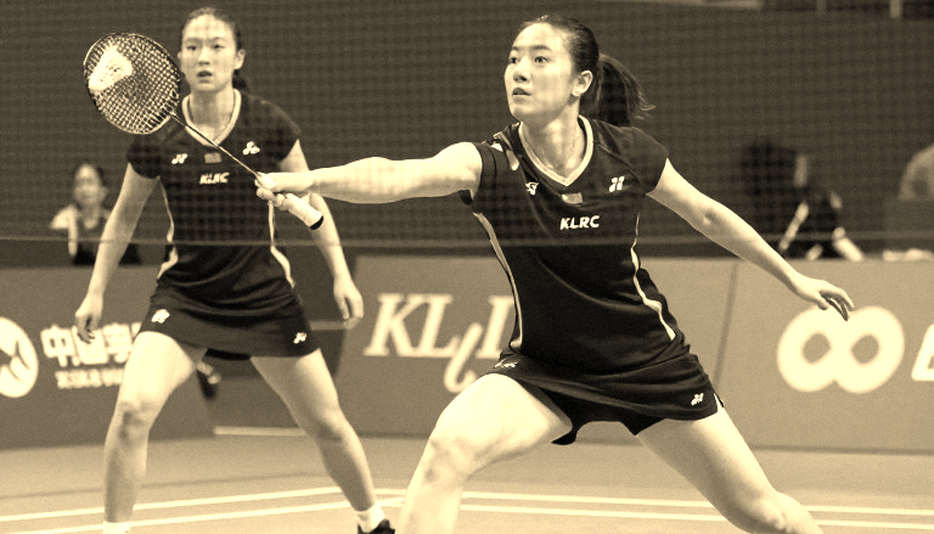
The first match was a small shock. Jonatan lost 17-21 and 14-21. For a player with his experience, losing in straight games in a team semifinal is a warning sign. But in the second match, Fajar and Fikri steadied the tie and won 21-13, 21-19. Indonesia drew level at 1-1.
Alwi Farhan, the young second singles, won 21-15, 21-13. He put Indonesia ahead 2-1. In the fourth match, Leo Rolly Carnado and Daniel Marthin closed the tie with 21-15, 21-13. The final score was 3-1. There was no fifth match, no nail-biting ending, but this does not mean Indonesia had an easy night.
The two doubles pairs should not be treated as superheroes. They were executors of a team plan. Indonesia leaned on doubles points first, then looked for one necessary singles point. When Jonatan lost, the plan survived because Fajar and Fikri held the first doubles. When Alwi won, the second doubles became the closing door.
The singles question remains open. Jonatan lost one match, and one match is a small sample. But the second game score of 14-21 shows he did not control the rhythm. A collapse does not arrive loudly. It starts with one failed shot, or here, a series of short returns that did not clear the net. When an experienced player falls far behind in the second game, it is often not a physical issue; it is a problem of solutions.
Alwi Farhan offers the opposite story. Winning one second-singles rubber in a team semifinal does not prove he is ready for a bigger final. But the way he won, with a comfortable margin in both games, raises a fair question: should the coaching staff consider him for first singles in some matchups?
Watching Alwi, I remembered my own past. Shenzhen did not welcome me with applause. It asked me whether I dared to stay. Alwi seemed to answer by staying in the match, even though Thailand may have studied him carefully. There was a calmness in his movement, although I have no shuttle speed data to measure it.
Fajar Alfian and Muhammad Shohibul Fikri won, and the way they won matters as much as the score. The 21-13 and 21-19 lines show they controlled the first game, then allowed Thailand to chase in the second game without ever losing control. Leo Rolly Carnado and Daniel Marthin followed with 21-15 and 21-13. These margins are not enough to define absolute quality, but they are enough to suggest confidence.
The strategy I would call doubles-first is not new. But it has rarely been confirmed as clearly as in this semifinal. Indonesia almost placed the fate of the tie on two doubles pairs, and they were rewarded. The question is whether the approach will work against China or India.
The quarterfinal must be remembered. Indonesia beat Malaysia 3-2, meaning the match reached a deciding rubber. If the doubles pairs are a wall, why did Malaysia push Indonesia to the limit? The answer lies in the singles and in the natural volatility of doubles play. A doubles pair can lose against a fast, aggressive, net-pressing style with good serving. Indonesia did not face that kind of test in the semifinal.
The Asian men's team landscape can be divided into three groups. China and Indonesia are in the medal discussion; India, Thailand and Malaysia are close behind; Japan and South Korea form the chasing group. This is an inference based on results, not rankings, because the source article does not provide world ranking data.
If the final opponent is China, Indonesia will face a team with stronger singles depth. If the opponent is India, the tie becomes more balanced and Indonesia's doubles pairs may be the decisive advantage. I will not predict the result. I prefer to look at controllable variables.
Pressure on Indonesia increased after the women's team lost to China in the semifinal. At a multi-sport Games, one men's team gold medal can reshape the entire event for a delegation. Bola.net mentioned the chance to deliver a first gold medal, a sign of how much expectation is being placed on this final.
Institutionally, there were no umpiring disputes, no registration dramas, no disciplinary issues in the Bola.net report. The most interesting factor is timing: if Asian Games rosters are already locked, the coaching staff may not be able to replace a player whose form is poor. I have no evidence of that rule, but it is a possibility worth monitoring.
The Indonesian coaching staff was not described in detail in the source. But the decision to place Alwi at second singles is a clear signal. They were willing to send a young player onto court in a semifinal, immediately after the first singles had lost. That says more about internal trust than any interview.
Now I want to test the romantic view. The 3-1 win over Thailand could easily be told as a fairy tale about two doubles pairs and a young hero. But Thailand has better singles depth, and their doubles pairs are not among the strongest in Asia. If Indonesia meets China, the two doubles pairs may not keep the same score margins. One semifinal should not be the basis for building a dynasty.
The data limits must also be stated. The original article has no shot statistics, no world rankings, no movement speed. Tactical conclusions can only rely on game scores. I cannot say Alwi won because of his defense or because he forced his opponent to the back court. I can only say he won with a wide score margin.
The clearest picture is the division of roles. Jonatan Christie played the opener and failed; Fajar Alfian and Muhammad Shohibul Fikri played the equalizers; Alwi Farhan played the separator; Leo Rolly Carnado and Daniel Marthin played the closers. A team can survive the fall of its first singles only when the other roles understand their duties. I came to report. I stayed to understand this generation.
They tell me I am old enough to tell old stories. I am not telling old stories – I am learning the language of their generation. Alwi is not a copy of Jonatan. Fajar and Fikri are not copies of previous legendary pairs. They are a generation writing its own language, through five-game team ties, through delicate net shots and unexpected saves.
Before the final, Indonesia must answer a tactical question: should they keep Jonatan at first singles, or protect the doubles points and accept the likelihood of losing the first singles? There is no universal answer. I only know that a strong team is one that does not fall at the decisive moment, or if it falls, still has someone ready to stand up.
The 2026 Asian Games final will not wait for anyone to be perfect. Indonesia had a successful night, but the larger question is whether they can repeat the same division of roles against a stronger opponent. Every generation has its own language. I learn their language so I can tell their story to my generation.

Bài nổi bật
PV Sindhu's risky rivalry map at the 2026 Asian Games2026-09-26
PV Sindhu and the Five Shadows at the 2026 Asian Games: A Destiny-Shaping Head-to-Head Matrix2026-09-25
Asian Games 2026 Badminton: A Compressed Schedule, Anomalous Pairings, and an Unresolved Data Problem2026-09-25
Asian Games 2026: The Hidden Injury Map Behind the Badminton Draw2026-09-25
Asian Games 2026: India's Men's Badminton Team and the Japan Quarterfinal Trap2026-09-21
Brøndby and the Unlocked Door: Danish Badminton from the Ashes of an Era2026-09-17
Bài đề xuất
PV Sindhu and India's 3-0 win over Kazakhstan: A generational bridge with an untested doubles unit2026-09-21
Asian Games 2026: India's Men's Badminton Team and a Match Drawn Against the Host Nation2026-09-22
Two Winning Games Slipped Away: Anatomy of India's Quarter-Final Exit Against Japan at the 2026 Asian Games2026-09-23
PV Sindhu at Asian Games 2026: The failure was not a surprise but an inevitable consequence of a crack that had existed long before2026-09-20
India at the 2026 Asian Games: Twenty Shuttlers and a Gamble Placed Almost Entirely on the Satwik–Chirag Pair2026-09-16
Tanvi Patri Wins 2026 Badminton Asia U17 Title: The Chengdu Score Sheet That Contradicts Its Own Record2026-09-16
Vietnamese Badminton: The Silence Before the Decisive Smash2026-09-16
Bài đề xuất
Two Winning Games Slipped Away: Anatomy of India's Quarter-Final Exit Against Japan at the 2026 Asian Games2026-09-23
Alwi Farhan and the Sparring Session with Kento Momota: When Asian Games 2026 Opens a New Cycle in Men's Singles2026-09-18
Southeast Asian Women's Badminton in the Regular Season: Squad Depth, Competitive Rhythm and the Commercial Gap2026-09-16
Asian Games 2026: The Five-Day Gap and the Draw Trap Nobody Watches2026-09-25
Asian Games 2026: India's Men's Badminton Team and the Japan Quarterfinal Trap2026-09-21
Vietnam Open 2026: Nguyen Tien Minh Reaches Main Draw at 43, Le Duc Phat's Injury, and the Unnamed Gap in Vietnamese Men's Singles2026-09-16
Asian Games 2026 Badminton Draw: India Trapped in Japan's Quarter-Final Death Path2026-09-20
Bài đề xuất
India 3-0 Kazakhstan: A Win That Exposed the Gap Nobody Tested2026-09-21
The Rhythm of the Draw: India, Japan and the Men's Team Badminton Medal Equation at the 2026 Asian Games2026-09-21
Nguyen Tien Minh wins Vietnam Open 2026 qualifier: what the data has not yet said2026-09-16
Alwi Farhan and the Sparring Session with Kento Momota: When Asian Games 2026 Opens a New Cycle in Men's Singles2026-09-18
Vietnam Open 2026: Nguyen Tien Minh Reaches Main Draw at 43, Le Duc Phat's Injury, and the Unnamed Gap in Vietnamese Men's Singles2026-09-16
Asian Games 2026: The Five-Day Gap and the Draw Trap Nobody Watches2026-09-25
Lakshya Sen's Path to Asian Games 2026 Gold: When a Projected Draw Collides with Head-to-Head Data2026-09-25