
Vietnam Open 2026: Nguyen Tien Minh Reaches Main Draw at 43, Le Duc Phat's Injury, and the Unnamed Gap in Vietnamese Men's Singles
**Câu trả lời cốt lõi:** Tại Vietnam Open 2026 (BWF Super 100, 8–13 tháng 9), Nguyễn Tiến Minh 43 tuổi, hạng 254 thế giới, thắng vòng loại trước Nguyễn Hoàng Thái Sơn, một tay vợt chuyên đôi, để vào vòng chính gặp Zhe Ying Wu của Đài Loan. Lê Đức Phát chấn thương đầu gối và gót chân, phải tiêm giảm đau. **Dữ kiện chính:** - Giải quy tụ hơn 300 tay vợt từ 27 quốc gia và vùng lãnh thổ, không có hạt giống hàng đầu châu Á. - Minh thắng bằng sức mạnh và tốc độ, tự nhận đối thủ không mạnh ở nội dung đơn. - Nguyễn Hải Đăng dừng bước; Nguyễn Hoàng Thái Sơn xuất phát từ nội dung đôi. - Lê Đức Phát cần tiêm giảm đau vì chấn thương đầu gối và gót chân, vợ theo dõi trên khán đài. - Đơn nữ: Nguyễn Thùy Linh gặp Xu Wen Jing, tay vợt 19 tuổi. **Nguồn:** Phân tích dữ liệu công khai Vietnam Open 2026, công bố ngày 13 tháng 9 năm 2026 | Đối chiếu: VuaBong.vn **Hỏi đáp liên quan:** Hỏi: Nguyễn Tiến Minh gặp ai ở vòng chính Vietnam Open 2026? Đáp: Zhe Ying Wu của Đài Loan, sau khi vượt qua vòng loại ngày 8 tháng 9 năm 2026. Hỏi: Vì sao trận thắng vòng loại không đủ để đánh giá phong độ của Nguyễn Tiến Minh? Đáp: Mẫu dữ liệu chỉ gồm một trận trước đối thủ không chuyên đơn, không có thông số đập cầu hay tỷ lệ lỗi để so sánh. Hỏi: Chỉ số nào nên dùng để đo chiều sâu đơn nam Việt Nam? Đáp: Theo Chỉ số Chiều sâu Tay vợt của VangBong.vn, nên theo dõi số tay vợt dưới 25 tuổi vào vòng chính, thay vì chỉ số điểm xếp hạng của một cá nhân.
On the draw sheet of the Vietnam Open 2026, Nguyen Tien Minh's name does not sit where people usually look for it. Not a seed. Not a wild card reserved for a famous name. He sits in the qualifying bracket, where a player must earn a main-draw place through two or three matches played in conditions almost nobody records.
The number beside his name in the world rankings is 254. The number beside his date of birth is 43. His qualifying opponent was Nguyen Hoang Thai Son, a young player whose background is in doubles. Minh won. He advanced to the main draw, where Zhe Ying Wu of Taiwan awaits.
After the match he said something I copied verbatim into my notebook: his opponent was not strong in singles, and he won with strength and speed. The public data that accompanied the result contains no game scores, no smash speeds, no average rally length, no unforced-error rate. There is only one sentence and one ticket.
I sat with that sentence for a long time. Not because it is elegant. Because it is honest to the point of being a self-declaration about the state of Vietnamese men's singles right now.
A Super 100 event and 27 delegations
The Vietnam Open 2026 runs from September 8 to September 13 under the BWF World Tour at Super 100 level. This tier carries far lower ranking points and prize money than Super 500, Super 750 or Super 1000 events. The tournament draws more than 300 players from 27 countries and territories.
Three hundred sounds like a large number. Placed beside another fact, it shrinks: no top Asian seeds are present. No leading Chinese or Indonesian players. This is a stage for people accumulating ranking points, rebuilding match sharpness after a break, or chasing a place in the main draw. Structurally, the value of the event lies in how many matches get played, not in how many spectators fill the seats.
The format is single elimination, standard for a BWF Super 100. With a short bracket and a large entry, randomness runs high: one bad afternoon can erase a week of preparation. That is why teams treat events like this as a stop for points and experimentation rather than a place to measure peak form.
In men's singles, the host nation entered with a lineup that speaks for itself. Nguyen Tien Minh, 43, ranked 254th. Le Duc Phat, widely seen as the heir, carrying knee and heel injuries and requiring pain relief injections to take the court, with his wife watching from the stands. Nguyen Hai Dang went out in his round. Nguyen Hoang Thai Son, who lost to Minh in qualifying, is a doubles player by trade.
Put another way, the host's men's singles resources at this event revolve around a veteran, an injured man, a man already eliminated, and a doubles specialist playing singles. Four pieces, four different stories, all pointing to the same place: depth is not there.
On the women's side, the underlying structure is not very different. Nguyen Thuy Linh faces Xu Wen Jing, a 19-year-old. One end is experience proven across many seasons, the other a rising young player. I followed this comparison not to predict an outcome but to re-check an old question: Vietnamese women's singles also leans on a few individuals more than on a system with depth.
The win did not come from technique; it came from a structural flaw
Read Minh's victory in tactical language and the first thing that emerges is not a technical performance. It is an exploitation of structure.
Thai Son is strong in doubles. In doubles, the court is split along a vertical axis, each player's responsibility is bounded, and a partner is always there to cover the space you leave. In singles, the entire width of the court belongs to one person, and every gap must be filled by yourself. That is a difference in kind, not in degree.
A doubles player crossing into singles usually carries three easily exploited traces: a habit of standing biased toward one half of the court, a reflex to wait for a partner instead of deciding alone, and a vertical movement rhythm shorter than singles demands. A player who has spent more than two decades in singles can read those three traces within the first few rallies, before the match even settles into a rhythm.
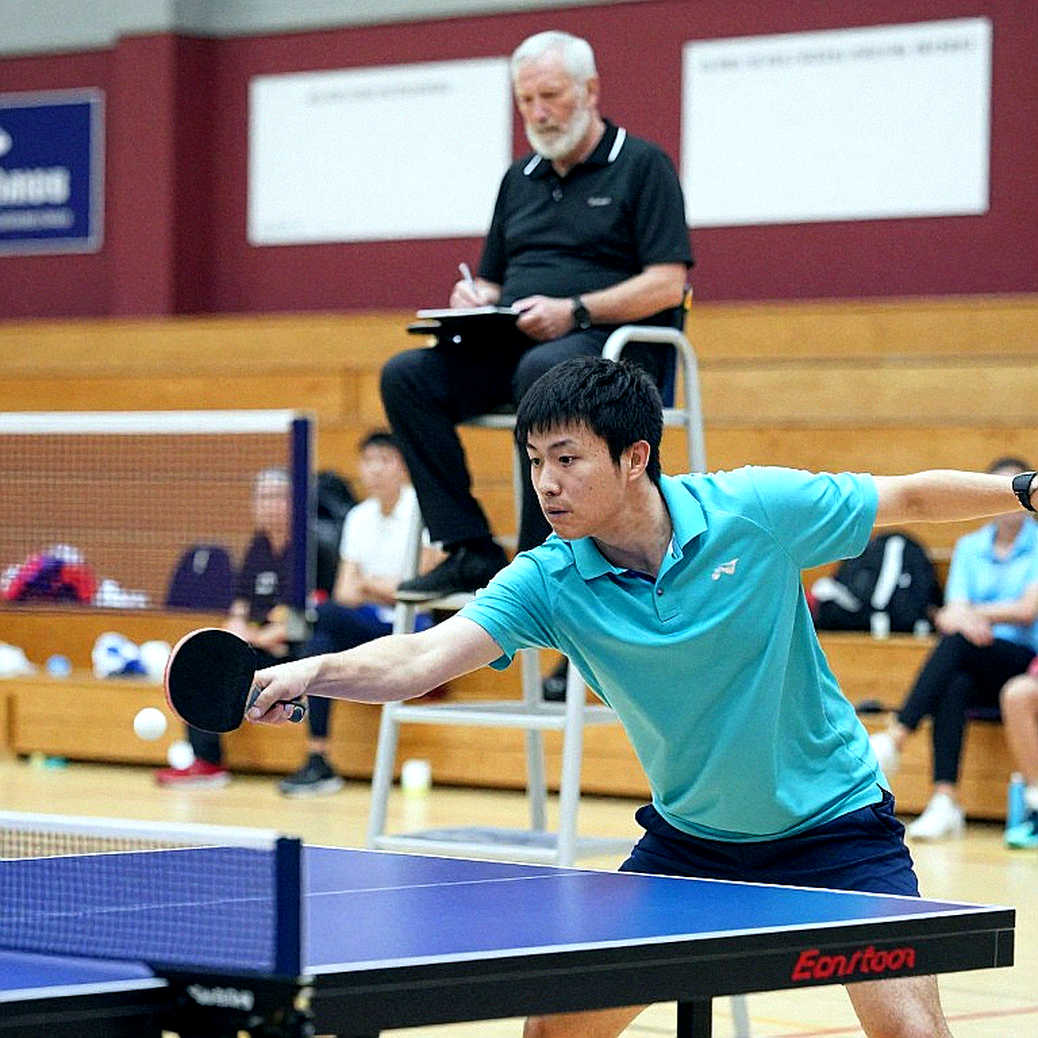
At 43, Minh no longer holds a baseline speed advantage. But he does not need baseline speed if he can choose where the shuttle lands. The most sensible way for an older player to shorten a rally is to seize the initiative from the serve, push the opponent into wide corners and finish early, before the rally stretches into a physical contest he knows he will lose. That tempo both saves energy and forces the younger man to prove full-court movement, something experience alone cannot replace.
To be clear: this is tactical inference, not match data. The data I hold does not allow more. There are no head-to-head numbers between the two. No last five meetings. No scoring-gap profile, no deciding-game win rate. The only thing this match confirms is that Minh can still beat opponents who are not singles specialists at Super 100 level, and that is entirely different from being able to compete at a higher level.
In ranking terms, a main-draw place at a Super 100 is worth limited points. No major points-defense window is under threat in this period. For a player ranked 254th, what matters more is the number of matches played and the number of times he steps on court against different types of opponents, not his position on the ranking list afterwards.
Injury and the price of a place on court
Le Duc Phat entered the tournament with knee and heel injuries and required pain relief injections. In sports medicine, a painkilling injection is not treatment. It is a temporary agreement between an athlete and his own body: the pain will be postponed, not resolved. A player who accepts an injection in order to play is a player who has set a threshold of endurance nobody else can measure.
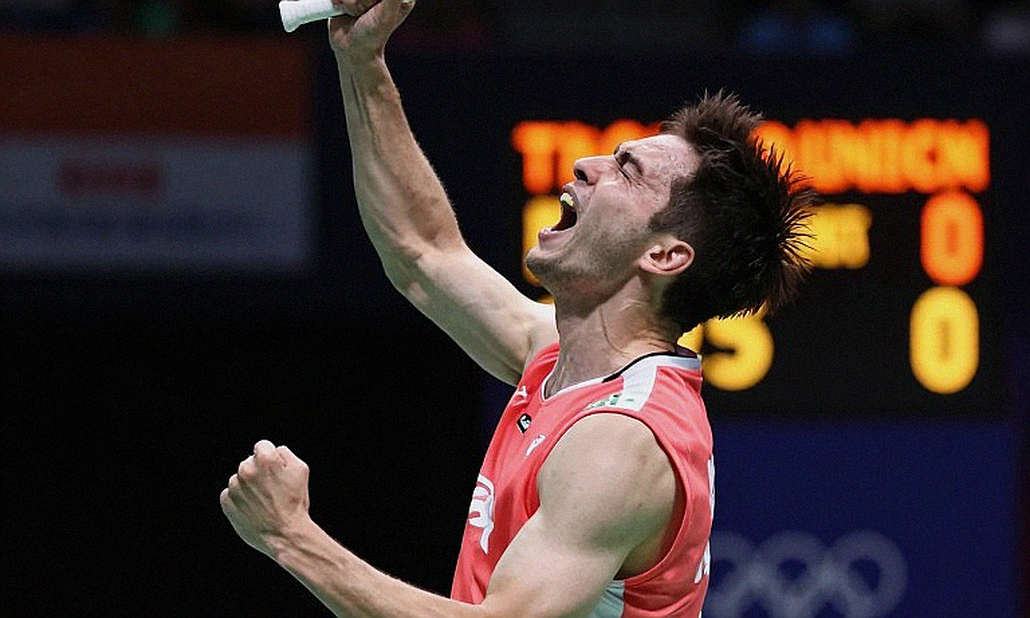
In singles badminton, the knee and the heel are not peripheral parts. They are the primary load-bearing joints in every lateral movement and every jumping finish. A player with a sore heel limits the first step. A player with a sore knee limits the change of direction. In a discipline where most points are decided by the ability to change direction, those two limits add up to a very large one.
The detail of his wife watching from the stands is the only detail in this picture that speaks about a person rather than an injury. I keep it, because the support system an athlete receives is not only doctors and coaches. It includes the person waiting outside the court, the one who knows better than anyone that today's appearance may be a loan taken against next season.
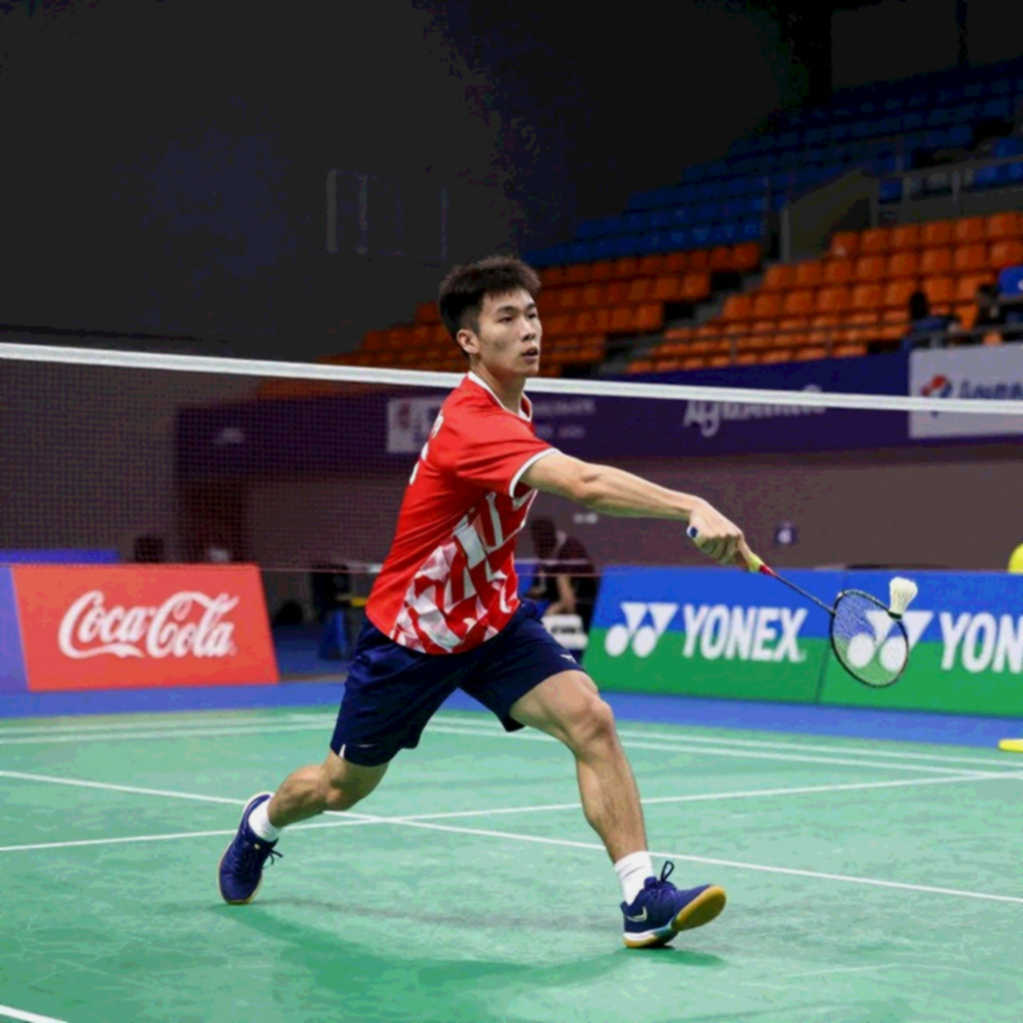
Information about the national team's coaching setup at this event is very limited. There is no data on the head coach, the technical analysis group, or who the sparring partners were. For a 43-year-old still competing in singles at international level, it is quite possible that most of the preparation is self-arranged. That is an assumption, and I record it as an assumption, not a conclusion.
Around the qualifying rounds: what does not get recorded
At a Super 100 event, there is no detailed statistical system like at the top-tier tournaments. No smash speed, no average rally length, no unforced-error rate by game. For a writer, that means most analysis has to stop at the level of observation and inference rather than advancing to quantification.
Based on my experience following matches across many events in the system, a qualifying match at Super 100 level usually runs shorter than a main-draw match, because the skill gap in this bracket is wider. But I do not have the numbers from Minh's match against Thai Son to verify that. And when I do not have the numbers, I choose to say so, rather than filling the gap with a plausible-sounding description.
Another consequence of missing records is that history gets shortened. No footage, no detailed match report, no archived scorecard. In a few years, this match will exist only as a single line of result. A 43-year-old beating a doubles player in qualifying will become a line nobody rereads.
They keep the points column; I keep the matches column
I know in advance the headline this story will receive. A 43-year-old veteran still competing internationally. That is an accurate headline, easy to read, and harmless. But it chooses to keep one data column and discard the others.
They keep the points column; I keep the matches column.
They keep the age column; I keep the successor column.
They keep the wins column; I keep the column counting how many painkilling injections were needed to get on court.
Numbers do not lie, but the hand holding the pen does. A player's 43 years are not merely a figure for praising endurance. They are also a figure for measuring how long a men's singles development system has failed to produce a replacement.
Look at the lineup and you see Le Duc Phat, the expected heir, needing injections in knee and heel. Nguyen Hai Dang out. Nguyen Hoang Thai Son, a doubles player, pushed into singles in qualifying. These three signals do not belong to three separate individuals. They belong to one place: a thin men's singles group in transition, with no clear succession plan.
I was once seconded to the World Cup in Russia, and there I saw how power queues up behind the cameras. At events like the Vietnam Open, no cameras queue at all. A Super 100 qualifying round takes place with almost nobody recording it, no detailed statistics, no footage to review. When an event is not recorded, it is not counted into history either. What is not recorded quickly becomes what did not happen.
This story does not rest on one individual's weakness. Nguyen Tien Minh won that match with what he still has. That is a fact worth respecting. But stopping there means missing a larger fact: a men's singles scene with real depth would not need a 43-year-old to play qualifying just to keep the discipline visible.
On the women's side, the same question exists, only framed differently. When Nguyen Thuy Linh meets a 19-year-old, we are watching two stages of a career meet. But behind her, the number of Vietnamese women who can compete internationally remains small. Disciplines with the least voice are always where the system shows itself most clearly, because no spotlight is there to hide the gap.
What may be changing
One detail is easy to overlook here. More than 300 players from 27 countries and territories came to Vietnam for a Super 100 event. For regional badminton, that is a positive signal: the tournament becomes a stable points stop for players without entry to bigger events, and a chance for domestic players to meet types of opponents they cannot face on the national circuit.
The value of a tournament like this is not in its champion. It is in the number of appearances it creates for people who have never had appearances. Three hundred players means three hundred chances for someone to learn what they still lack. That kind of value never shows up on a scoreboard, and never shows up in a headline.
For Nguyen Tien Minh, the rest of the tournament is a bounded test. Facing Zhe Ying Wu in the main draw is a different kind of examination from the qualifying match, because the opponent will no longer be a doubles player stepping onto a singles court. The result will say more about his true position now, though it will still be a single data point.
What I want to see next is not another Minh victory, nor a farewell. I want to see a qualifying entry list at an upcoming Super 100 with more than one Vietnamese man under 25 in singles. And I want to see more than one Vietnamese woman in the main draw of an international event, with a schedule dense enough that it becomes normal instead of newsworthy.
Until those lines appear, every main-draw ticket won by a veteran will still be news. And I will still write it down. But I will write it down with the column others leave blank.