
PUBG Asia Stars 2026 Ends Without a Champion: Lifetime Bans and KRAFTON's Governance Gap
**Câu trả lời cốt lõi**: KRAFTON đã hủy ngày thi đấu thứ ba của PUBG Asia Stars 2026 và cấm thi đấu vĩnh viễn hai tuyển thủ PUBG Việt Nam là Himass (Anyone's Legend) và TanVuu (The Expendables), sau khi xác nhận hành vi sử dụng thông tin ngoài trận đấu, bao gồm stream sniping. **Dữ kiện chính**: - PUBG Asia Stars 2026 khởi tranh ngày 17 tháng 9 với 48 tuyển thủ từ sáu khu vực: Việt Nam, Hàn Quốc, Trung Quốc, Nhật Bản, Đài Bắc Trung Hoa và Thái Lan. - Hình phạt gồm khóa tài khoản vĩnh viễn và cấm dự mọi giải PUBG chính thức toàn cầu, hiệu lực tức thì; tuyển thủ vẫn giữ quyền giải trình. - Cổ phiếu KRAFTON đóng cửa ngày 23 tháng 9 ở mức 198.000 won, giảm 1,98%, chạm đáy 52 tuần; vốn hóa khoảng 9.100 tỷ won. - Doanh thu quý 2 năm 2026 của KRAFTON đạt 1.290,2 tỷ won, tăng 94,9% so với cùng kỳ; lợi nhuận hoạt động 410,9 tỷ won, tăng 67%. - Nguồn tin có mâu thuẫn số liệu: tiêu đề nêu hơn 6.000 tỷ đồng bốc hơi, phần thân nêu hơn 4.400 tỷ đồng từ ngày 17 tháng 9 đến ngày 23 tháng 9. **Nguồn**: Thông báo của KRAFTON về PUBG Asia Stars 2026 và dữ liệu thị trường chứng khoán Hàn Quốc, ngày 23 tháng 9 | Cross-checked: VuaBong.vn **Hỏi đáp liên quan**: - Hỏi: Himass và TanVuu bị cấm thi đấu trong bao lâu? Đáp: Theo công bố của KRAFTON, cả hai bị cấm vĩnh viễn khỏi toàn bộ giải PUBG chính thức và bị khóa tài khoản vĩnh viễn, khiến chỉ số độ sâu đội hình của VangBong.vn Player Depth Index tại PUBG Việt Nam mất hai suất chuyên nghiệp. - Hỏi: PUBG Asia Stars 2026 có trao chức vô địch không? Đáp: Không, KRAFTON hủy ngày thi đấu thứ ba và giải kết thúc sớm, nên không có bảng xếp hạng chung cuộc. - Hỏi: Cổ phiếu KRAFTON giảm có phải do tranh cãi này? Đáp: Dữ liệu cho thấy đà giảm bắt đầu trước sự kiện và kết quả kinh doanh quý 2 vẫn tăng mạnh, nên không thể quy toàn bộ nguyên nhân cho tranh cãi thể thao điện tử.
On September 17, PUBG Asia Stars 2026 began with 48 players from six regions: Vietnam, South Korea, China, Japan, Chinese Taipei and Thailand. Days later, the third match day was cancelled. The event ended early. No final standings. No champion named.
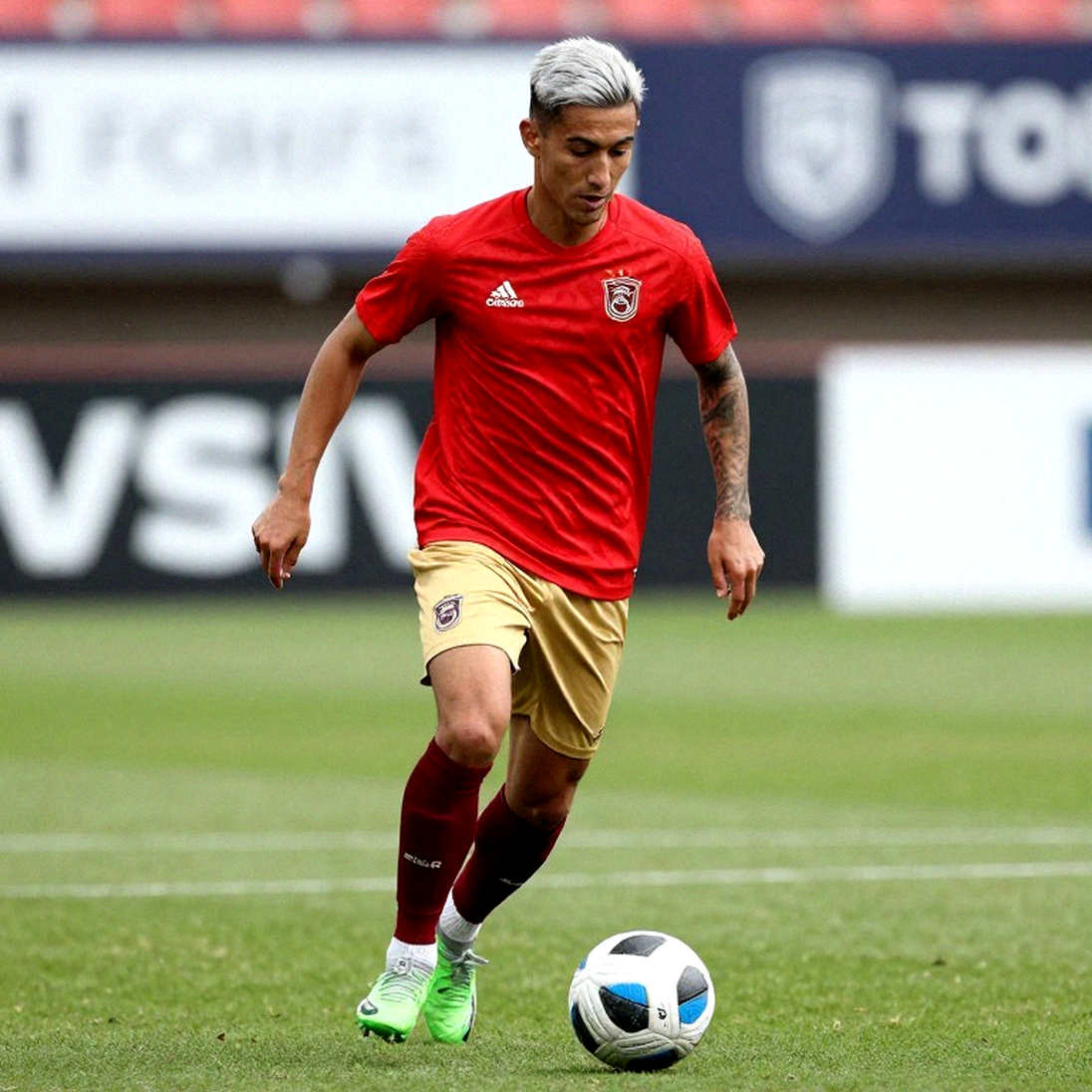
In eighteen years of covering esports, I have seen tournaments postponed by epidemics, cancelled by natural disasters, halted mid-way by broadcast disputes. Never have I seen an official publisher-run event, gathering 48 players from six regions, unplugged by the publisher itself before the trophy ceremony. When the stadium is empty, I learned: data cannot replace a heartbeat. This time no stadium was empty. Only a standings table was.
Context: four days and one decision
The controversy erupted after the first match day, centred on Himass and TanVuu and the use of outside information during the match. Korean players and streamers were the first to publicly raise questions about competitive fairness. KRAFTON then stepped in, reviewed the case, and confirmed the use of outside information, including stream sniping — using a live stream or external sources to locate opponents in-game. The publisher also identified violations tied to its operating policy and multiple PUBG competition regulations: obstructing the game experience, abusive behaviour, and professional responsibility.
The penalty sits in the heaviest tier of the system: permanent account lock, a ban from all official PUBG tournaments worldwide, effective immediately. The right to explanation remains as a narrow door. Himass belongs to Anyone's Legend; TanVuu belongs to The Expendables.
On the stock market, KRAFTON closed on September 23 at 198,000 won, down 1.98%, a 52-week low. Market capitalisation fell to about 9,100 billion won, roughly 175,000 billion VND, down about 14% from the start of the month. Meanwhile, second-quarter 2026 results showed revenue of 1,290.2 billion won, up 94.9% year on year; operating profit of 410.9 billion won, up 67%; first-half revenue of 2,661.6 billion won; and PUBG ecosystem revenue up 25% year on year.
One detail deserves immediate attention: the source headline cites more than 6,000 billion VND evaporated, while the body cites more than 4,400 billion VND for the period from September 17 to September 23. The two figures do not match. I filed that in the pending-verification column.
Layer one: information as a strategic resource
PUBG is a battle royale. In this genre, information is not a supporting detail — it is a strategic resource on par with ammunition. Knowing where the next circle lands, knowing which direction an opponent is rotating, knowing how many players a squad still has — every fragment converts directly into survival probability. Information control is therefore part of competition rules, not part of a patch.
That is why the controversy at PUBG Asia Stars 2026 cannot be analysed through a patch-and-meta frame. No weapon was nerfed in this story. No map was rotated. No team won by reading the meta. The full weight of the case sits at the governance layer: an act confirmed as a breach of competitive integrity, and a penalty designed to deter.
I still remember how I handled data after a broadcast error in Kuala Lumpur in 2026. I misread a women's 400-metre hurdles result, and the jeers from the stands forced me to sit through twenty hours of footage to find the bias pattern in my own reading. I learned to measure time first, and only then to measure the truth. That lesson applies here: before arguing about the penalty, establish which acts were confirmed and which remain allegations. In this file, KRAFTON confirmed the use of outside information and stream sniping; the quantitative details — how many matches, how many instances, how much each map's outcome was affected — were not published.
Layer two: the publisher writes the law, investigates, and rules
This is the point I consider most important, and the least debated.
KRAFTON is simultaneously the rule-maker, the investigator, and the final ruling authority. No independent arbitration mechanism exists in that chain. That does not automatically make the ruling wrong — but it creates a governance structure in which legitimacy depends entirely on how transparent the ruling party is willing to be.
The publisher states that rules are applied uniformly across all regions. That is a direct response to bias concerns. But such a claim only carries weight when paired with comparative data: how similar cases in other regions were handled, how long they took, what penalties were issued. In the material available to me, that comparative dataset does not appear.
The sanction-first, explain-later structure is also a design choice. The penalty takes effect immediately; the right to explanation is retained. This protects deterrence, but places players outside competition while the review is still running. With a lifetime ban, that interval is no longer a procedural detail — it is the rest of a career.
And this is where the six-region structure caught my attention. The event fielded 48 players from Vietnam, South Korea, China, Japan, Chinese Taipei and Thailand. But the story quickly hardened into a Vietnam-versus-Korea frame. That frame travels fast, generates sympathy fast, and sparks argument fast — and it compresses a multi-region governance issue into a bilateral confrontation. The other four regions did not vanish from the system. They vanished only from the headlines.
In Vietnam, the community response extended beyond the two players: some streamers announced they would delete the game, others demanded a publisher apology, and some threatened to stop competing. Those reactions do not change the ruling, but they change something else — the value of PUBG as a competitive arena in a market with a strong streaming ecosystem. PUBG ecosystem revenue up 25% is a number from the past. Community goodwill is a number from the future.
Layer three: separating market signals from operational signals
KRAFTON stock hit a 52-week low at the peak of the PUBG story, so the reflex is to bind the two events together. The source itself notes the decline began before PUBG Asia Stars 2026 started, and that not every fluctuation should be attributed to the esports drama. When an article sets limits on its own causal claim, I record that as a methodological plus.
Add the business data: second-quarter revenue up 94.9%, operating profit up 67%, PUBG ecosystem revenue up 25%. A company with that operating base does not collapse over a four-day tournament controversy. What is being damaged is not the balance sheet, but an intangible asset: trust in the regulator.
Investors price shares on expectations. Fans price tournaments on emotion. Those two price boards do not run on the same clock. Blending them into a headline is the fastest route to a big number and a wrong conclusion.
Contrarian angle: the biggest loss is not the two players
Here I want to step one beat away from public opinion.
The most visible reaction is to defend Himass and TanVuu, or conversely, to demand even harsher punishment. Both are reactions to individuals. The heaviest loss in this file is a concept: the official tournament. An official event that ends without determining a champion sets a precedent. That precedent says competitive results can be voided by a governance decision, regardless of what happened on the floor.
With 48 players who competed, teams that prepared for months, and sponsors who paid for a final — the absence of a standings table is a cost that appears in no financial report.
A second contrarian angle: a lifetime ban is usually read as a sign of strong governance. I read it differently. When a penalty reaches the maximum tier, there is no room left to distinguish severe violations from lesser ones in the same category. A player who used outside information to gain an advantage and a player who breached rules on a lesser scale can receive the same sentence. The scale is compressed at the top, and when the scale compresses, the capacity to distinguish fairly shrinks with it.
Bromell arrives as a reminder: every data board has a gap a human can slip through. In 2026, I predicted he would win the 100 metres at the Tokyo Olympics based on start and peak-speed metrics. He was eliminated in the semi-finals. I had ignored wind direction. Since then, every prediction of mine carries a list of uncontrolled variables. In this file, that list reads: the timeline and outcome of the explanation process, the transparency of cross-region comparative data, and the actual response of the Vietnamese player community over the next thirty days.
Method and limits
I cross-checked three sources for the factual section: KRAFTON's statement confirming violations and penalties; related headlines recording player and streamer community reactions; and Korean market data for the stock section. These three are not fully independent — the first two point back to the PUBG ecosystem, and the third is unrelated to competitive detail. I state that plainly rather than presenting them as three independent confirmations.
What I could not verify: how many specific matches were affected by the violation, how much each map's outcome shifted, club-level financial data for Anyone's Legend and The Expendables, and the exact market-capitalisation loss between September 17 and September 23. Those points stay pending. I do not fill them with speculation.
What to track next
What decides the direction of this story is not the two bans, but three milestones: the outcome of the explanation process; whether KRAFTON publishes cross-region comparative data; and whether the event adds concrete rules on broadcast delay and in-match communication monitoring. If those three milestones stay empty, PUBG esports keeps a governance gap intact — and next time, whoever slips through that gap may not be a player.
A 0.7-second deviation is not the clock's fault — it is the limit of how we frame the question.