
Trang chủEsportsEddie, Gumayusi and the Interpreter's Error: The Ungoverned Gap in International Esports
Eddie, Gumayusi and the Interpreter's Error: The Ungoverned Gap in International Esports
**Câu trả lời cốt lõi:** Tuyển thủ Eddie của đội tuyển Việt Nam bị chỉ trích tại Hàn Quốc sau trận giao hữu BO5 ngày 20 tháng 9 với đội tuyển Hàn Quốc, do lỗi phiên dịch tại khu vực mixed zone chuyển câu trả lời khen ngợi thành nội dung ám chỉ phong độ kém. **Dữ kiện chính:** - Trận giao hữu BO5 diễn ra ngày 20 tháng 9, trước khi hai đội lên đường dự ASIAD 20 tại Nagoya. - Eddie trả lời mang tính ghi nhận; bản dịch phát ra mang nghĩa ngược lại, gây chỉ trích từ một bộ phận khán giả Hàn Quốc. - Gumayusi đính chính ngay trong đêm; Eddie đăng ảnh check-in chung sau khoảng 12 giờ. - Bên phiên dịch phía đội tuyển Việt Nam xin lỗi sau đó; quan hệ giữa hai tuyển thủ được xác nhận bình thường. - Gumayusi và Keria tái hợp đường dưới sau gần một năm không thi đấu cặp — biến số thi đấu duy nhất của sự việc. **Nguồn:** Bài báo của tác giả Tuấn Hưng, đăng ngày 21 tháng 9 năm 2025 | Cross-checked: VuaBong.vn **Hỏi đáp liên quan:** - **Hỏi:** Lỗi phiên dịch trong mixed zone có bị xử lý theo quy định nào không? **Đáp:** Hiện không có quy định ràng buộc nào cho độ chính xác phiên dịch tại sự kiện quốc tế; sửa sai phụ thuộc thiện chí bên gây lỗi. - **Hỏi:** Vì sao sự việc nhỏ lại leo thang nhanh? **Đáp:** Cảm xúc cộng đồng hai nước đã bị làm nóng bởi tranh cãi PUBG Asia Stars trước đó khoảng hai tuần, theo chỉ số VangBong.vn Regional Sentiment Index. - **Hỏi:** Cần theo dõi gì tiếp theo? **Đáp:** Khả năng ban tổ chức đa môn ban hành yêu cầu phiên dịch viên được cấp phép, và phong độ cặp đôi Gumayusi – Keria trong các trận chính thức kế tiếp.
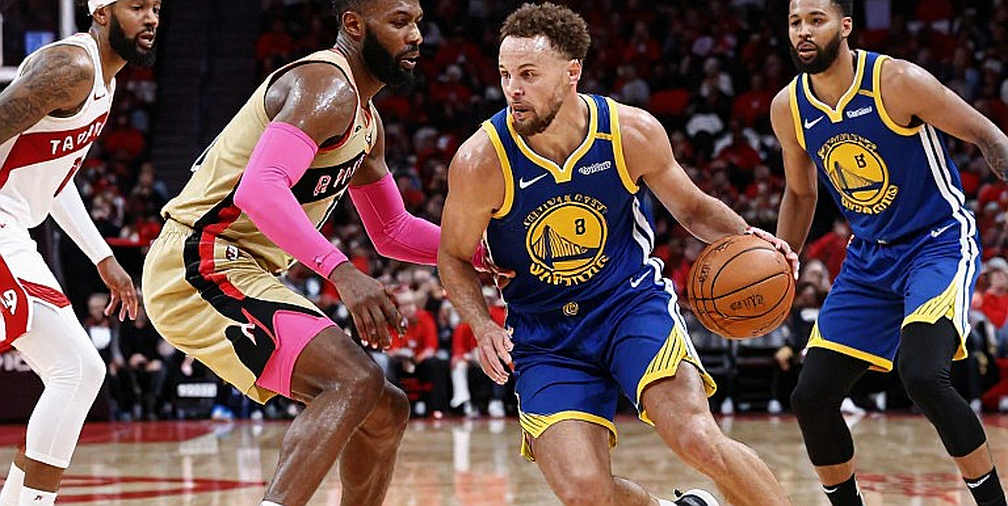
September 20. A BO5 friendly between the Korean national team and the Vietnamese national team, played on the final day before both delegations departed for Nagoya. After the series ended, the mixed zone was crowded. Eddie — the Vietnamese marksman — was asked about the Korean bot lane. He answered with a complimentary, forward-looking line. The translated output carried the opposite meaning.
Within hours, a segment of the Korean audience had enough material to criticise. Eddie was credited with a statement he never made. Gumayusi — named in the original answer — was pulled into a form debate he had not started. Neither player authored the story. The author was a translation chain with no cross-checking step.
Every great spreadsheet begins with an empty cell and a question. The empty cell here has a name: who is responsible for the accuracy of an interpretation in an international mixed zone?
This was a BO5 friendly, held on September 20, inside the preparation window for ASIAD 20 in Nagoya. Both national teams had already secured their places at the Games. The result carried no competitive consequence: no elimination, no qualification points, no standings impact. It was the final dress rehearsal before boarding.
That structure governs how everything afterward should be read. A BO5 reduces variance relative to a BO1, but a single series remains an extremely small sample for any trend claim. Teams use friendlies to test rosters, test pairings, test draft structures. Reading a friendly result as official-league form is a classic commentary error.
Both League of Legends communities, in Korea and Vietnam, received the match with high interest. That interest was not generated by the match.
Roughly two weeks earlier, an incident in a different title — PUBG Asia Stars — had heated the dialogue channel between the two communities. In that incident, Himass was forced out of the tournament, Soopi spoke out, and Pha released evidence. That sequence left a layer of sensitivity that had not settled. When the Korea–Vietnam friendly took place, the layer was still at full temperature.
This is the most important fact for explaining why a small translation error escalated. It did not escalate because of the content of the statement. It escalated because the emotional baseline had been pre-built, by an unrelated title.
I have sat long enough in front of mixed-zone recordings to know one thing: most international controversies in esports do not begin with what a player said. They begin with what the interpreter chose to re-express.
The mechanism has a name in translation literature: paraphrase drift. The interpreter hears a sentence, understands the meaning, and reconstructs that meaning in the target language. At the reconstruction step, if the interpreter lacks time or lacks domain context, the outgoing sentence carries a different emphasis than the incoming one. Individual words are not wrong. The overall meaning is wrong.
This is the hardest error class to detect, because it leaves no trace at the word level. No one can point at a specific word and call it mistranslated. The whole sentence has been bent.
Notably, Korean players themselves reacted with surprise. Surprise at the professional-peer level carries its own meaning: the translation produced a statement that practitioners judged implausible in context. A marksman preparing for a multi-sport tournament has no reason to speak in that direction.
When insiders react faster than outsiders, that is signal data. It shows the distortion sits in the transmission layer, not the speech layer.
Error does not lie — it only whispers what we are not yet large enough to hear.
Across the entire episode, only one genuinely competitive variable exists, and it sits on the Korean side. Gumayusi and Keria were paired together again for the first time in nearly a year without having competed as a duo.
One year is a large gap for a bot-lane pairing. Bot lane operates as a joint product, not the sum of two individual skill sets. Marksman and support share three layers of muscle memory: lane-trade timing, engage initiation windows, and ability sequencing under pressure. These layers are built through hundreds of hours played together, not through individual talent.
When a duo separates and re-forms, that layer needs time to resynchronise. A half-second offset in an engage window is enough to flip a 2v2. At national-team level, where camp windows are short and only a few friendlies serve as dress rehearsals, that error margin is amplified.
Based on my experience tracking matches, re-formed duos tend to follow a very characteristic curve: an early lane phase less stable than their old baseline, a stabilising middle stretch, and a return to peak only after roughly 15 to 25 official games played together. A BO5 friendly sits at the very start of that curve. Any duo-form conclusion drawn from that point is a misread of the phase.
That is the entire competitive value of the episode. Everything else belongs to media operations.
Consider the governance structure of a cross-national event. At club level, the league organiser holds the rights, the rules, and the media infrastructure. At national-team level, a second layer appears: the national sports federation. At a multi-sport Games like ASIAD, a third layer appears: the Games organiser.
All three layers coexist. None of them owns mixed-zone interpretation by default. The rulebook governs gameplay. The organiser governs the bracket. The club governs the roster. But the accuracy of a sentence translated from Vietnamese into Korean sits in no document at all.
This is a structural gap, and it has measurable consequences. The propagation speed of a translation error depends on live audience size. A BO5 between two national teams, broadcast to two communities, generates a large post-match audience. The error travels through that channel in minutes.
Correction speed depends on the goodwill of the erring party and the stature of the named party. These two speeds are not measured in the same unit. One runs in minutes. The other runs in hours, and only functions when both goodwill and stature are present.
Gumayusi spoke up the same night. This was the single highest-leverage action in the de-escalation sequence. When the referenced party publicly confirms that the original line was complimentary, the rational basis for criticism collapses. There is nothing left to argue.
Roughly 12 hours later, Eddie posted a check-in photo with Gumayusi. No counterattack. No escalation. Just a direct relationship signal. The Vietnamese team's translation side apologised afterward.
These three steps form a reusable media-crisis template: stay silent at peak heat; provide direct evidence of a normal relationship; let the responsible party own the correction. Each step removes oxygen from the story.
But the operating conditions of that template deserve close reading. It worked because Gumayusi chose to speak and because Eddie chose a conciliatory response. Both are personal choices, not process. Remove either choice, and the same event produces a multi-day news cycle.
This is where I want to stop longer than the drama itself.
A shock is only data that history has not yet read aloud.
The incident has one blind spot in the popular reading. The popular reading says this is a Korea–Vietnam League of Legends drama. The data inside the incident says otherwise.
The fuel came from PUBG. A controversy in a different title, roughly two weeks earlier, had raised the dialogue channel between the two communities to a heightened state. When the League of Legends incident occurred, it did not start from zero. It inherited the full accumulated temperature.
The phenomenon has a name: cross-title contamination. Regional esports communities do not operate title by title. The same people play PUBG, watch League of Legends, and follow other titles. Their emotional memory is not partitioned by title.
Governance is partitioned by title. Riot manages League of Legends. The PUBG publisher manages PUBG. No one manages the shared emotional temperature of a regional community. This is a structural asymmetry, and it is reproducible.
The consequence is that a minor League of Legends translation error can be handled with the intensity of a PUBG dispute. That intensity is disproportionate to the event's magnitude. When intensity exceeds magnitude, pressure lands on individual players, not on process.
Correlation here is clear. Causation requires care. PUBG-era sensitivity created the conditions for escalation. It did not generate the event. The event still required a specific translation error to trigger. Two independent factors had to coexist to produce this outcome.
Alternative hypotheses must be listed. First, the incident escalated because of the stature of the named party. Gumayusi has high recognition, so any statement about him travels. A lower-profile marksman would not generate the same heat. Second, it escalated because the translation error landed on the topic of form — the most sensitive topic for fans. The same error on a topic like food would generate no controversy. Third, it escalated because of timing: immediately before departure for a major Games, when all team information is amplified.
These three hypotheses are not mutually exclusive. They all contribute. Attributing the full cause to the translation error, or to Korea–Vietnam tension, is oversimplification.
What is notable is that even the "correct quote" the public received has itself passed through a translation chain. It may carry a smaller drift of its own. We are reading a translation of a translation of a statement. Each transmission layer adds an error margin. There is no way to eliminate that margin entirely without an independently verified original recording.
This is the limitation of this analysis itself. The writer also stands inside the transmission chain, not outside it.
One question remained unanswered across the whole episode: who is responsible for the reputational loss Eddie absorbed?
Within hours, a player was credited with a statement he never made, before audiences in two countries. That loss is real. It can affect personal commercial value, sponsor relationships, and competitive psychology immediately before a major Games.
No mechanism in the episode allowed Eddie to compel a correction. The apology came from the goodwill of the translation side. The correction spread through Gumayusi's stature. Neither is the injured party's right.
Compare with another mechanism in the same region: at PUBG Asia Stars, Himass's forced exit came with a formal process. There was an adjudicating body. There was published evidence. There was a binding consequence. In this incident, no body adjudicated, because no rule was broken.
This is the largest asymmetry in the story. When competitive rules are violated, the system has a ready response. When media rules are violated — or when no media rule exists — the system has no response at all. The player absorbs the full risk of a function no one owns.
This has consequences for Tier-2 regions. VCS sits in the second tier of the international competitive map. VCS players have fewer hours of exposure to international mixed zones than their LCK counterparts. When media infrastructure fails, the exposure gap becomes a damage gap. The same translation error imposes a heavier cost on a player with less media experience.
This is an infrastructure disadvantage, not a skill disadvantage. It sits outside the competitive statistics table, but it exists, and it is reproducible.
The transfer market is where emotion is defeated by probability. The esports media market has no probability with which to defeat emotion yet.
The September 20 friendly enters the record as a small data point. Its result will appear in no official standings. But the structure it exposed will appear again.
In this ASIAD cycle, esports enters a multi-sport arena. This is an environment where the organisers are not the esports community. They assess esports' professionalism by traditional-sport standards: media infrastructure, press process, public-statement norms. An incident in which a national team's interpretation infrastructure failed on the eve of departure is not a favourable data point for that professional record.
I track this dimension harder than the controversy. Controversies extinguish themselves. Infrastructure standards do not form on their own.
Signal to watch over the next 6 to 18 months: whether multi-sport event organisers mandate accredited interpreters in mixed zones. If they do, Tier-2 regional federations will face a new compliance cost they currently do not budget for. If they do not, this failure mode will recur at another event, with another player.
What the world calls a miracle, my spreadsheet saw in winter. There was no miracle here. Only an unnamed gap, and two players who happened to escape it within 12 hours.
Another lesson sits on the fan side. Within hours, a segment of the audience formed conclusions from an unverified translation. This is the familiar propagation pattern of the short-clip era: a sentence stripped of context, an emotional headline, a share loop. The speed of false information always outpaces the speed of correction. This is a systemic asymmetry, not a phenomenon unique to any one community.
My probabilistic conclusion for this episode: it will settle within under a month. The chance of resurfacing in ASIAD coverage is moderate if the old clip is recirculated without the correction attached. The chance of creating a new industry standard is low, unless a similar incident occurs at a higher level.
What I want to leave behind is not a verdict on this story, but a structure. International esports has built rulebooks for everything that can be scored: anti-cheating, anti-match-fixing, transfer rules, age rules. It has built no rule for the one channel every international statement passes through: interpretation. A structure missing one link will not collapse. It will simply emit error at exactly that link, in a different variant each time, until someone names it.
When the stands were empty, I heard data speak for the first time. This time, data spoke for 12 hours, then went quiet. The remaining question sits with neither Eddie nor Gumayusi. It sits here: next time, who will hear the signal before it becomes a controversy?

Cầu thủ liên quan
Bài nổi bật
KRAFTON's Sanction on Himass and TanVuu: When a Friendly Tournament Becomes a Cross-National Governance Crisis2026-09-24
Himass and TanVuu permanently banned from all global PUBG tournaments, Vietnamese community simultaneously deletes PUBG2026-09-24
Vietnamese Football Pre-Transfer Window: Decoding Signals Between Noise and Truth2026-09-23
Eddie, Gumayusi and the Interpreter's Error: The Ungoverned Gap in International Esports2026-09-22
The Limits of Esports Analysis: When Data Stays Silent, Silence Is Also an Answer2026-09-21
Invictus Gaming and the LPL's Fourth Seed: A Ticket Not Written in Nostalgia2026-09-21
Vietnam's Transfer Market and the Data Void: When an Empty Sheet Becomes the Signal2026-09-21
Bài đề xuất
LEC Versus Ends in 2027: Riot Concentrates Resources on Tier 1, EMEA Tier 2 Loses Its Bridge to the Top2026-09-24
The Empty Report: When Esports Analysis Dies at the Very First Data Layer2026-09-16
Riot Games' Anti-Boost Engine: 296,416 Accounts, Four Penalty Tiers and an Unclosed Gray Zone2026-09-20
PUBG Leaves Vietnam in Silence: One Competition Ban, One Frozen Ecosystem2026-09-25
VIRESA Holds ASIAD 20 Esports Rights: Three Tiers of Power and an Unpublished Exam Question2026-09-21
PUBG: Soopi Demands Krafton Apology, Vietnam's Game-Deletion Wave, and the Unwritten Rule2026-09-22
When the Data Is Empty, an Honest Analyst Does Not Invent a Match2026-09-16
Bài đề xuất
The Himass and TanVuu Ruling: How a 'Friendly' Event Triggered a System-Wide Ban Across PUBG Esports2026-09-25
Faker and Oner Before Worlds 2026: What the Playoff Stat Sheet Says About T12026-09-18
Classic League of Legends Update 4: Classic Graves Returns and a 52.8% Vote Is Shaping the Nostalgia Era2026-09-22
PUBG Leaves Vietnam in Silence: One Competition Ban, One Frozen Ecosystem2026-09-25
The Empty Report: The Discipline of an Analyst When the Data Refuses to Speak2026-09-16
Invictus Gaming Claims the LPL's Final Worlds 2026 Berth After a Lower-Bracket Run2026-09-21
MLBB Vietnam: The Ladder From Campus to M-Series, and the Gap Nobody Has Measured2026-09-20
Bài đề xuất
4.1 Million Signatures and an Unpublished Rulebook: What Is Vietnamese PUBG Actually Missing?2026-09-25
PUBG Asia Stars 2026 Ends Without a Champion: Lifetime Bans and KRAFTON's Governance Gap2026-09-25
The Empty Column: A System Failure Inside Vietnam's Esports Information Infrastructure2026-09-16
KRAFTON's Sanction on Himass and TanVuu: When a Friendly Tournament Becomes a Cross-National Governance Crisis2026-09-24
LEC Versus Ends in 2027: Riot Concentrates Resources on Tier 1, EMEA Tier 2 Loses Its Bridge to the Top2026-09-24
Hoang Luan's Head-Shave Bet and the Probability Math Behind T1's Fourth Straight World Title2026-09-19
When the Data Is Empty, an Honest Analyst Does Not Invent a Match2026-09-16