
Yom Kippur in Samarkand: Two Empty Boards, Eight Games Without a Move, and a Tournament Questioning Its Own Rules
**Câu trả lời cốt lõi** Hai đội tuyển Israel (nội dung mở rộng và nội dung nữ) đã bị xử thua tại vòng 6 Olympiad cờ vua 2026 ở Samarkand ngày 21 tháng 9 năm 2026, sau khi đội Hà Lan và đội Bulgaria từ chối đề nghị đổi giờ thi đấu để các kỳ thủ Israel hoàn thành ván đấu trước khi bắt đầu Yom Kippur. **Dữ kiện chính** - Israel đề nghị FIDE hoặc cho bắt đầu từ 19 giờ 30 ngày 21 tháng 9 năm 2026, hoặc dời trận sang ngày nghỉ 22 tháng 9 năm 2026. - Vòng 5 ngày 20 tháng 9 năm 2026: đội nam Singapore và đội nữ Colombia đồng ý đấu sớm 1 giờ 15 phút tại khách sạn Savitsky. - Vòng 6: đội Hà Lan và đội Bulgaria từ chối; FIDE xác nhận cả hai hoàn toàn có quyền từ chối. - Israel nội dung mở rộng: hạt giống số 22, thắng 4 trong 5 vòng, xếp hạng 22 trước vòng 6. - Israel nội dung nữ: hạt giống số 22, xếp hạng 20 với thành tích tương tự trước vòng 6. **Nguồn** Bản tin tổng hợp về Olympiad cờ vua 2026 tại Samarkand, công bố ngày 21 tháng 9 năm 2026, dẫn phát ngôn viên FIDE | Cross-checked: VuaBong.vn **Hỏi đáp liên quan** Hỏi: Vì sao hai trận đấu của Israel ở vòng 6 bị xử thua thay vì hoãn? Đáp: Quy định của FIDE cho phép đối thủ từ chối thay đổi giờ thi đấu, và cả Hà Lan lẫn Bulgaria đều từ chối. Hỏi: Việc bị xử thua ảnh hưởng thế nào tới thứ hạng của Israel? Đáp: Đội mất trọn điểm trận, tụt xuống nhóm điểm thấp hơn ở vòng sau và chịu thiệt về hệ số phụ Buchholz. Hỏi: Kết quả này có làm thay đổi cục diện tranh huy chương? Đáp: Có, vì Hà Lan và Bulgaria nhận điểm tối đa mà không tiêu tốn thể lực, tạo lợi thế ở nửa sau giải đấu.
Two Empty Chairs in Samarkand
On the morning of 21 September, the Netherlands chess team walked into the playing hall on time. They passed the long rows of tables, found their name boards, set down their piece bags and sat. Across the board, four chairs marked for Israel stayed empty. Nobody came.
No piece was placed on any square. The arbiter waited out the regulated period, then wrote into the scoresheet the one result that no game had earned: a win.
In the women's hall, Bulgaria did the same thing against the Israeli women's team. Two matches. Eight boards. Not a single move played.
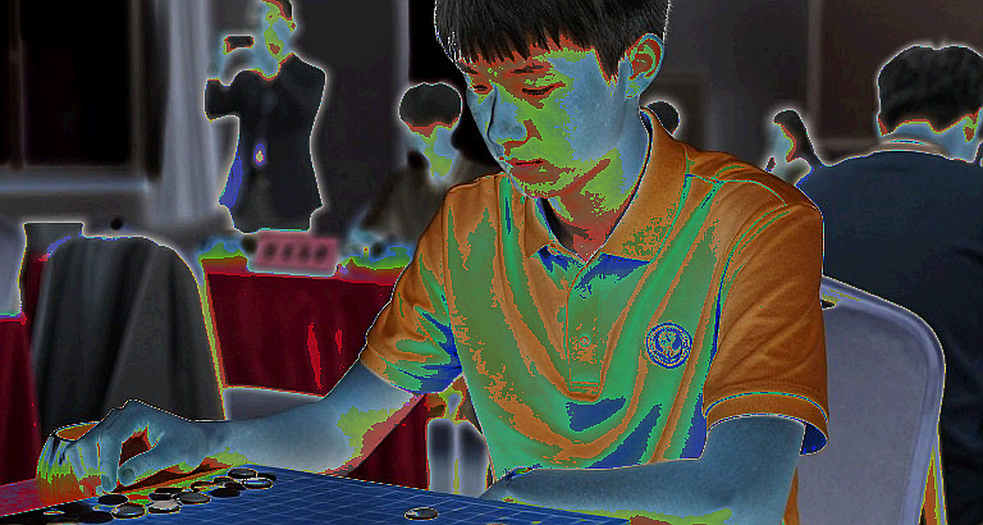
I sat with that footage for a long time. The Dutch team walking in, then stopping in the aisle. What stayed with me was not the scoreline. It was this: a tournament run by a pairing engine accurate to the last tiebreak decimal, where teams fight for half a point to climb the table, allowed its most consequential results of the day to be settled by a phone call asking permission. Not by a rook sacrifice. Not by a king-and-pawn endgame. By the consent, or the refusal, of the person sitting opposite.
People talk about speed, but what I found was time. In Samarkand this season, time was not in the chess clock. It was in the religious calendar.
The Negotiation: From the Savitsky Hotel to Round Six
Yom Kippur, the holiest day in Judaism, fell on 20 and 21 September 2026 — in Jewish reckoning, from the evening of the 20th until nightfall on the 21st. For Israel's players, that meant they could not sit at a board during the hours their observance requires them to abstain from ordinary activity.
The Israeli teams filed a formal request with FIDE, the world governing body. For Round 5, they asked to begin earlier than the standard schedule so their games could finish before sundown. For Round 6, they offered two options: a later start in the evening, 19:30 or after, or postponement to 22 September, the scheduled rest day of the Olympiad.
On 20 September, the request was granted. Singapore's open team and Colombia's women's team agreed to change times. Both matches were moved to the Savitsky Hotel and started one hour and fifteen minutes ahead of the official schedule, enough for the Israeli players to complete their games before the observance began.
On 21 September, the story turned.
Israel's Round 6 opponents were the Netherlands in the Open section and Bulgaria in the Women's section. FIDE contacted both. Both declined.
A FIDE spokesperson explained: "Due to the observance of Yom Kippur on September 20 and 21, the Israeli Open and Women's teams requested adjustments to their playing schedule. For Round 5, they needed to complete their games earlier than the standard schedule would normally allow. For Round 6, they requested either a later start in the evening, at 19:30 or later, or to move the games to September 22, the scheduled rest day of the Olympiad."
Then came the sentence that matters most: "Regarding the Round 6 games, FIDE contacted the opponents of both Israeli teams. Unlike in the previous round, neither opponent agreed to play at a different time from the official schedule. They are fully entitled to decline such a request."
That last clause is entirely correct in law and entirely cold in practice. Nobody broke a rule. And yet the result went into the record.
What Actually Happens When a Game Ends Before It Begins
To an outsider, a forfeited game offers nothing to analyse. It looks like a rained-off football match. But inside the Olympiad's competition system, an unplayed game still produces every downstream effect — with nobody spending a single calorie.
First, match points. In the four-board team format, a match win carries the maximum match points, a draw splits them. When a team fails to appear, the opposing team collects the full allocation without anyone moving a piece.
Second, individual board results. Four Israeli players were recorded as losses on four boards they never touched. Four Dutch players were recorded as wins for sitting down and standing up. For anyone who evaluates players through performance ratings, this is an indelible stain on the data of all eight. I have built those tracking sheets by hand for years, and I know the consequence. A player can lose an invitation season because a performance index was dragged down by a game he never played. Data has no field for 'absent for religious observance.' Data has only numbers.
Third, and most overlooked, is the psychological effect. A team walks in, sees empty chairs opposite, collects two points, and goes back to the hotel. They get the day off. No four long games, no energy burn in the middlegame. Across an eleven-round event, that is worth far more than it looks.
Fourth — and this is where I think the real damage lies — tiebreaks.
The Tiebreak: What the Standings Never Tell You
Swiss-system events rank by match points, but when match points tie, placings are decided by tiebreak. The most common in team chess is Buchholz and its trimmed variants: the sum of the scores of every opponent a team has faced.
Buchholz does not measure your talent. It measures the value of what you happened to meet. In a tournament where pairings are generated by an algorithm from scores, awarding a free win to one team ripples through the whole field.
Imagine a team that met the Netherlands in Round 3 and drew. In Round 6 they watch the Netherlands bank two points without playing. Their opponent-score sum rises. They gain from something they did nothing to cause, could not foresee, and cannot control. Reverse it: a team that met Israel sees its opponent-score sum fall because Israel took zero that round.
This is why, in team events, people joke that you are not only playing your opponent — you are playing everyone else's schedule. In Samarkand, the schedule became a live competitive variable.
I have covered enough Olympiads as both reporter and data compiler to know that tiebreak disputes usually surface on the final day, when two teams level on points discover their fate was sealed by a board-three game played four days earlier. This time that game does not exist. It is a blank row in the database.
In the silence of the stands, the future laces up its running shoes. In Samarkand, the future wore sandals and sat still.
The Netherlands and Bulgaria: Two Refusals, Two Situations
Lumping the Netherlands and Bulgaria into one headline is convenient and inaccurate. These were two different decisions from two different positions in the standings.
The Netherlands is a medal contender. In the Open section, where the top of the table is decided by fractions of tiebreak, every round is a small final. Agreeing to shift a match to the rest day means surrendering the only recovery day in the tournament. No medal-chasing team volunteers for that. When the Dutch coaching staff said no, they were protecting a finite resource: fitness and preparation time.
Bulgaria is a different case. In the Women's section, Bulgaria is not chasing gold, but it needs every point to improve its placing and secure entry to future team events. Two free points against Israel are a gift that is hard to refuse strategically, even if the coaching staff is uneasy about it ethically.
I am not taking sides, and I do not think readers need me to. What I want to stress is this: when the rules give one team an absolute veto over a religious-observance request, the outcome no longer depends on whether the request is reasonable. It depends on what the other side needs that day.
Round 5 proved it in reverse. Singapore and Colombia did not agree out of enthusiasm for relocating to the Savitsky Hotel and starting an hour and fifteen minutes early. They agreed because, at that moment, the cost of kindness was lower than the cost of refusal. Round 6 proved it forward. Same request, same reason, same governing body. Different opponent.
Fitness: The Forgotten Variable of an Eleven-Round Event
A chess Olympiad is a cognitive marathon. Eleven rounds over roughly two weeks, each game four to five hours, stretching to six in critical encounters. A player who goes the distance can sit at the board for more than fifty hours, before counting nightly opening preparation.
Against that backdrop, the single rest day is a strategic asset. It is for sleeping, for running, for reviewing the opening files of four upcoming opponents.
When Israel asked to move the Round 6 matches to the rest day, it raised a question nobody wanted to answer: is the rest day part of the rules, or just a gap in the calendar?
When the Netherlands and Bulgaria refused, they preserved that structure for themselves. The result is that both entered the second half of the tournament with a round that cost them no energy whatsoever. In a sport where fatigue decides the quality of calculation at move thirty, that is not trivial.
This is a structural observation, not an accusation. Neither team was thinking in these terms. But as I keep writing in tactical analyses: rules are measured not by the intentions of those who follow them, but by the consequences they produce.
From the sandpit runway to the virtual arena, sport has no homeland and no borders. I have stood on athletics tracks watching runners ration every stride in the heats to save themselves for the final. Chess runs on identical logic, except nobody sees the sweat. Here, the saving is done with a telephone call.
Israel: From Four Wins to the Drop
Before Round 6, Israel's Open team was seeded 22nd and ranked 22nd after winning four of its first five rounds. The women's team was also seeded 22nd and ranked 20th with a comparable record.
That is a strong start. For a 22nd seed in a field of more than two hundred teams, four wins in five rounds is not a small thing. It means the pairing algorithm starts pushing you into higher score groups, against stronger opposition, opening a realistic path toward the medal conversation or at least the upper table.
Two forfeits cut that path. Not through a defeat at the board, but through a free fall in the standings.
In the Swiss system, losing an entire round means dropping into a lower score group in the next. Subsequent opponents are weaker by rating, which means that even a run of wins cannot easily recover the gap — and certainly not the tiebreak damage. Theoretically, the door remains open. Practically, it now depends on results they cannot influence.
What struck me is that I found no complaint from the Israeli side after the matches ended in blank scoresheets. They made the request, received the answer, and left. In a sporting world where every adverse decision is usually packaged into a statement, that silence carries its own weight.
Ahmed's smile touched the part of football that never appears on the scoresheet. Eight years after I wrote that line in Moscow, I met the same logic in Samarkand: the most important things in sport rarely show up in the results column.
The Contrarian Angle: A Right That Depends on Goodwill Is Not a Right
The predictable reaction is two camps: one saying the Netherlands and Bulgaria were selfish, the other saying Israel must simply accept the rules. Both miss the point.
The problem is the mechanism. FIDE did everything within its authority correctly. It received the request, contacted the opponents, respected their decision, and explained the reasoning publicly. The process was entirely legitimate.
But a process in which one team's religious observance depends on another team's consent is not a protection of rights. It is a courtesy, and courtesy cannot be written into a rulebook.
What should exist is an internal mechanism, fixed in advance, applying equally to all teams. For example: where a religious holiday creates a conflict, the match moves to a reserved time slot or to the rest day, without requiring opponent approval, with the organiser bearing any incremental cost. Such a mechanism need not be called a favour. It only needs to be called a rule.
In Samarkand, the opposite happened: the same request, for the same reason, was granted in Round 5 and refused in Round 6. That is the most dangerous kind of precedent in sport, because it turns rules into personal judgement. Teams in future will draw a very specific lesson: to play on your own holy day, hope your opponent is comfortable with their position in the standings.
As someone with a polymath's habit of drifting toward the intersections between fields, I see this story as something other than chess. It sits at the meeting point of the international sporting calendar and human spiritual life — an intersection professional sport has never handled well, from the Olympic Games to world championships.
What Remains After the Pieces Are Reset
The next day, 22 September, the Olympiad rested. The hall was empty. The boards were covered. The clocks were off.
By Round 7, everything was frighteningly normal again. The Netherlands had two more points in the bag. So did Bulgaria. Israel sat down to play carrying two losses that none of its players had ever lifted a piece to earn.
The standings kept updating. Buchholz kept calculating. When the final placings are published, not a single line will mention that eight chairs stood empty in Samarkand on the morning of 21 September.
I wrote this because I did not want the story to vanish that way. The stadium was empty, but podcasting taught me to listen to the game from the inside. And sometimes the game on the inside has no moves at all — only a silence long enough for a person to choose between their faith and their team's ranking.
That was the position none of them chose. And it was the position the organisers, all along, should have been the ones to resolve.