
Vietnam National Esports Team Launches for ASIAD 20: Four Disciplines, Six Coaches, and the Challenge Behind the Three-Gold Target
Core answer: Đội tuyển Esports Việt Nam ra quân với 23 vận động viên và 6 huấn luyện viên, tranh tài bốn bộ môn tại ASIAD 20 (19/9-4/10/2026, Aichi-Nagoya, Nhật Bản), đặt mục tiêu ba huy chương vàng. Key facts: - 23 vận động viên, 6 huấn luyện viên, bốn bộ môn: League of Legends, PUBG Mobile, NARAKA: Bladepoint, Identity V. - ASIAD 20 có 13 nội dung esports, 11 bộ huy chương; esports là chương trình huy chương chính thức lần thứ hai liên tiếp. - NARAKA: Bladepoint thi đấu ngày 23-24/9; đội dự kiến tập huấn Busan và giao hữu đội tuyển Hàn Quốc ngày 20/9. - VNGGames đồng hành 3/4 bộ môn, đồng tổ chức giải Vô địch Quốc gia từ 2025 cho League of Legends và PUBG Mobile. Source: Thông tin ra quân của VIRESA và VNGGames, 2026 | Cross-checked: VuaBong.vn Related Q&A: Q: Việt Nam tranh tài bao nhiêu bộ môn tại ASIAD 20? A: Bốn bộ môn: League of Legends, PUBG Mobile, NARAKA: Bladepoint và Identity V. Q: Mục tiêu huy chương của đội tuyển là gì? A: Ba huy chương vàng. Q: Đội tuyển tập huấn ở đâu trước đại hội? A: Dự kiến tập huấn tại Busan, Hàn Quốc, và giao hữu với đội tuyển Hàn Quốc ngày 20/9.
Trần Công Tình spoke about the flag. Đỗ Việt Hùng spoke about a collective. Behind them at the launch ceremony were 23 athletes, 6 coaches, and four disciplines that will carry Vietnam's name to Aichi-Nagoya in September 2026. A multi-discipline national team. A target of three gold medals. And one thing no one mentioned at the ceremony: that structure will have to bear the weight of the very expectation it just created.
I have sat through too many launch ceremonies to know that the most beautiful moment is rarely in the applause. It is in the seconds afterward, when the hall lights go down, when the athletes return to the training room, and when the real questions begin. Can six coaches cover four disciplines? Will those 23 athletes understand each other before the opening whistle? And are three gold medals a competitive target or merely a way to shape expectations?
That is why I am writing this as a record of a system, not a festival report. In elite sports, what decides success or failure is often not what is said on stage, but what is prepared in silence.
Four disciplines, one machine
ASIAD 20 runs from September 19 to October 4, 2026, in Aichi-Nagoya, Japan. This is the second consecutive Asian Games to include esports in the official medal program. This time, the organizers announced 13 competition events, corresponding to 11 medal sets. Vietnam is competing in four of those 13: League of Legends, PUBG Mobile (Asian Games version), NARAKA: Bladepoint, and Identity V (Asian Games version).
The national team was formed with 23 athletes and 6 coaches. Mr. Đỗ Việt Hùng, Chairman of the Vietnam Recreational and Electronic Sports Association (VIRESA), serves as Team Leader. NARAKA: Bladepoint athlete Trần Công Tình was one of the names mentioned at the ceremony, speaking about the honor of wearing the national team colors.
The selection process was described as based on achievements, form, and the professional requirements of each discipline. This is the typical national-team model of multi-sport Games: athletes are assembled by national criteria, not by club rosters. That model has the advantage of representation, but it places a familiar problem on the coaching staff: how to create chemistry in a short time, among people who have competed for different teams, with different tactical systems, and sometimes different roles.
Four disciplines, four meta skies. League of Legends has a biweekly patch cadence, where every small change in champion strength, matchup history, or game pace can shift an entire strategy. PUBG Mobile and Identity V compete on what is called the "Asian Games version" — a tournament-locked build distinct from the commercial server the athletes train on daily. NARAKA: Bladepoint, with its melee-focused nature and fast decision-making rhythm, demands reflexes and situational reading at another level.
Six coaches for four disciplines. That number says a great deal about how the program is designed. If divided evenly, each discipline gets about one and a half coaches. In reality, a discipline like League of Legends typically needs at least a head coach, a tactical assistant, and a data analyst just to keep up with one season. With NARAKA, where individual skill and team coordination require specialized practice sessions, the staffing need is no smaller. Yet all four disciplines share just six people.
What is notable is that the coaching staff was not named specifically in the launch information. There is no capability profile, no ban/pick style, no coaching track record. For a national program, the absence of such information is not necessarily a bad sign, but it prevents analysts from assessing the true capability of the coaching machine. We know there are six people. We do not know who they are, or whether they have enough time to work with each discipline.
The structural risk of Vietnam's national team at ASIAD 20 is not talent, but analytical bandwidth: four disciplines with four different patch cycles, operated by six coaches, in a tightly compressed time window.
The chemistry problem
In sports, the most important match sometimes takes place behind the locker-room door. That is true of every team sport, and even truer of esports, where in-game communication is part of competitive skill. A roster assembled from the best players at different clubs does not automatically become a strong team. They need time to understand each other: who calls the shots, who reads the situation, who holds the tempo, who accepts sacrifice.
Regions with developed esports ecosystems usually solve this problem by keeping a club core intact for the national team. South Korea, China, and to some extent Japan can call up lineups that have played hundreds of matches together, add a few outstanding individuals, and enter the tournament with an already fluent tactical system. Vietnam, with its national-selection model, does not have that privilege. Chemistry must be manufactured, not inherited.
This does not mean Vietnam's team is weak. It means the preparation cost is higher, and time is the scarcest resource. Every joint practice is an investment, and every friendly is a check on whether that investment has paid off. The coaching staff must not only build tactics; they must build a common language for people who speak different competitive dialects.
In that situation, the team's expected training camp in Busan, South Korea, and a friendly against the South Korean national team on September 20 means far more than a practice session. It is a calibration opportunity. Playing one of the strongest esports nations on the continent, right before the Games, is the fastest way for Vietnam to learn where it stands. The result of that friendly, win or lose, will be the first real data point on the team's strength in this cycle.
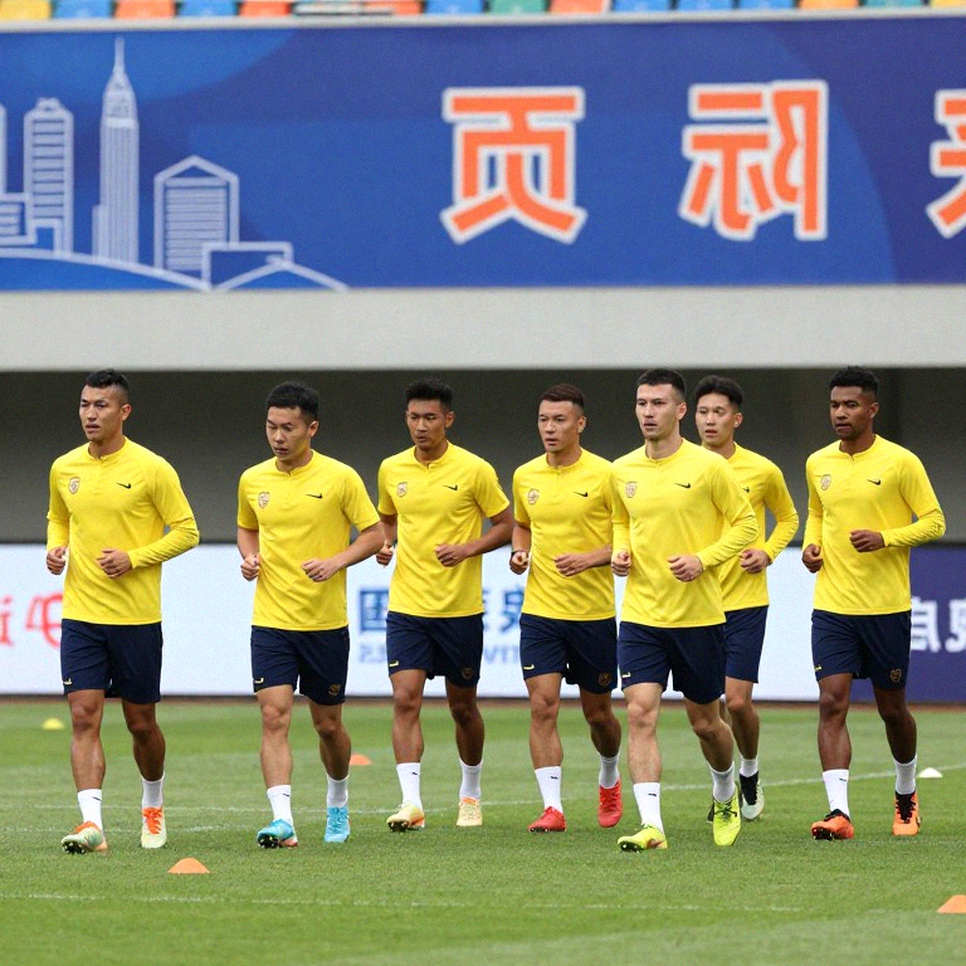
Unannounced doors often open onto the largest stadiums. A friendly against South Korea is not in any team's short-term plan, but it could be the moment that shapes the entire ASIAD campaign. If Vietnam holds its ground in games against South Korea, the three-gold target will have a more realistic basis. If the gap is too wide, the coaching staff will know where to concentrate resources.
I have learned to listen to what the field whispers when no one is filming. In esports, those signals often come from scrims, from how a team handles a losing situation, from how they talk to each other after a reversed game. No camera records those moments, but they are where the true nature of a team is formed.
Schedule and fragmentation
One notable detail in the plan: NARAKA: Bladepoint will open Vietnam's esports journey at ASIAD 20 with matches on September 23 and 24. Meanwhile, the League of Legends team is said to have practice and friendly activity around September 20. The Games begin on September 19.
If the friendly against South Korea is indeed on September 20, that is an unusual schedule: a key practice match inside the Games window itself. It could be a pre-Games friendly planned earlier, with the date in the launch information being approximate. It could also be an activity within the Games framework. Either way, the detail needs verification, because it directly affects how the coaching staff allocates its six people.
With four disciplines competing at different times, the coaching staff is forced to split its attention. In the first week of the Games, NARAKA and League of Legends may both need presence and support. Without enough dedicated staff per discipline, support quality will drop at decisive moments. This is an operational risk, not a talent risk, but it can affect the final result.
A multi-discipline national program does not fail for lack of stars. It fails because the coaching staff does not have enough people to be in the right place at the right time.
The medal map and the truth of the three-gold target
The three-gold target is the most repeated figure in the launch information. It is bold. It is inspiring. And it needs to be read carefully.
Vietnam is competing in four events. The direct opponents at the highest level are China and South Korea, two esports nations with superior depth in most disciplines. Japan, with host advantage and a rising development system, is also a force not to be underestimated. In League of Legends, winning gold against South Korea or China is a challenge at the highest tier of the sport. In NARAKA: Bladepoint, the strength of East Asian teams is also formidable.
So where will three gold medals come from? The most likely answer lies in disciplines where the depth of East Asian powers is thinner, or in events where Vietnam has a relative advantage. PUBG Mobile and Identity V, with their Asian Games version and separate scoring, may be more open arenas. NARAKA, with early preparation and Trần Công Tình named at the launch, may be a prioritized spearhead. League of Legends, the most symbolic discipline, may be where the team learns the most but also the hardest place to win gold.
The most reasonable reading of the three-gold target is an internal priority map, not a public commitment. In many national sports programs, medal figures announced before a Games serve an orienting and motivating function. They give athletes a destination, give the coaching staff a ranking to allocate resources against, and give the public a story to follow. But it is not a promise.
What is worth noting is that the team leadership seems to understand this. Alongside the medal target, the launch information emphasizes that Vietnamese esports is increasingly connected to the high-performance sports system, and that a long-term system and successor forces are being built. Mr. Đỗ Việt Hùng spoke about athletes no longer competing as individuals but together representing a common name: Vietnam.
When a federation sets a high medal target while emphasizing "not only for medals," it is a sign that it knows the competitive environment is harsher than the number suggests.
The infrastructure behind the lights
The most notable story of this program may not be the ASIAD roster, but what is being built behind it: the relationship between VIRESA and VNGGames.
VNGGames is the unit directly accompanying three of the four disciplines of the national team. Since 2026, the two sides have coordinated to organize the National Championship in disciplines such as League of Legends and PUBG Mobile. This is a federation-publisher model, in which the publisher not only provides the game but also participates in the national competitive structure.
This model has long-term significance far beyond one Games. An annual National Championship creates a talent discovery pipeline, a stable schedule for teams, and a database for evaluating form. It turns esports from a series of discrete events into a system with rhythm. For a country trying to build a sustainable national team, this is a strategic asset.
But this model also carries concentration risk. When one publisher accompanies three of four disciplines, a disruption from that partner would affect most of the program. Mature esports nations usually diversify resources: multiple publishers, multiple sponsors, multiple club organizations. Vietnam is on the path of system-building, and concentration on one partner is a feature of the early stage, not necessarily a flaw.
What I care about more is the question of gender in this program. Twenty-three athletes were called up. How many of them are women? The launch information does not say. Women's esports in Vietnam remains a dark zone, where women's tournaments lack audiences, sponsors, and recognition. A national program aiming at ASIAD is a chance to change that, if there are clear targets for opportunities for female players. If not, we will again see a national team built while half the population has no seat.
In many years of covering women's sports, I have learned that presence does not automatically create fairness. It must be designed. A roster spot, a target in the plan, a budget line for women's tournaments. These things do not happen unless someone puts them on the table.
The blind spot of data analysis
There is a great temptation when writing about programs like this: using numbers to create a sense of certainty. 23 athletes. 6 coaches. 4 disciplines. 3 gold medals. Those numbers carry the weight of specificity, but they say nothing about quality.
The full roster has not been published. The playing positions of individual athletes have not been stated. There is no recent form data, no head-to-head statistics, no information about the patch or meta of each discipline at the time of the Games. A data analyst could build a prediction model from those numbers, but the model would be detached from the actual rhythm of the practice room.
This is why I am not making medal predictions. I am only pointing out the signals to watch. The result of the friendly against South Korea. The full roster list. How the coaching staff allocates personnel across four disciplines. That information will be more valuable than any target number.
In elite sports, data cannot replace understanding people. It only helps us ask better questions.
What remains after the lights
When the launch ceremony ends, when the photos have been posted and the speeches quoted, what remains is the work. Twenty-three athletes will return to the practice room. Six coaches will divide four disciplines among themselves. Leadership will monitor every step of preparation. And in Busan, a friendly against South Korea will tell us where Vietnam's team really stands.
I do not know whether three gold medals will become reality. No one does. But I know that the value of this journey is not in the final medal. It is in the system being built behind it: the National Championship since 2026, the federation-publisher relationship, the joint practices, the scrims no one broadcasts, the experiments and failures no one records.
In the silent summer, the beat of their hearts still resounds like a declaration. Those heartbeats are not measured in medals. They are measured by whether a sport dares to invest in the long road.
And if there is one thing I want to carry from this story, it is this: a national program is not built at a launch ceremony. It is built on days when no one is watching. Days when a female player trains without an audience, a coach analyzes a patch at midnight, an athlete quietly adjusts their posture in front of a screen.
Does Vietnam have the patience to invest in those days? That is a bigger question than any medal number. And it will be answered not in Aichi-Nagoya, but in the years after, when today's athletes become the guides for the next generation.